Guo Sifan, Qiu Shi, Cai Ying, Wang Zhibo, Yang Qiang, Tang Songqi, Xie Yiqiang, Zhang Aihua
International Advanced Functional Omics Platform, Scientific Experiment Center and Hainan General Hospital, College of Chinese Medicine, Hainan Medical University, Haikou, China.
Graduate School, Heilongjiang University of Chinese Medicine, Harbin, China.
Front Chem. 2023 Mar 31;11:1142287. doi: 10.3389/fchem.2023.1142287. eCollection 2023.
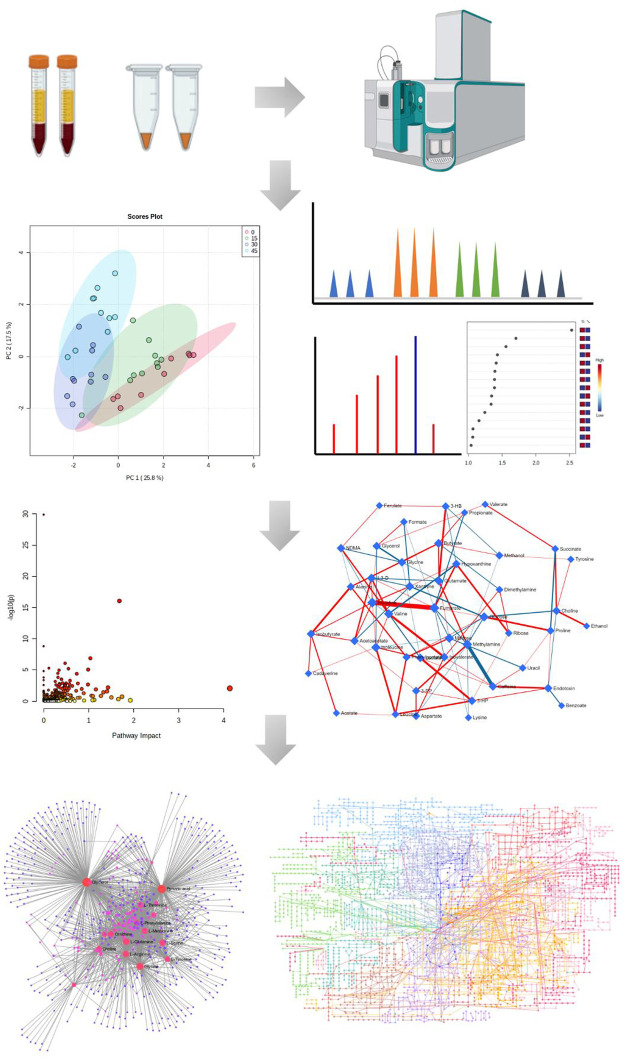
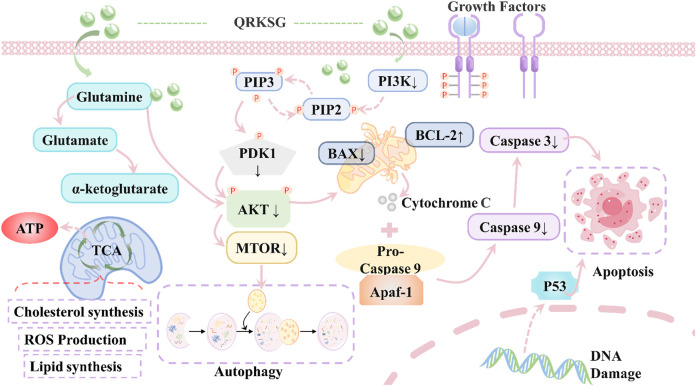
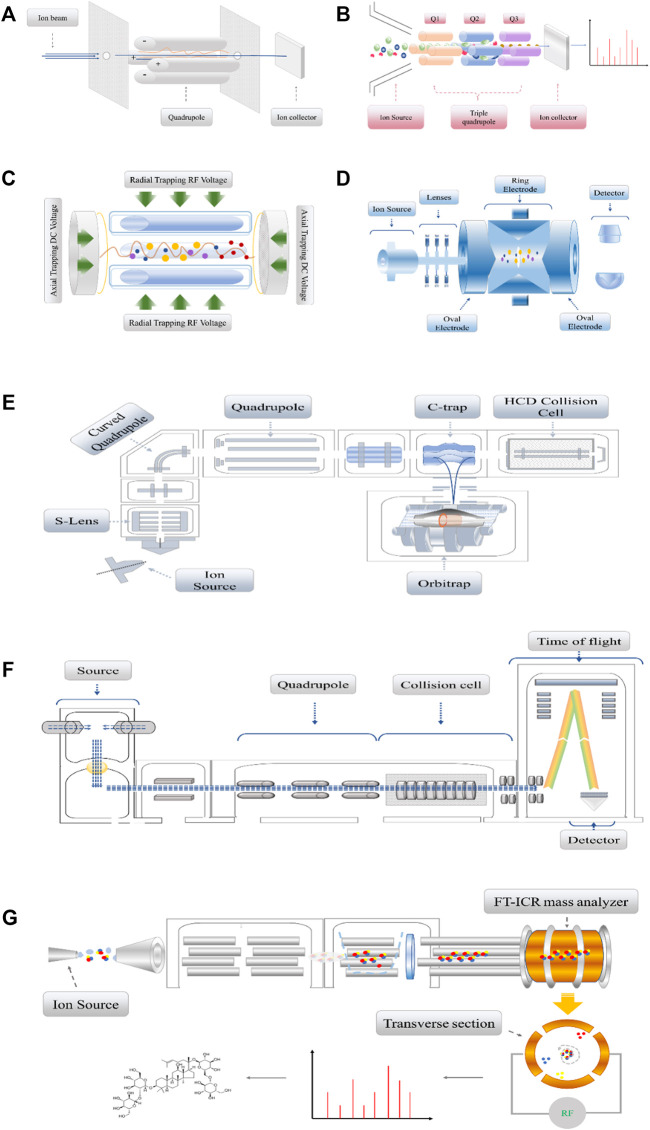
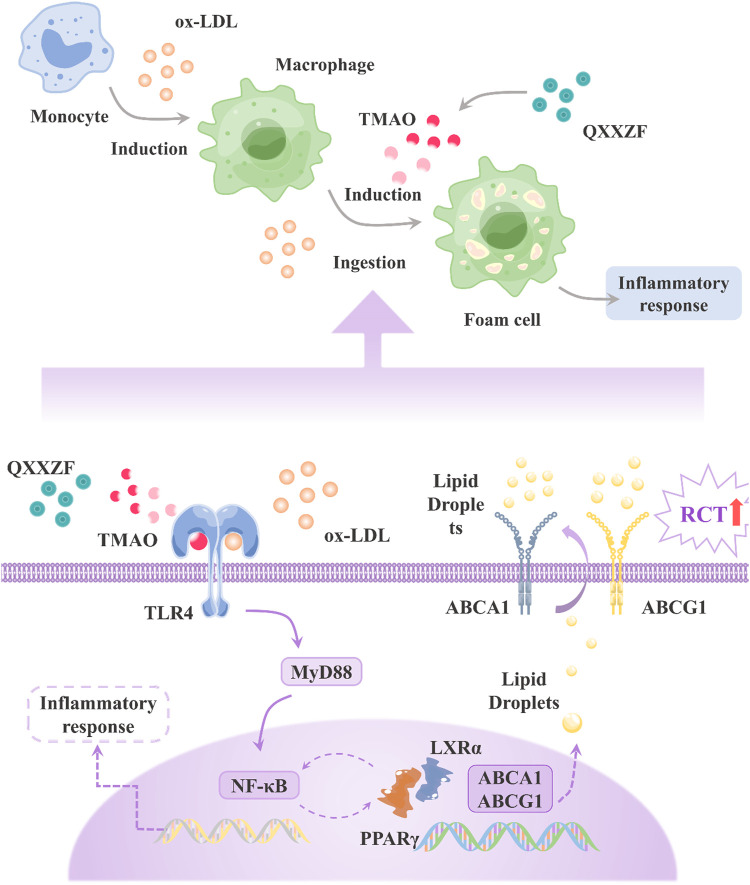
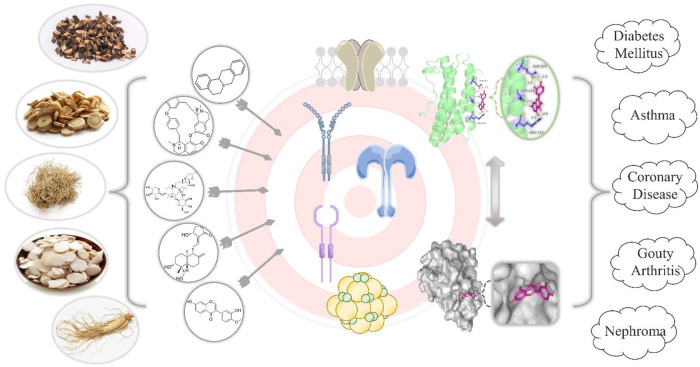
Natural products derived from herbal medicine are a fruitful source of lead compounds because of their structural diversity and potent bioactivities. However, despite the success of active compounds derived from herbal medicine in drug discovery, some approaches cannot effectively elucidate the overall effect and action mechanism due to their multi-component complexity. Fortunately, mass spectrometry-based metabolomics has been recognized as an effective strategy for revealing the effect and discovering active components, detailed molecular mechanisms, and multiple targets of natural products. Rapid identification of lead compounds and isolation of active components from natural products would facilitate new drug development. In this context, mass spectrometry-based metabolomics has established an integrated pharmacology framework for the discovery of bioactivity-correlated constituents, target identification, and the action mechanism of herbal medicine and natural products. High-throughput functional metabolomics techniques could be used to identify natural product structure, biological activity, efficacy mechanisms, and their mode of action on biological processes, assisting bioactive lead discovery, quality control, and accelerating discovery of novel drugs. These techniques are increasingly being developed in the era of big data and use scientific language to clarify the detailed action mechanism of herbal medicine. In this paper, the analytical characteristics and application fields of several commonly used mass spectrometers are introduced, and the application of mass spectrometry in the metabolomics of traditional Chinese medicines in recent years and its active components as well as mechanism of action are also discussed.
源自草药的天然产物因其结构多样性和强大的生物活性,是先导化合物的丰富来源。然而,尽管源自草药的活性化合物在药物发现方面取得了成功,但由于其多组分的复杂性,一些方法无法有效地阐明其整体效果和作用机制。幸运的是,基于质谱的代谢组学已被公认为是一种揭示天然产物的效果、发现活性成分、详细分子机制和多个靶点的有效策略。从天然产物中快速鉴定先导化合物并分离活性成分将有助于新药开发。在此背景下,基于质谱的代谢组学已经建立了一个综合药理学框架,用于发现与生物活性相关的成分、鉴定靶点以及阐明草药和天然产物的作用机制。高通量功能代谢组学技术可用于鉴定天然产物的结构、生物活性、功效机制及其对生物过程的作用方式,辅助生物活性先导物的发现、质量控制以及加速新药的发现。在大数据时代,这些技术正在不断发展,并使用科学语言阐明草药的详细作用机制。本文介绍了几种常用质谱仪的分析特点和应用领域,并讨论了近年来质谱在中药代谢组学及其活性成分以及作用机制方面的应用。