Department of Epidemiology, Johns Hopkins Bloomberg School of Public Health, Baltimore, MD, USA.
Department of Medicine, Greater Baltimore Medical Center, Baltimore, MD, USA.
Vasc Health Risk Manag. 2023 Apr 21;19:237-253. doi: 10.2147/VHRM.S379874. eCollection 2023.
The relationship between cardiovascular health and diet is evolving. Lifestyle modifications including diet changes are the primary approach in managing cardiometabolic risk factors. Thus, understanding different diets and their impact on cardiovascular health is important in guiding primary and secondary prevention of cardiovascular disease (CVD). Yet, there are many barriers and limitations to adopting a heart healthy diet.
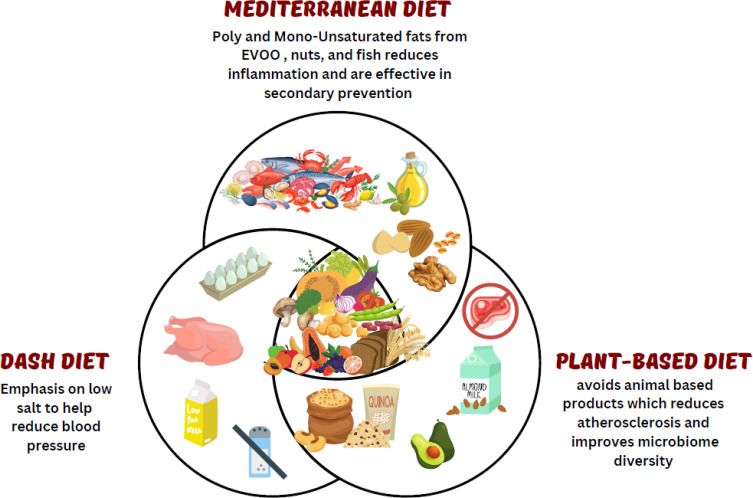
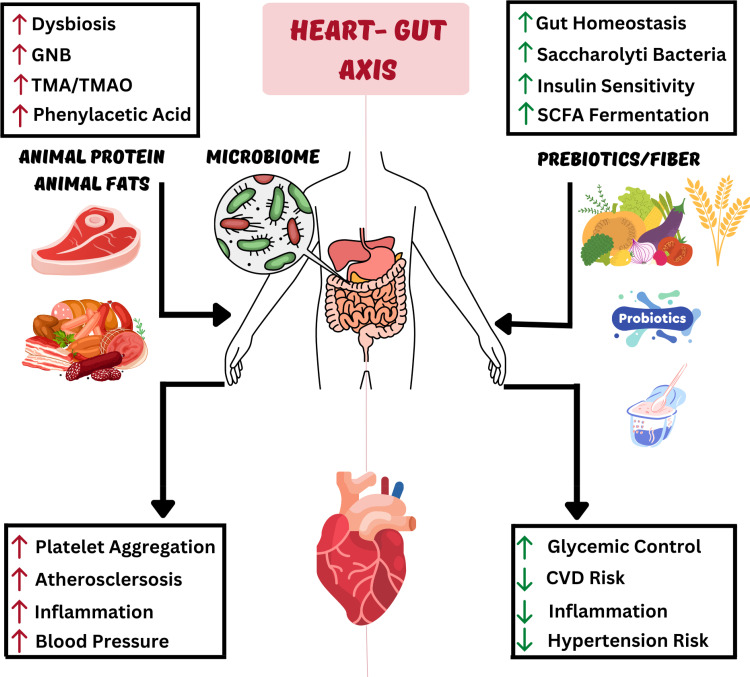
Diets rich in fruits, vegetables, legumes, whole grains, and lean protein sources, with minimization/avoidance of processed foods, trans-fats, and sugar sweetened beverages, are recommended by prevention guidelines. The Mediterranean, DASH, and plant-based diets have all proven cardioprotective in varying degrees and are endorsed by professional healthcare societies, while other emerging diets such as the ketogenic diet and intermittent fasting require more long-term study. The effects of diet on the gut microbiome and on cardiovascular health have opened a new path for precision medicine to improve cardiometabolic risk factors. The effects of certain dietary metabolites, such as trimethylamine N-oxide, on cardiometabolic risk factors, along with the changes in the gut microbiome diversity and gene pathways in relation to CVD management, are being explored.
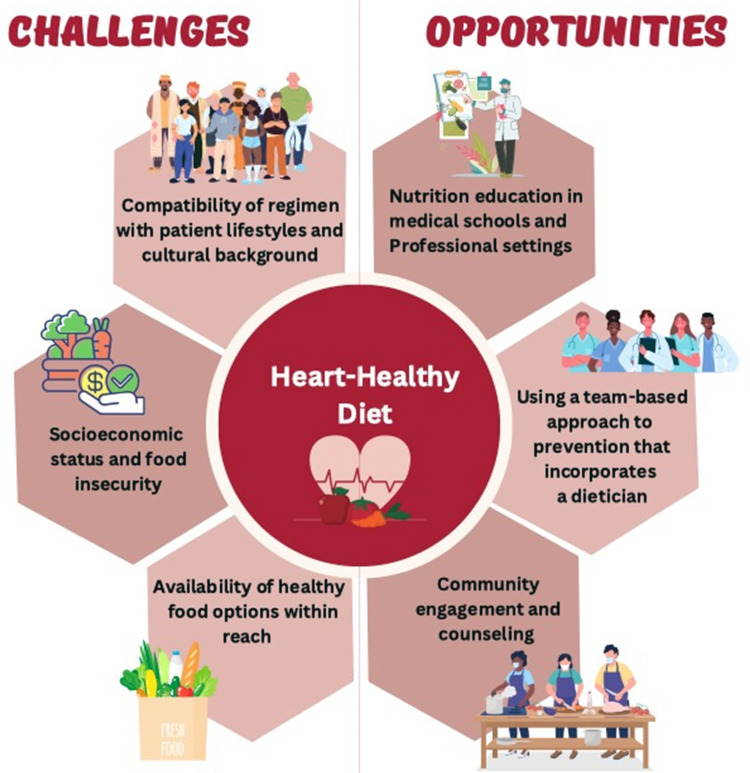
In this review, we provide a comprehensive up-to-date overview on established and emerging diets in cardiovascular health. We discuss the effectiveness of various diets and most importantly the approaches to nutritional counseling where traditional and non-traditional approaches are being practiced, helping patients adopt heart healthy diets. We address the limitations to adopting a heart healthy diet regarding food insecurity, poor access, and socioeconomic burden. Lastly, we discuss the need for a multidisciplinary team-based approach, including the role of a nutrition specialist, in implementing culturally-tailored dietary recommendations. Understanding the limitations and finding ways to overcome the barriers in implementing heart-healthy diets will take us miles in the path to CVD prevention and management.
目的综述:心血管健康与饮食之间的关系正在不断发展。生活方式的改变,包括饮食的改变,是管理心血管代谢危险因素的主要方法。因此,了解不同的饮食及其对心血管健康的影响对于指导心血管疾病(CVD)的一级和二级预防非常重要。然而,采用健康的心脏饮食存在许多障碍和限制。
最新发现:预防指南建议多吃水果、蔬菜、豆类、全谷物和瘦肉蛋白来源的饮食,尽量减少/避免加工食品、反式脂肪和含糖饮料。地中海饮食、DASH 饮食和植物性饮食在不同程度上都具有心脏保护作用,并得到专业医疗保健协会的认可,而其他新兴饮食,如生酮饮食和间歇性禁食,则需要更多的长期研究。饮食对肠道微生物组和心血管健康的影响为精准医学改善心血管代谢危险因素开辟了新途径。某些饮食代谢物,如三甲胺 N-氧化物,对心血管代谢危险因素的影响,以及与 CVD 管理相关的肠道微生物组多样性和基因途径的变化,正在被探索。
总结:在这篇综述中,我们提供了一个关于心血管健康的既定和新兴饮食的全面、最新的概述。我们讨论了各种饮食的有效性,最重要的是讨论了营养咨询的方法,传统和非传统的方法都在实践中,帮助患者采用健康的心脏饮食。我们解决了采用健康心脏饮食的障碍,包括食物不安全、获取途径有限和社会经济负担。最后,我们讨论了需要采用多学科团队的方法,包括营养专家的作用,以实施文化上量身定制的饮食建议。了解实施健康心脏饮食的局限性并找到克服障碍的方法,将使我们在预防和管理 CVD 的道路上更进一步。