Hopwood Malcolm
Albert Road Clinic and Department of Psychiatry, University of Melbourne, 31-34 Albert Road, Melbourne, VIC 3004, Australia.
Neurol Ther. 2023 Apr;12(Suppl 1):5-12. doi: 10.1007/s40120-023-00469-6. Epub 2023 Apr 28.
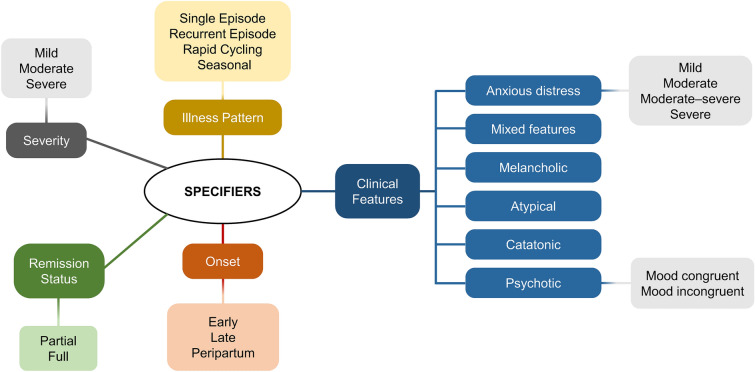
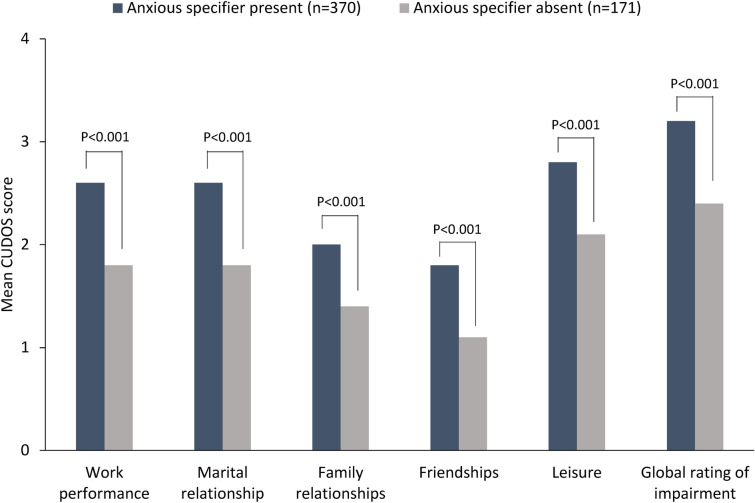
The prevalence of major depressive disorder (MDD) has been increasing, and MDD is now a leading cause of global disability. Depression often coexists with anxiety, and the 5th edition of the Diagnostic and Statistical Manual of Mental Disorders (DSM-5) introduced the 'anxious distress' specifier to identify those patients within the MDD category who have anxiety as well. The prevalence of anxious depression is high, with studies suggesting that 50-75% of patients with MDD meet the DSM-5 criteria for anxious depression. However, it can be difficult to discern whether a patient has MDD with anxiety or an anxiety disorder that has triggered an episode of depression. In fact, approximately 60-70% of patients with comorbid anxiety and depression experience anxiety first, but it is often depression that leads the patient to seek treatment. Patients with MDD who also have anxiety have significantly worse psychosocial functioning and poorer quality of life compared with patients with MDD without anxiety. In addition, patients with MDD and anxiety take significantly longer to achieve remission, and are less likely to achieve remission, than patients with MDD without anxiety. Therefore, it is essential that physicians have a high index of suspicion for comorbid anxiety in patients with depression, and that anxiety symptoms in patients with MDD are effectively treated. This commentary is based on a virtual symposium presented at the 33rd International College of Neuropsychopharmacology (CINP) World Congress, Taipei, Taiwan, in June 2022.
重度抑郁症(MDD)的患病率一直在上升,目前已成为全球致残的主要原因。抑郁症常与焦虑症共存,《精神疾病诊断与统计手册》第5版(DSM-5)引入了“焦虑痛苦”说明符,以识别MDD类别中同时患有焦虑症的患者。焦虑性抑郁症的患病率很高,研究表明,50%-75%的MDD患者符合DSM-5中焦虑性抑郁症的标准。然而,很难辨别患者是患有伴有焦虑症的MDD还是由焦虑症引发了一次抑郁发作。事实上,约60%-70%的合并焦虑症和抑郁症的患者首先出现焦虑,但往往是抑郁症导致患者寻求治疗。与无焦虑症的MDD患者相比,伴有焦虑症的MDD患者的心理社会功能明显更差,生活质量更低。此外,与无焦虑症的MDD患者相比,患有MDD和焦虑症的患者实现缓解所需的时间显著更长,且缓解的可能性更小。因此,医生必须对抑郁症患者的合并焦虑症保持高度怀疑,并有效治疗MDD患者的焦虑症状。本评论基于2022年6月在台湾台北举行的第33届国际神经精神药理学院(CINP)世界大会上举办的一次虚拟研讨会。