Department of Oncology, The First Affiliated Hospital of Zhengzhou University, Zhengzhou, People's Republic of China.
Cancer Med. 2023 Jun;12(12):13111-13122. doi: 10.1002/cam4.5994. Epub 2023 May 3.
Gastric cardia adenocarcinoma (GCA) is a highly fatal form of cancer in humans. The aim of this study was to extract clinicopathological data of postoperative patients with GCA from the Surveillance, Epidemiology, and End Results database, analyze prognostic risk factors, and build a nomogram.
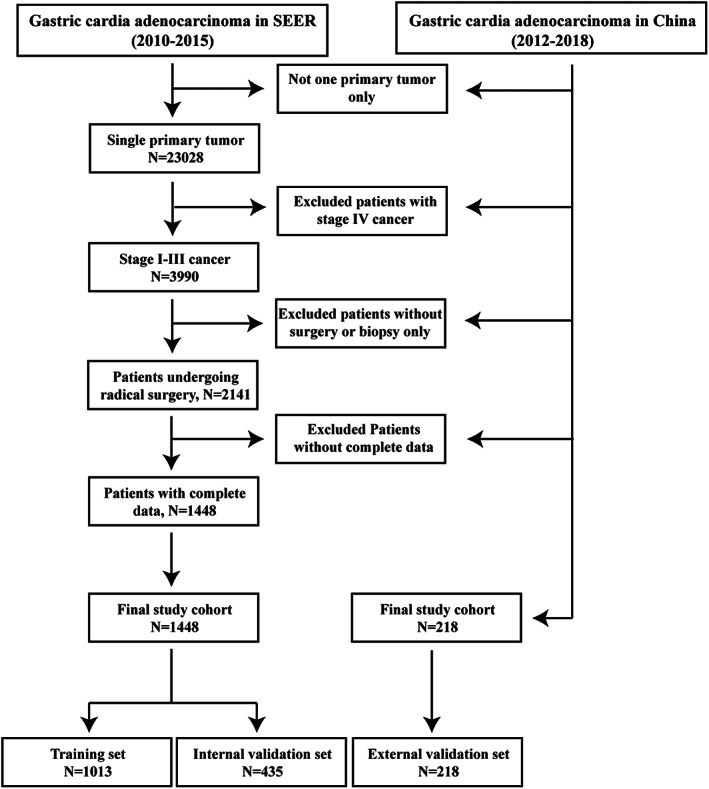
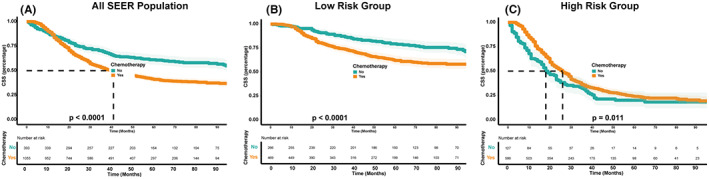
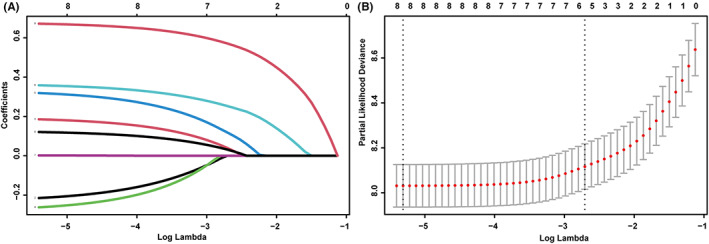
In this study, the clinical information of 1448 patients with GCA who underwent radical surgery and were diagnosed between 2010 and 2015 was extracted from the SEER database. The patients were then randomly divided into training (n = 1013) and internal validation (n = 435) cohorts at a 7:3 ratio. The study also included an external validation cohort (n = 218) from a Chinese hospital. The study used the Cox and LASSO models to pinpoint the independent risk factors linked to GCA. The prognostic model was constructed according to the results of the multivariate regression analysis. To assess the predictive accuracy of the nomogram, four methods were used: C-index, calibration curve, time-dependent ROC curve, and DCA curve. Kaplan-Meier survival curves were also generated to illustrate the differences in cancer-specific survival (CSS) between the groups.
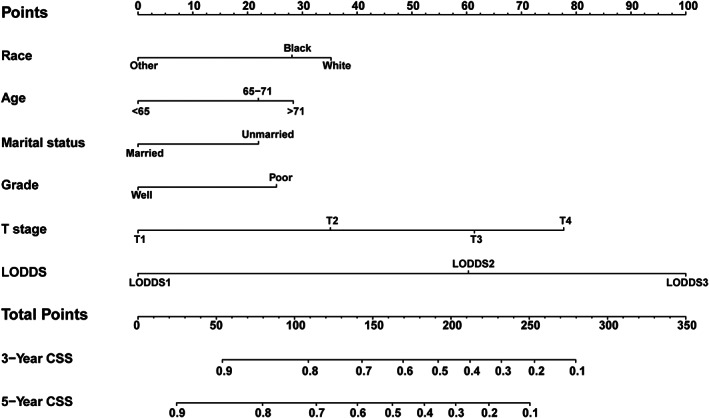
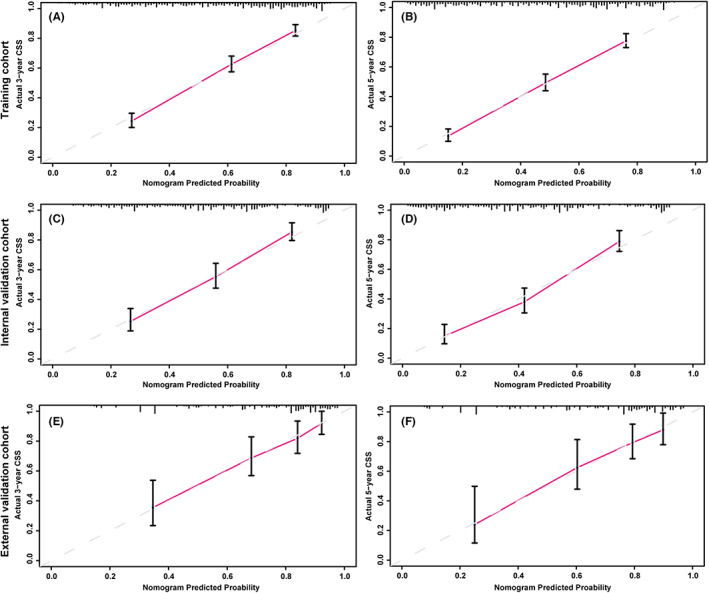
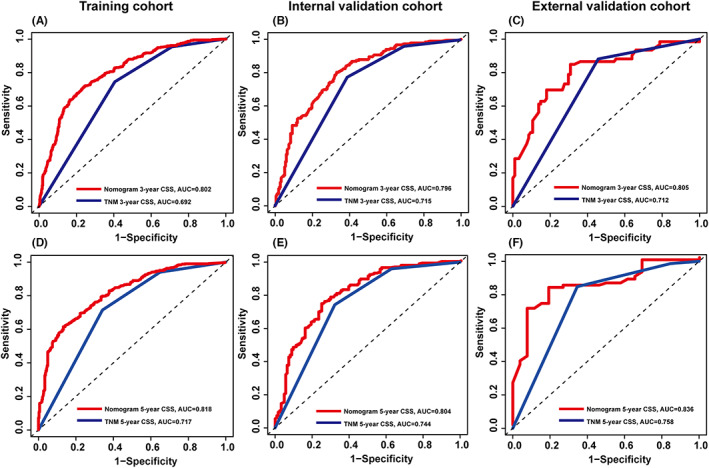
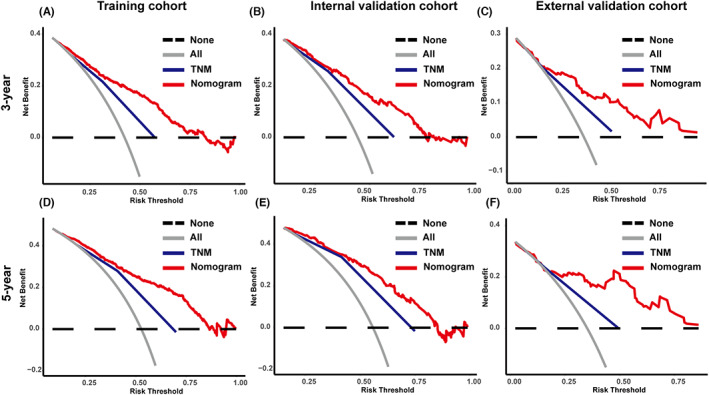
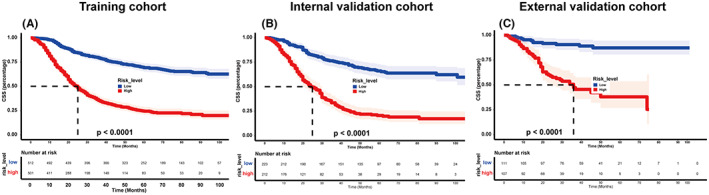
The results of the multivariate Cox regression analysis showed that age, grade, race, marital status, T stage, and log odds of positive lymph nodes (LODDS) were independently associated with cancer-specific survival in the training cohort. Both the C-index and AUC values depicted in the nomogram were greater than 0.71. The calibration curve revealed that the nomogram's CSS prediction was consistent with the actual outcomes. The decision curve analysis suggested moderately positive net benefits. Based on the nomogram risk score, significant differences in survival between the high- and low-risk groups were observed.
Race, age, marital status, differentiation grade, T stage, and LODDS are independent predictors of CSS in patients with GCA after radical surgery. Our predictive nomogram constructed based on these variables demonstrated good predictive ability.
胃贲门腺癌(Gastric cardia adenocarcinoma,GCA)是一种在人类中具有高度致命性的癌症形式。本研究的目的是从监测、流行病学和最终结果(Surveillance, Epidemiology, and End Results,SEER)数据库中提取接受根治性手术的 GCA 术后患者的临床病理数据,分析预后危险因素,并构建列线图。
本研究从 SEER 数据库中提取了 2010 年至 2015 年间接受根治性手术且诊断为 GCA 的 1448 例患者的临床信息。随后,将患者以 7:3 的比例随机分为训练集(n=1013)和内部验证集(n=435)。本研究还纳入了来自中国医院的外部验证队列(n=218)。本研究使用 Cox 和 LASSO 模型来确定与 GCA 相关的独立危险因素。根据多变量回归分析的结果构建预后模型。为了评估列线图的预测准确性,使用了 C 指数、校准曲线、时间依赖性 ROC 曲线和 DCA 曲线四种方法。Kaplan-Meier 生存曲线用于说明各组间癌症特异性生存(cancer-specific survival,CSS)的差异。
多变量 Cox 回归分析结果显示,年龄、分级、种族、婚姻状况、T 分期和阳性淋巴结对数优势比(log odds of positive lymph nodes,LODDS)是训练集中与癌症特异性生存相关的独立因素。列线图的 C 指数和 AUC 值均大于 0.71。校准曲线显示,列线图的 CSS 预测与实际结果一致。决策曲线分析表明具有适度的净获益。根据列线图风险评分,高低风险组之间的生存差异具有统计学意义。
种族、年龄、婚姻状况、分化程度、T 分期和 LODDS 是 GCA 患者根治性手术后 CSS 的独立预测因素。基于这些变量构建的预测列线图具有良好的预测能力。