Silang Katherine, Tomfohr-Madsen Lianne, Maxey Connor, Pastuck Melanie, Johnson Jo-Ann
Department of Psychology, University of Calgary, Calgary, Canada (Ms Silang).
Alberta Children's Hospital Research Institute, Calgary, Canada (Ms Silang).
AJOG Glob Rep. 2023 Apr 5;3(2):100205. doi: 10.1016/j.xagr.2023.100205. eCollection 2023 May.
Preeclampsia affects between 2% and 5% of pregnant people in North America. First-trimester preeclampsia screening based on the Fetal Medicine Foundation risk calculation algorithm combined with treatment of high-risk patients with aspirin effectively reduces the incidence of preterm preeclampsia more than the currently used risk factor-based screening. However, the impact of such screening on patient satisfaction and maternal anxiety is unknown.
This study aimed to assess the impact of first-trimester prediction and prevention of preterm preeclampsia on patient satisfaction and anxiety.
Consenting pregnant patients participating in a local first-trimester (11-13+6 weeks) preterm preeclampsia screening and prevention implementation study were contacted 6 weeks postpartum to complete an online patient satisfaction survey, designed to assess their satisfaction with the screening program and their levels of trait anxiety (using an abbreviated version of the State-Trait Anxiety Inventory [STAIT-5]). In addition to assessing overall patient satisfaction, the level of patient satisfaction was stratified and compared according to levels of patient risk for preterm preeclampsia.
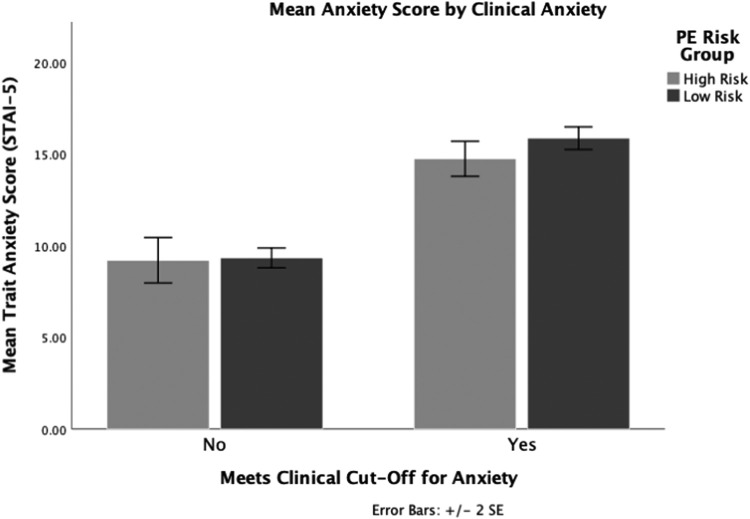
Between June 2021 and December 2021, surveys were emailed to 765 participants. The response rate was 47.80% (358/765). Overall, 93% of participants reported high levels of satisfaction with preterm preeclampsia screening (70%-100%), and 98% stated that they would recommend the screening to all pregnant patients. With respect to levels of satisfaction with the program's support in reducing feelings of worry and anxiety, 87.9% of the total sample reported high satisfaction (70%-100%). The level of clinically significant symptoms of anxiety did not differ significantly between low- and high-risk groups (8% vs 10.8%, respectively).
Overall, first-trimester preeclampsia screening was associated with high patient satisfaction and did not lead to differences in patient anxiety between those with high- and low-risk screen results.
子痫前期在北美影响2%至5%的孕妇。基于胎儿医学基金会风险计算算法的孕早期子痫前期筛查,结合使用阿司匹林治疗高危患者,比目前基于风险因素的筛查更有效地降低了早产子痫前期的发生率。然而,这种筛查对患者满意度和产妇焦虑的影响尚不清楚。
本研究旨在评估孕早期预测和预防早产子痫前期对患者满意度和焦虑的影响。
参与当地孕早期(11 - 13⁺⁶周)早产子痫前期筛查和预防实施研究的同意参与的孕妇,在产后6周被联系以完成一项在线患者满意度调查,该调查旨在评估她们对筛查项目的满意度以及她们的特质焦虑水平(使用状态 - 特质焦虑量表简版[STAIT - 5])。除了评估总体患者满意度外,还根据早产子痫前期患者风险水平对患者满意度水平进行分层和比较。
在2021年6月至2021年12月期间,向765名参与者发送了调查问卷。回复率为47.80%(358/765)。总体而言,93%的参与者报告对早产子痫前期筛查高度满意(70% - 100%),98%的人表示会向所有孕妇推荐该筛查。关于对该项目在减轻担忧和焦虑情绪方面的支持满意度,总样本中的87.9%报告高度满意(70% - 100%)。低风险组和高风险组之间临床上显著的焦虑症状水平没有显著差异(分别为8%和10.8%)。
总体而言,孕早期子痫前期筛查与高患者满意度相关,并且在筛查结果高风险和低风险的患者之间,并未导致患者焦虑出现差异。