Li Hai-Jun, Li Dan-Qing, Zhang Yu-Liang, Ding Xiao-Fei, Gao Hai-Tao, Zhu Ya, Liu Jun, Zhang Li-Xia, Chen Jie, Chen Guang, Yu Ying
Department of Neurology, Taizhou Second People's Hospital, Taizhou University, Taizhou, Zhejiang, China.
Department of Pharmacology, School of Medicine, Taizhou University, Taizhou, Zhejiang, China.
Front Pharmacol. 2023 May 9;14:1123387. doi: 10.3389/fphar.2023.1123387. eCollection 2023.
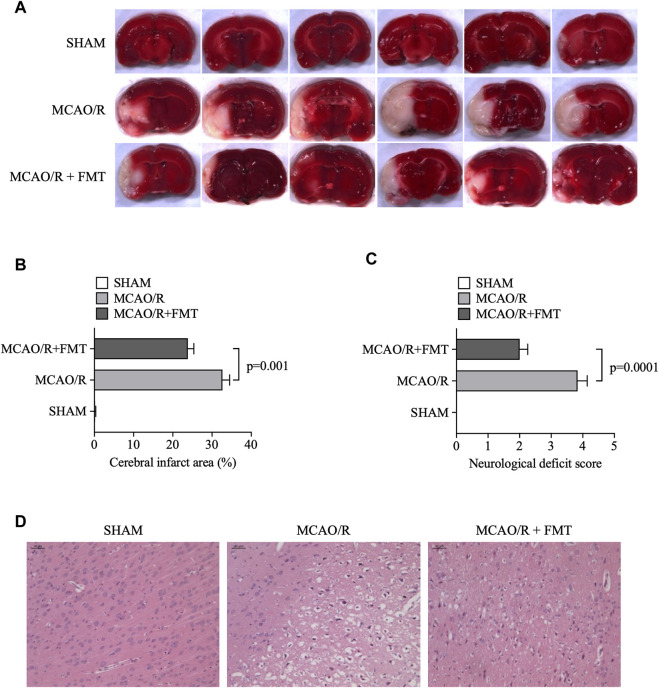
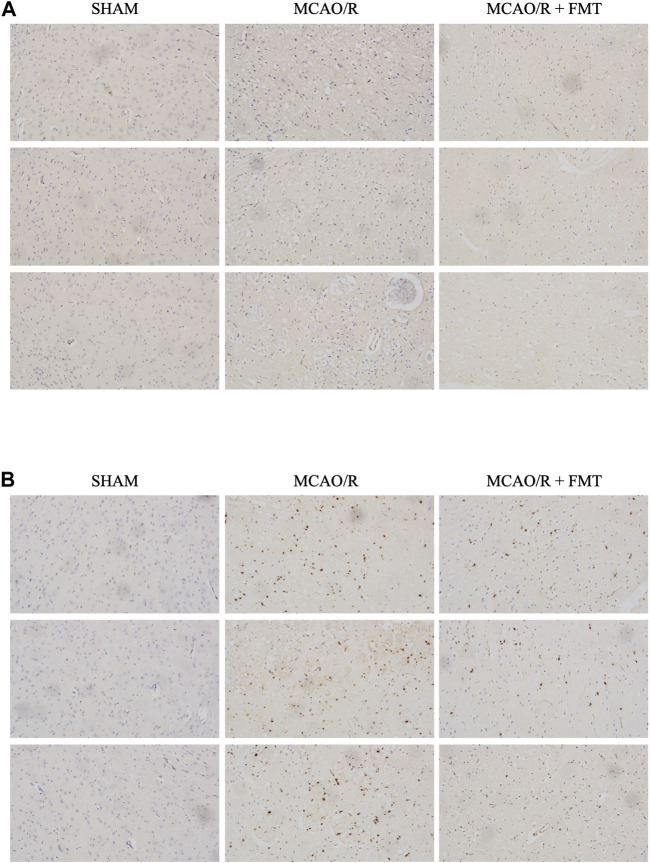
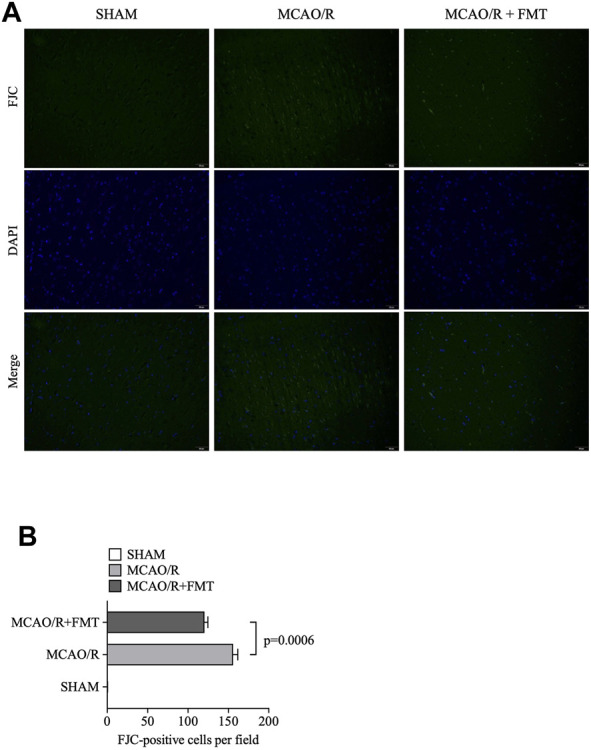
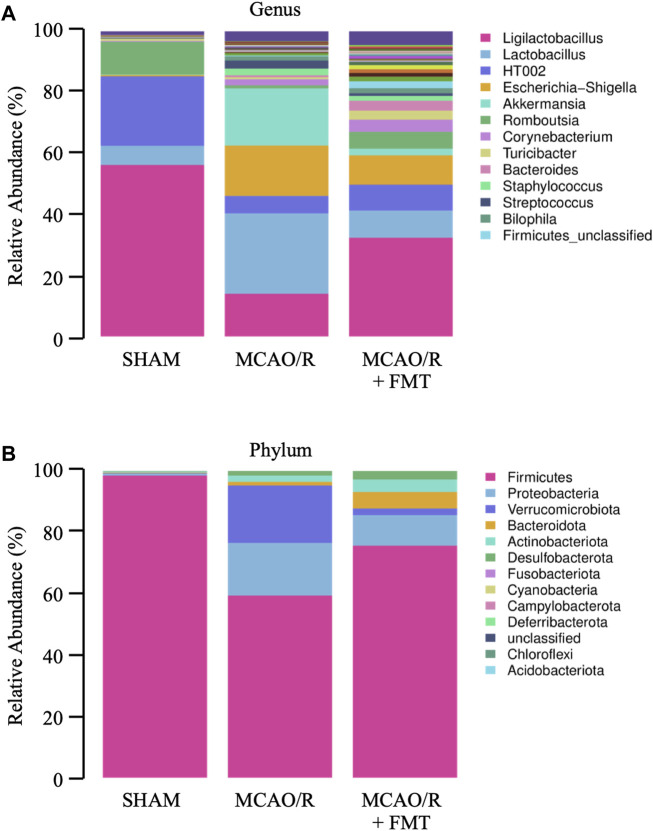
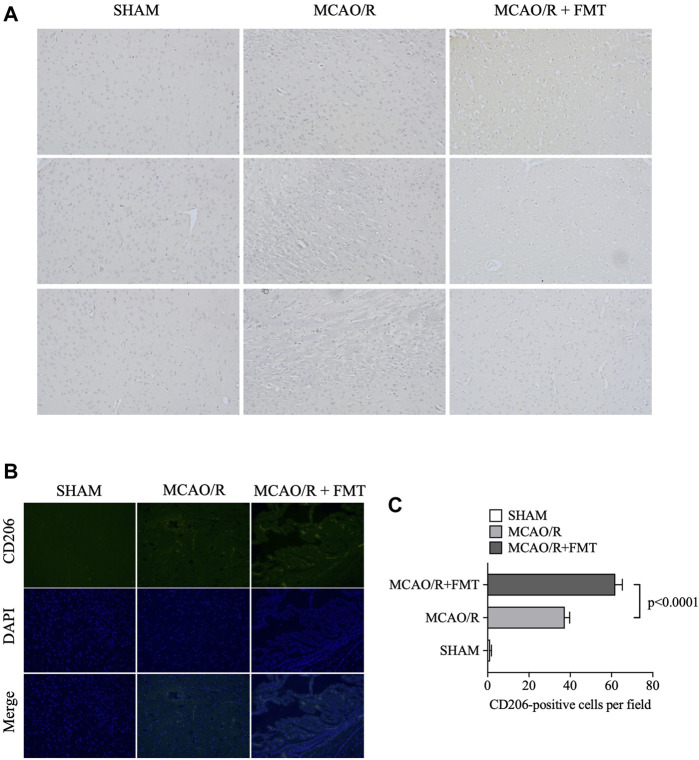
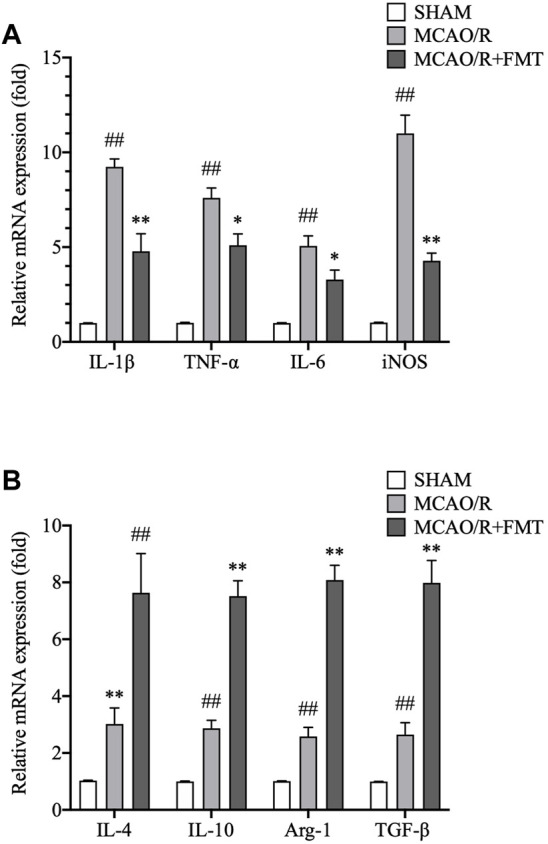
Gut microbiota affects the gut-brain axis; hence, the modulation of the microbiota has been proposed as a potential therapeutic strategy for cerebral ischemia/reperfusion injury (CIRI). However, the role and mechanism of the gut microbiota in regulating microglial polarization during CIRI remain poorly understood. Herein, using a middle cerebral artery occlusion and reperfusion (MCAO/R) rat model, we evaluated changes in the gut microbiota after CIRI and the potential effects of fecal microbiota transplant (FMT) on the brain. Rats underwent either MCAO/R or sham surgery, and then they received FMT (started 3 days later; continued for 10 days). 2,3,5-Triphenyltetrazolium chloride staining, neurological outcome scale, and Fluoro-Jade C staining showed that MCAO/R induced cerebral infarction, neurological deficits, and neuronal degeneration. In addition, immunohistochemistry or real-time PCR assay showed increased expression levels of M1-macrophage markers-TNF-α, IL-1β, IL-6, and iNOS-in the rats following MCAO/R. Our finding suggests that microglial M1 polarization is involved in CIRI. 16 S ribosomal RNA gene sequencing data revealed an imbalance in the gut microbiota of MCAO/R animals. In contrast, FMT reversed this MCAO/R-induced imbalance in the gut microbiota and ameliorated nerve injury. In addition, FMT prevented the upregulation in the ERK and NF-κB pathways, which reversed the M2-to-M1 microglial shift 10 days after MCAO/R injury in rats. Our primary data showed that the modulation of the gut microbiota can attenuate CIRI in rats by inhibiting microglial M1 polarization through the ERK and NF-κB pathways. However, an understanding of the underlying mechanism requires further study.
肠道微生物群影响肠-脑轴;因此,调节微生物群已被提出作为治疗脑缺血/再灌注损伤(CIRI)的一种潜在策略。然而,肠道微生物群在CIRI期间调节小胶质细胞极化中的作用和机制仍知之甚少。在此,我们使用大脑中动脉闭塞和再灌注(MCAO/R)大鼠模型,评估了CIRI后肠道微生物群的变化以及粪便微生物群移植(FMT)对大脑的潜在影响。大鼠接受MCAO/R或假手术,然后接受FMT(3天后开始;持续10天)。2,3,5-氯化三苯基四氮唑染色、神经功能评分和氟玉髓C染色显示,MCAO/R诱导了脑梗死、神经功能缺损和神经元变性。此外,免疫组织化学或实时PCR检测显示,MCAO/R后大鼠中M1巨噬细胞标志物——肿瘤坏死因子-α、白细胞介素-1β、白细胞介素-6和诱导型一氧化氮合酶的表达水平升高。我们的研究结果表明,小胶质细胞M1极化参与了CIRI。16S核糖体RNA基因测序数据显示,MCAO/R动物的肠道微生物群失衡。相比之下,FMT逆转了MCAO/R诱导的肠道微生物群失衡,并改善了神经损伤。此外,FMT阻止了ERK和NF-κB通路的上调,这逆转了MCAO/R损伤10天后大鼠小胶质细胞从M2向M1的转变。我们的初步数据表明,调节肠道微生物群可以通过ERK和NF-κB通路抑制小胶质细胞M1极化,从而减轻大鼠的CIRI。然而,对潜在机制的理解还需要进一步研究。