Luca Andreea, Nacu Isabella, Tanasache Sabina, Peptu Cătălina Anişoara, Butnaru Maria, Verestiuc Liliana
Department of Biomedical Sciences, Faculty of Medical Bioengineering, "Grigore T. Popa" University of Medicine and Pharmacy, 700115 Iasi, Romania.
"Petru Poni" Institute of Macromolecular Chemistry, 700487 Iasi, Romania.
Gels. 2023 May 1;9(5):371. doi: 10.3390/gels9050371.
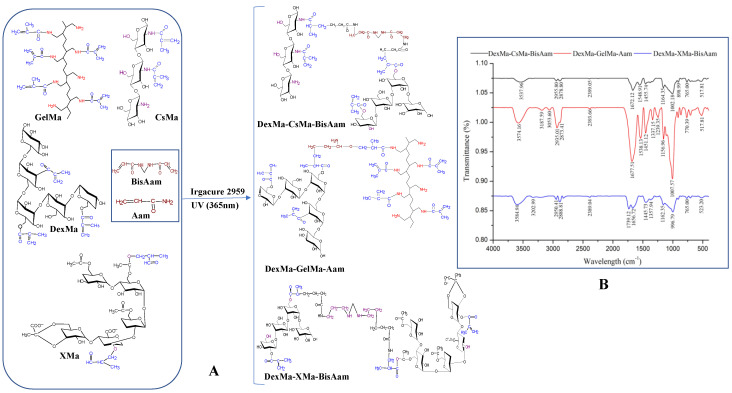
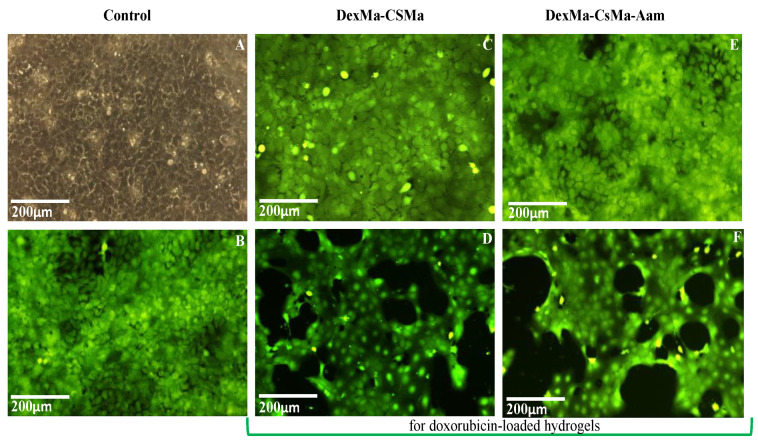
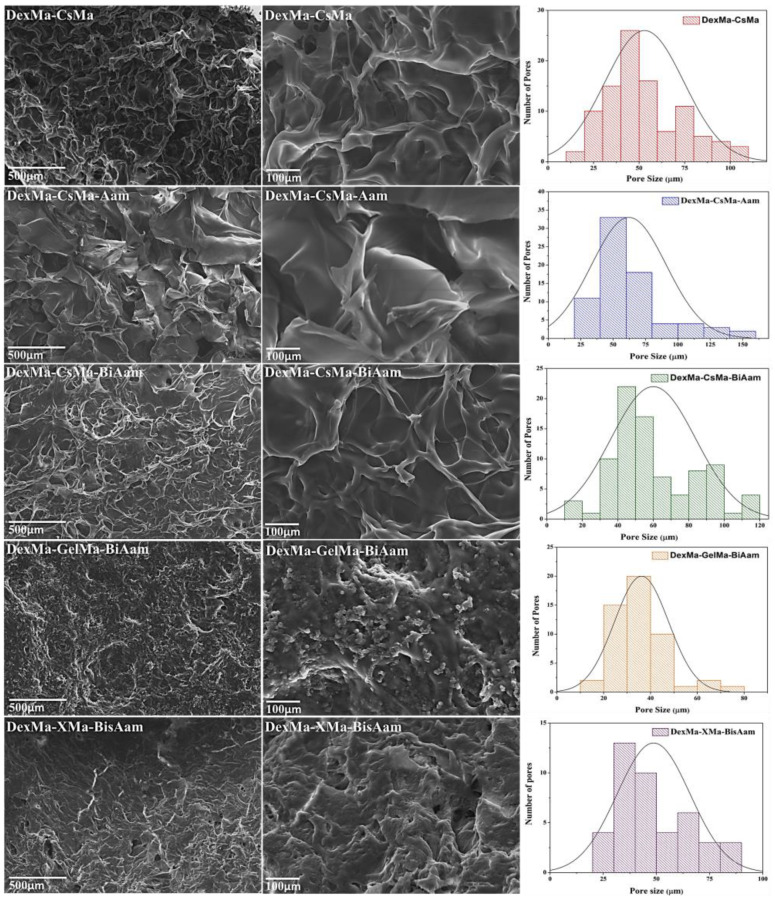
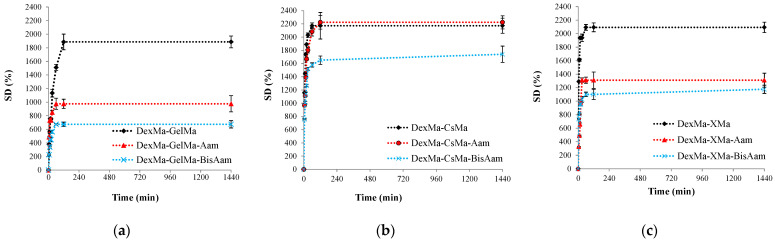
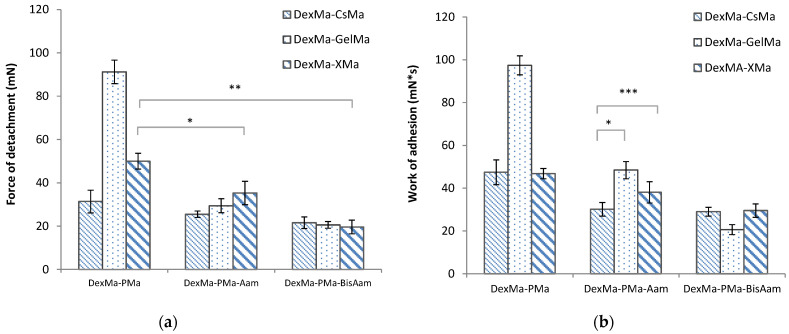
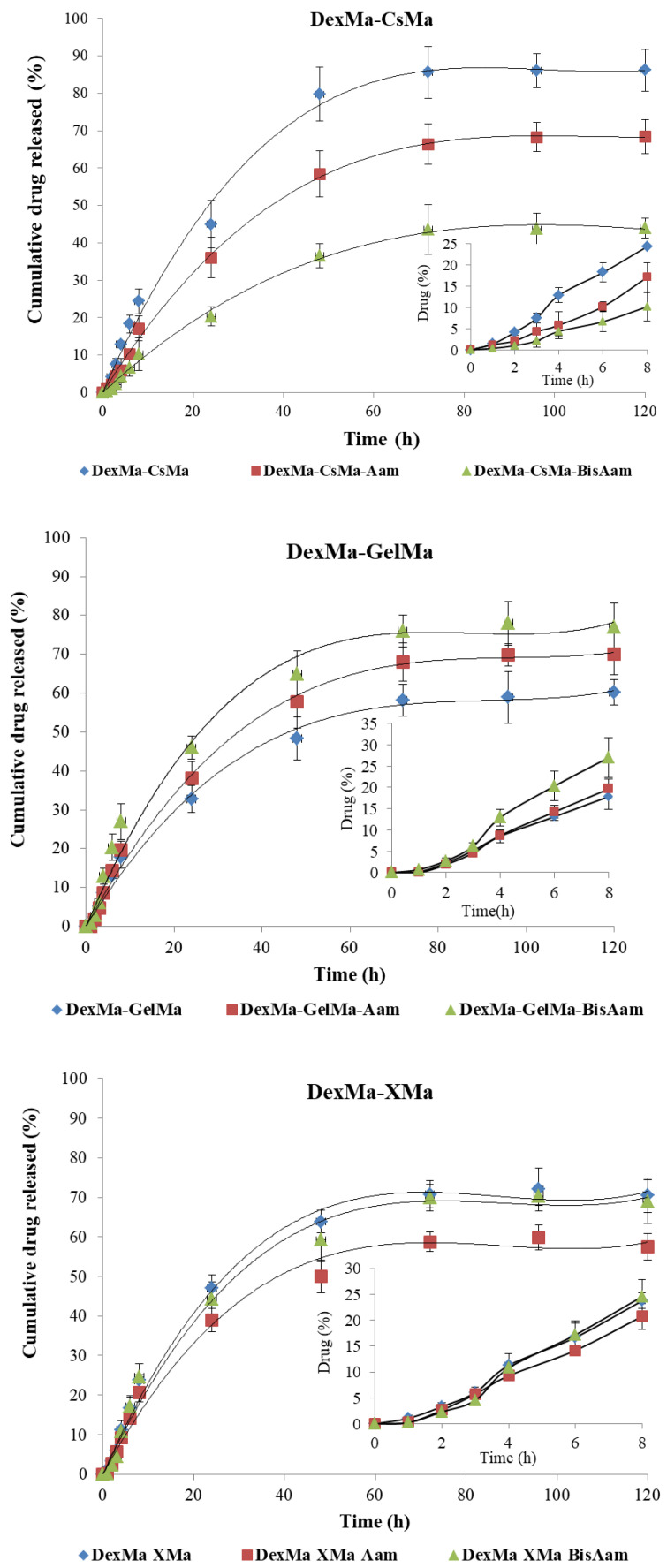
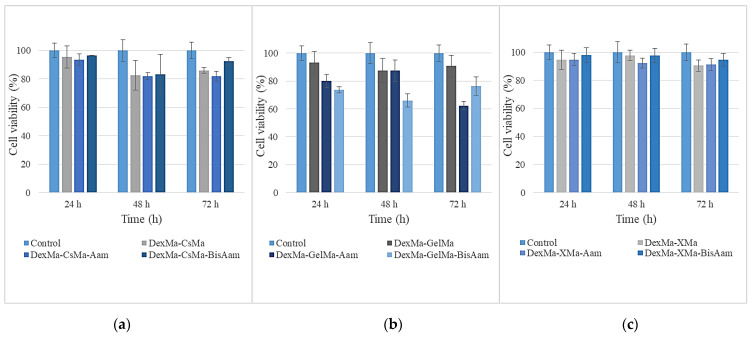
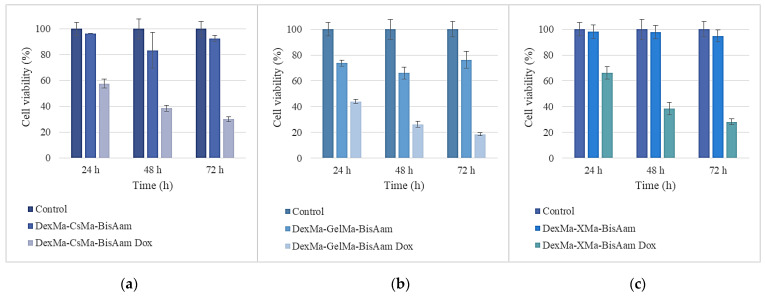
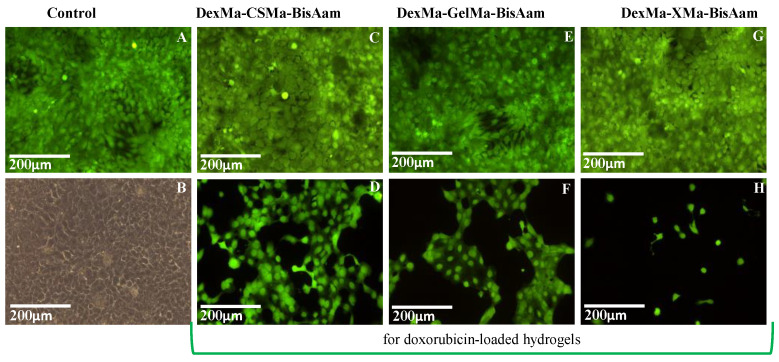
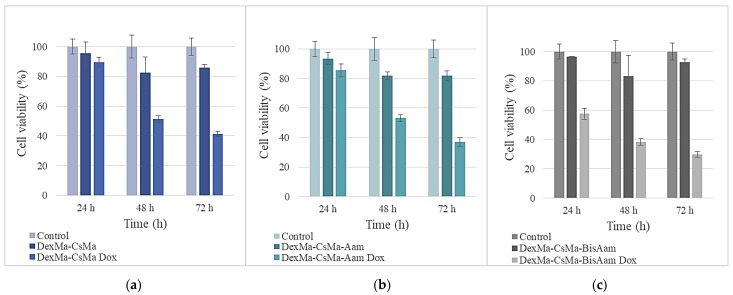
The aim of the present work was to obtain drug-loaded hydrogels based on combinations of dextran, chitosan/gelatin/xanthan, and poly (acrylamide) as a sustained and controlled release vehicle of Doxorubicin, a drug used in skin cancer therapy that is associated with severe side effects. Hydrogels for use as 3D hydrophilic networks with good manipulation characteristics were produced using methacrylated biopolymer derivatives and the methacrylate group's polymerization with synthetic monomers in the presence of a photo-initiator, under UV light stimulation (365 nm). Transformed infrared spectroscopy analysis (FT-IR) confirmed the hydrogels' network structure (natural-synthetic composition and photocrosslinking), while scanning electron microscopy (SEM) analysis confirmed the microporous morphology. The hydrogels are swellable in simulated biological fluids and the material's morphology regulates the swelling properties: the maximum swelling degree was obtained for dextran-chitosan-based hydrogels because of their higher porosity and pore distribution. The hydrogels are bioadhesive on a biological simulating membrane, and values for the force of detachment and work of adhesion are recommended for applications on skin tissue. The Doxorubicin was loaded into the hydrogels and the drug was released by diffusion for all the resulting hydrogels, with small contributions from the hydrogel networks' relaxation. Doxorubicin-loaded hydrogels are efficient on keratinocytes tumor cells, the sustained released drug interrupting the cells' division and inducing cell apoptosis; we recommend the obtained materials for the topical treatment of cutaneous squamous cell carcinoma.
本研究的目的是制备基于葡聚糖、壳聚糖/明胶/黄原胶和聚丙烯酰胺组合的载药水凝胶,作为多柔比星的缓释和控释载体。多柔比星是一种用于皮肤癌治疗的药物,但会产生严重的副作用。使用甲基丙烯酸化生物聚合物衍生物以及在光引发剂存在下,在紫外线(365nm)刺激下甲基丙烯酸酯基团与合成单体的聚合反应,制备了具有良好操作特性的用作三维亲水网络的水凝胶。傅里叶变换红外光谱分析(FT-IR)证实了水凝胶的网络结构(天然-合成组成和光交联),而扫描电子显微镜(SEM)分析证实了微孔形态。水凝胶在模拟生物流体中可溶胀,材料的形态调节溶胀特性:基于葡聚糖-壳聚糖的水凝胶由于其较高的孔隙率和孔隙分布而获得最大溶胀度。水凝胶在生物模拟膜上具有生物粘附性,推荐了用于皮肤组织的脱离力和粘附功的值。将多柔比星负载到水凝胶中,所有所得水凝胶中的药物均通过扩散释放,水凝胶网络松弛的贡献较小。载有多柔比星的水凝胶对角质形成细胞肿瘤细胞有效,持续释放的药物会中断细胞分裂并诱导细胞凋亡;我们推荐所获得的材料用于皮肤鳞状细胞癌的局部治疗。