Stanford University, Stanford, USA.
Center for Mechanisms of Evolution, Arizona State University, Tempe, USA.
J Mol Evol. 2023 Jun;91(3):293-310. doi: 10.1007/s00239-023-10114-3. Epub 2023 May 27.
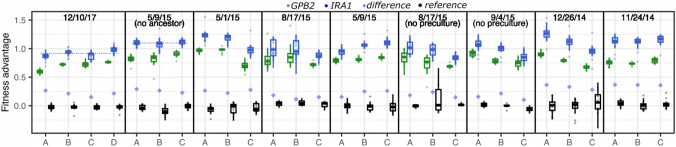
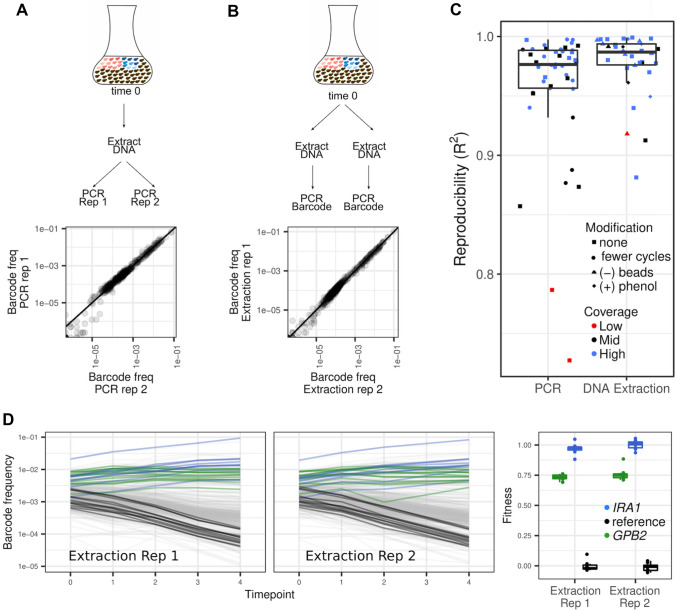
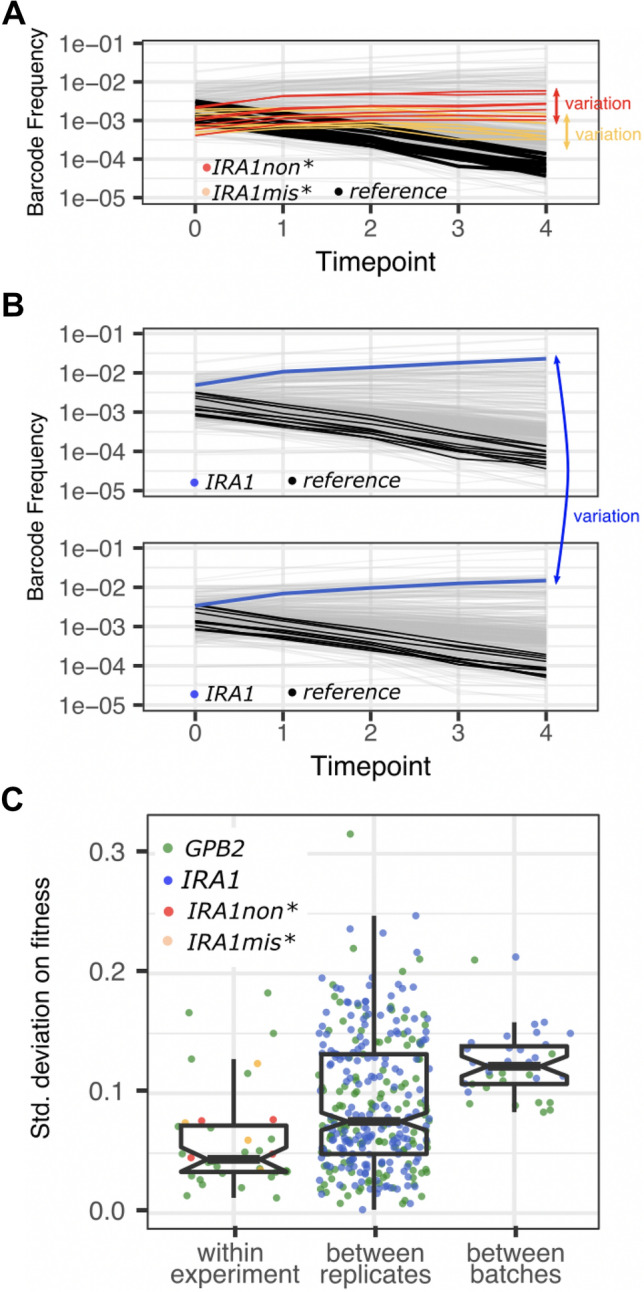
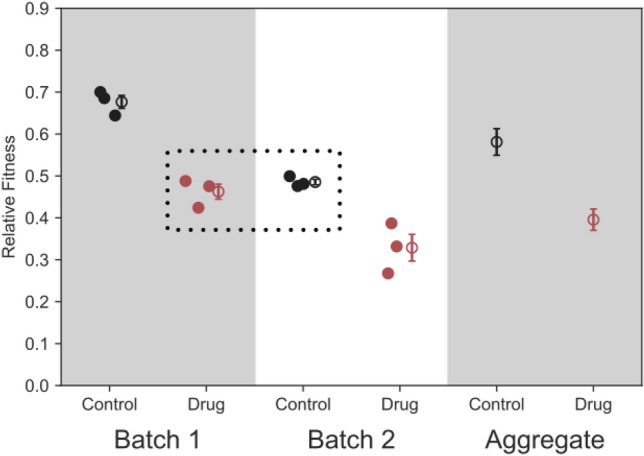
The phrase "survival of the fittest" has become an iconic descriptor of how natural selection works. And yet, precisely measuring fitness, even for single-celled microbial populations growing in controlled laboratory conditions, remains a challenge. While numerous methods exist to perform these measurements, including recently developed methods utilizing DNA barcodes, all methods are limited in their precision to differentiate strains with small fitness differences. In this study, we rule out some major sources of imprecision, but still find that fitness measurements vary substantially from replicate to replicate. Our data suggest that very subtle and difficult to avoid environmental differences between replicates create systematic variation across fitness measurements. We conclude by discussing how fitness measurements should be interpreted given their extreme environment dependence. This work was inspired by the scientific community who followed us and gave us tips as we live tweeted a high-replicate fitness measurement experiment at #1BigBatch.
“适者生存”这一短语已经成为自然选择作用的标志性描述。然而,即使是在受控的实验室条件下生长的单细胞微生物种群,精确测量适应性仍然是一个挑战。虽然有许多方法可以进行这些测量,包括最近开发的利用 DNA 条码的方法,但所有方法在区分适应性差异较小的菌株时都受到精度的限制。在这项研究中,我们排除了一些主要的不精确来源,但仍然发现适应性测量值在重复之间有很大的差异。我们的数据表明,重复之间非常细微且难以避免的环境差异会在适应性测量值中产生系统变化。最后,我们讨论了在考虑到适应性测量值对极端环境的强烈依赖性的情况下,应该如何解释这些测量值。这项工作的灵感来自于我们在#1BigBatch 上实时发布高重复适应性测量实验时跟随我们并给我们提供建议的科学界人士。