Mutua Florence, Kiarie Gideon, Mbatha Miriam, Onono Joshua, Boqvist Sofia, Kilonzi Emily, Mugisha Lawrence, Moodley Arshnee, Sternberg-Lewerin Susanna
International Livestock Research Institute, Animal and Human Health Program, P.O. Box 30709, Nairobi 00100, Kenya.
Department of Public Health, Pharmacology and Toxicology, Faculty of Veterinary Medicine, University of Nairobi, P.O. Box 30197, Nairobi 00100, Kenya.
Antibiotics (Basel). 2023 May 13;12(5):905. doi: 10.3390/antibiotics12050905.
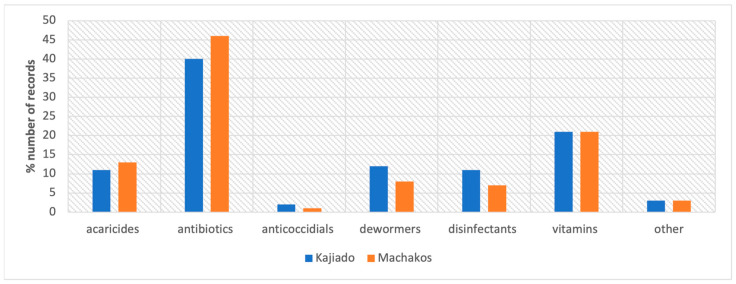
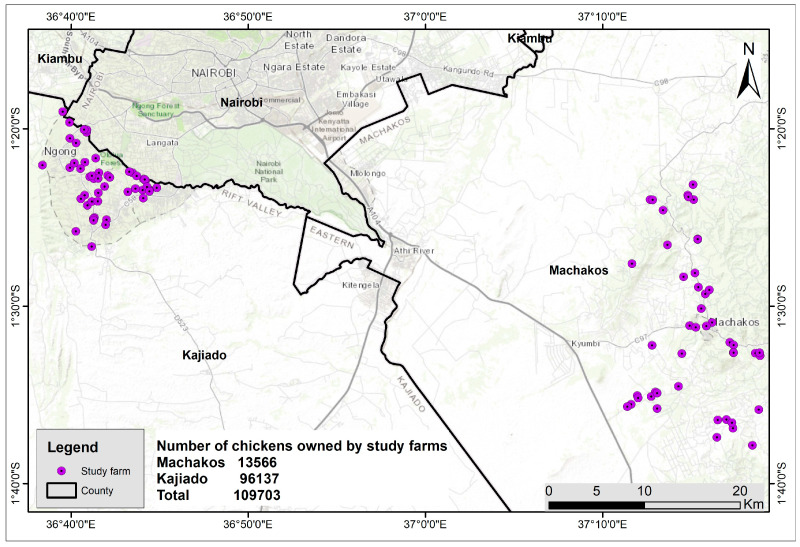
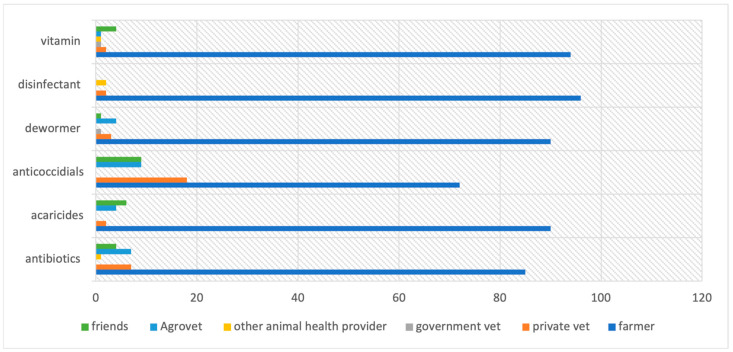
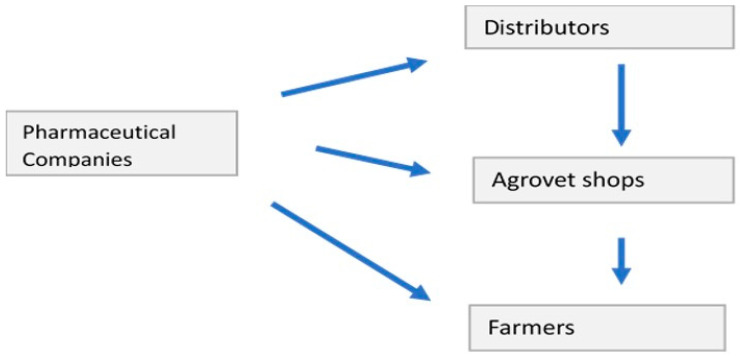
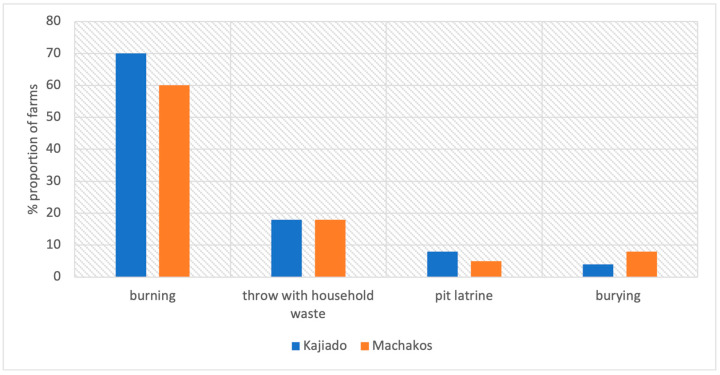
Antimicrobial use (AMU) is a major driver of antimicrobial resistance (AMR). An understanding of current practices can lead to better targeting of AMU-reducing interventions. An analysis of the distribution and current usage of veterinary drugs in peri-urban smallholder poultry systems in Kenya was undertaken. A survey among poultry farmers and key informant interviews with agrovet operators and other players in the value chain was conducted in Machakos and Kajiado counties. Interview data were analyzed using descriptive and thematic approaches. A total of 100 farmers were interviewed. The majority (58%) were > 50 years old, and all kept chickens, while 66% kept other livestock. Antibiotics constituted 43% of the drugs reportedly used on the farms ( = 706). These were mostly administered by the farmers themselves (86%) through water (98%). Leftover drugs were stored for later use (89%) or disposed of (11%). Incineration was the main method for the disposal of leftover drugs and empty containers. As described by the key informants ( = 17), the drug distribution chain relied on agrovet shops that were supplied by local distributors and pharmaceutical companies, which, in turn, supplied drugs to the farmers. Farmers reportedly purchased drugs without prescriptions and rarely observed the withdrawal periods. Drug quality was a concern, especially for products requiring reconstitution.
抗菌药物的使用(AMU)是抗菌药物耐药性(AMR)的主要驱动因素。了解当前的做法有助于更好地针对减少抗菌药物使用的干预措施。对肯尼亚城市周边小农户家禽养殖系统中兽药的分布和当前使用情况进行了分析。在马查科斯县和卡贾多县对家禽养殖户进行了调查,并与农业兽药经营者及价值链中的其他参与者进行了关键 informant 访谈。使用描述性和主题性方法对访谈数据进行了分析。共采访了100名养殖户。大多数(58%)年龄超过50岁,所有人都养鸡,66%还饲养其他牲畜。据报道,抗生素占农场使用药物的43%(=706)。这些大多由养殖户自己(86%)通过饮水(98%)给药。剩余药物被储存以备后用(89%)或处理掉(11%)。焚烧是处理剩余药物和空容器的主要方法。正如关键 informant (=17)所描述的,药品分销链依赖于由当地经销商和制药公司供应的农业兽药商店,而这些公司又向养殖户供应药品。据报道,养殖户购买药品时无需处方,很少遵守停药期。药品质量令人担忧,尤其是对于需要复溶的产品。