Zhang Jesse, Xia Jiangyi, Liu Xin, Olichney John
Computer Science Department, University of Southern California, Los Angeles, CA 90089, USA.
UC Davis Center for Mind and Brain, Davis, CA 95618, USA.
Brain Sci. 2023 May 7;13(5):770. doi: 10.3390/brainsci13050770.
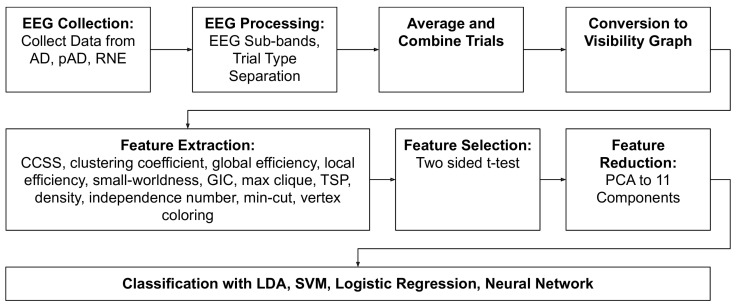
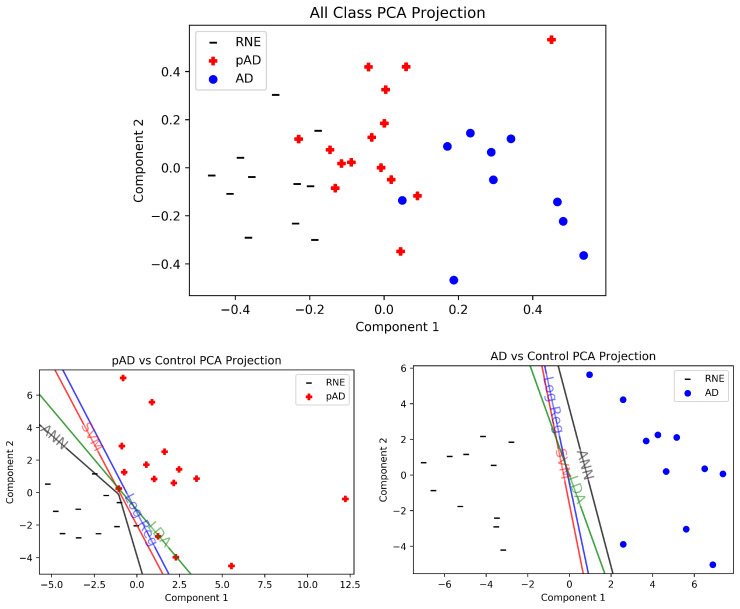
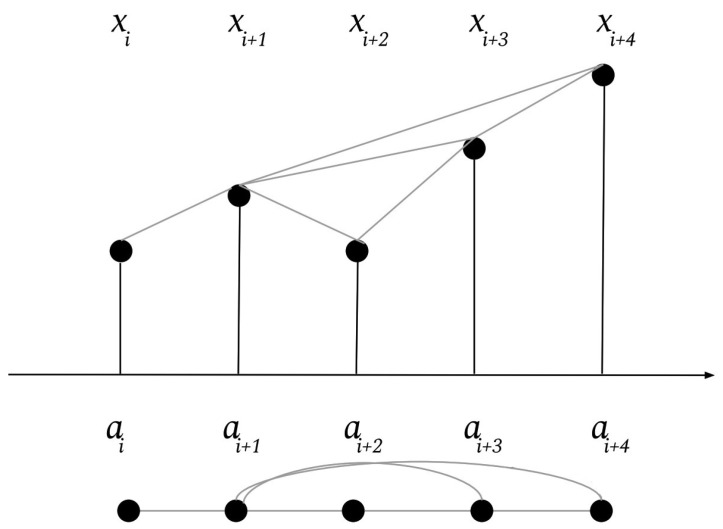
We present a framework for electroencephalography (EEG)-based classification between patients with Alzheimer's Disease (AD) and robust normal elderly (RNE) via a graph theory approach using visibility graphs (VGs). This EEG VG approach is motivated by research that has demonstrated differences between patients with early stage AD and RNE using various features of EEG oscillations or cognitive event-related potentials (ERPs). In the present study, EEG signals recorded during a word repetition experiment were wavelet decomposed into 5 sub-bands (δ,θ,α,β,γ). The raw and band-specific signals were then converted to VGs for analysis. Twelve graph features were tested for differences between the AD and RNE groups, and -tests employed for feature selection. The selected features were then tested for classification using traditional machine learning and deep learning algorithms, achieving a classification accuracy of 100% with linear and non-linear classifiers. We further demonstrated that the same features can be generalized to the classification of mild cognitive impairment (MCI) converters, i.e., prodromal AD, against RNE with a maximum accuracy of 92.5%. Code is released online to allow others to test and reuse this framework.
我们提出了一个基于脑电图(EEG)的框架,通过使用可见性图(VG)的图论方法,对阿尔茨海默病(AD)患者和健康正常老年人(RNE)进行分类。这种EEG-VG方法的灵感来自于一些研究,这些研究利用EEG振荡的各种特征或认知事件相关电位(ERP),证明了早期AD患者和RNE之间的差异。在本研究中,在单词重复实验中记录的EEG信号通过小波分解为5个子带(δ、θ、α、β、γ)。然后将原始信号和特定频段信号转换为VG进行分析。测试了12个图特征在AD组和RNE组之间的差异,并采用t检验进行特征选择。然后使用传统机器学习和深度学习算法对所选特征进行分类测试,线性和非线性分类器的分类准确率达到了100%。我们进一步证明,相同的特征可以推广到轻度认知障碍(MCI)转化者(即前驱AD)与RNE的分类中,最高准确率为92.5%。代码已在线发布,以便其他人测试和重用此框架。