
基于脱细胞番茄带刺叶片的肝癌微环境建模:一种用于肝癌治疗的新型天然三维(3D)支架
modeling of hepatocellular carcinoma niche on decellularized tomato thorny leaves: a novel natural three-dimensional (3D) scaffold for liver cancer therapeutics.
作者信息
Ahmadian Mariye, Hosseini Saadi, Alipour Atefeh, Jahanfar Mehdi, Farrokhi Naser, Homaeigohar Shahin, Shahsavarani Hosein
机构信息
Department of Cell and Molecular Biology, Faculty of Life Science and Biotechnology, Shahid Beheshti University, Tehran, Iran.
Laboratory of Regenerative Medicine and Biomedical Innovations, Pasteur Institute of Iran, National Cell Bank, Tehran, Iran.
出版信息
Front Bioeng Biotechnol. 2023 May 5;11:1189726. doi: 10.3389/fbioe.2023.1189726. eCollection 2023.
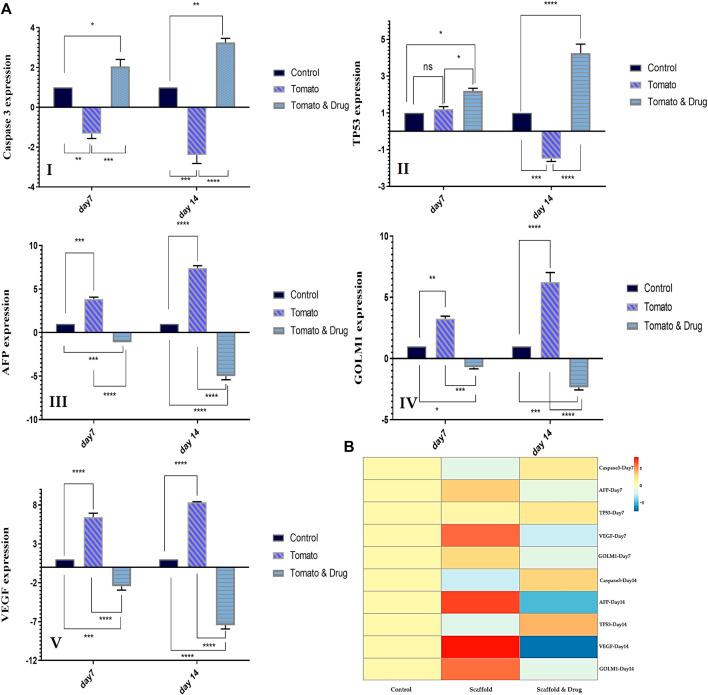
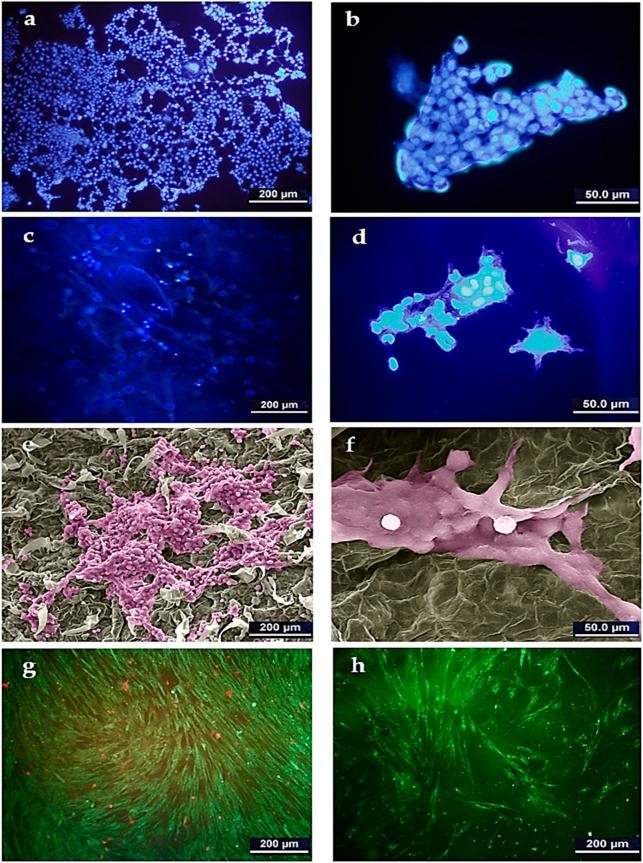
Liver cancer is now one of the main causes leading to death worldwide. To achieve reliable therapeutic effects, it is crucial to develop efficient approaches to test novel anticancer drugs. Considering the significant contribution of tumor microenvironment to cell's response to medications, 3D bioinspiration of cancer cell niches can be regarded as an advanced strategy to improve the accuracy and reliability of the drug-based treatment. In this regard, decellularized plant tissues can perform as suitable 3D scaffolds for mammalian cell culture to create a near-to-real condition to test drug efficacy. Here, we developed a novel 3D natural scaffold made from decellularized tomato hairy leaves (hereafter called as DTL) to mimic the microenvironment of human hepatocellular carcinoma (HCC) for pharmaceutical purposes. The surface hydrophilicity, mechanical properties, and topography measurement and molecular analyses revealed that the 3D DTL scaffold is an ideal candidate for liver cancer modeling. The cells exhibited a higher growth and proliferation rate within the DTL scaffold, as verified by quantifying the expression of related genes, DAPI staining, and SEM imaging of the cells. Moreover, prilocaine, an anticancer drug, showed a higher effectiveness against the cancer cells cultured on the 3D DTL scaffold, compared to a 2D platform. Taken together, this new cellulosic 3D scaffold can be confidently proposed for chemotherapeutic testing of drugs on hepatocellular carcinoma.
肝癌是目前全球主要的致死原因之一。为了实现可靠的治疗效果,开发高效的方法来测试新型抗癌药物至关重要。考虑到肿瘤微环境对细胞药物反应的重大贡献,癌细胞生态位的三维生物启发可被视为一种提高基于药物治疗的准确性和可靠性的先进策略。在这方面,脱细胞植物组织可作为适合哺乳动物细胞培养的三维支架,以创造接近真实的条件来测试药物疗效。在此,我们开发了一种由脱细胞番茄毛状叶制成的新型三维天然支架(以下称为DTL),用于模拟人类肝细胞癌(HCC)的微环境以用于制药目的。表面亲水性、机械性能、形貌测量和分子分析表明,三维DTL支架是肝癌建模的理想候选材料。通过定量相关基因的表达、DAPI染色和细胞的扫描电镜成像验证,细胞在DTL支架内表现出更高的生长和增殖速率。此外,与二维平台相比,抗癌药物丙胺卡因对在三维DTL支架上培养的癌细胞显示出更高的有效性。综上所述,这种新型纤维素三维支架可被可靠地用于肝癌药物的化疗测试。



 Zotero 插件