Center for Applied NanoBioscience and Medicine, College of Medicine Phoenix, University of Arizona, 475 North 5th Street, Phoenix, AZ 85004, USA.
Department of Basic Medical Sciences, College of Medicine Phoenix, University of Arizona, 475 North 5th Street, Phoenix, AZ 85004, USA.
Int J Mol Sci. 2021 Nov 16;22(22):12347. doi: 10.3390/ijms222212347.
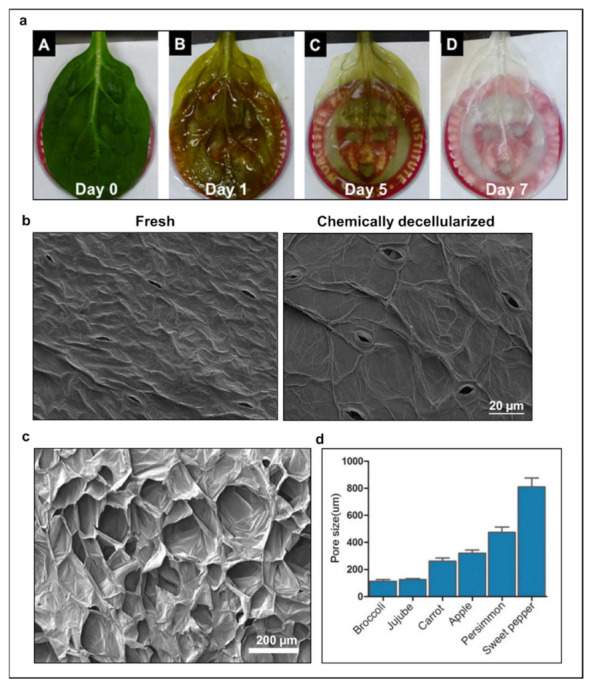
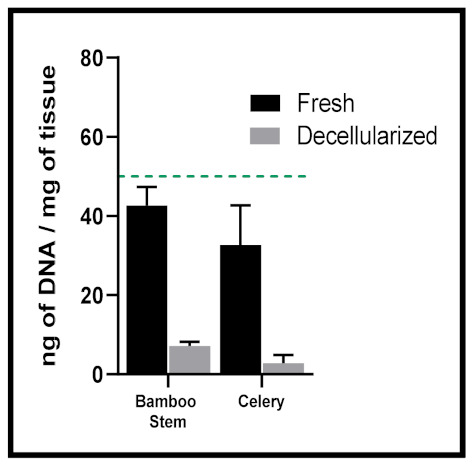
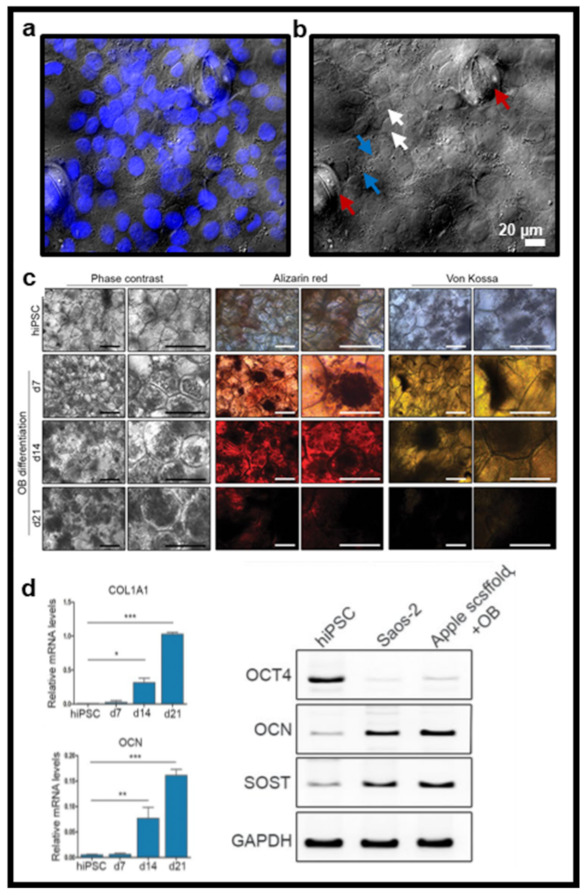
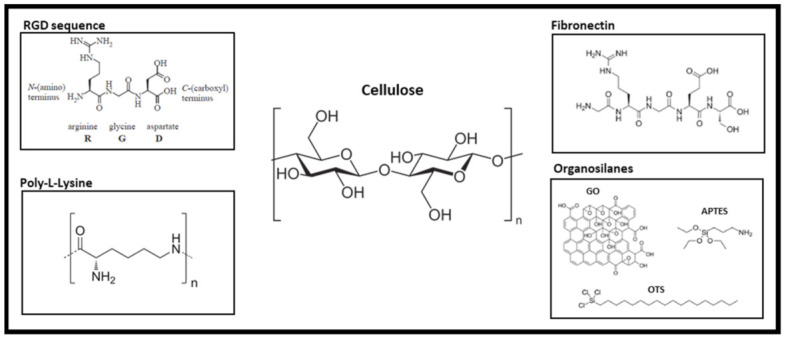
The decellularization of plant-based biomaterials to generate tissue-engineered substitutes or in vitro cellular models has significantly increased in recent years. These vegetal tissues can be sourced from plant leaves and stems or fruits and vegetables, making them a low-cost, accessible, and sustainable resource from which to generate three-dimensional scaffolds. Each construct is distinct, representing a wide range of architectural and mechanical properties as well as innate vasculature networks. Based on the rapid rise in interest, this review aims to detail the current state of the art and presents the future challenges and perspectives of these unique biomaterials. First, we consider the different existing decellularization techniques, including chemical, detergent-free, enzymatic, and supercritical fluid approaches that are used to generate such scaffolds and examine how these protocols can be selected based on plant cellularity. We next examine strategies for cell seeding onto the plant-derived constructs and the importance of the different functionalization methods used to assist in cell adhesion and promote cell viability. Finally, we discuss how their structural features, such as inherent vasculature, porosity, morphology, and mechanical properties (i.e., stiffness, elasticity, etc.) position plant-based scaffolds as a unique biomaterial and drive their use for specific downstream applications. The main challenges in the field are presented throughout the discussion, and future directions are proposed to help improve the development and use of vegetal constructs in biomedical research.
近年来,植物源性生物材料的脱细胞处理技术(以生成组织工程替代物或体外细胞模型)显著增加。这些植物组织可以来自植物的叶子、茎干或水果和蔬菜,是一种低成本、可及且可持续的资源,可用于生成三维支架。每个构建体都是独特的,代表了广泛的结构和机械特性以及固有血管网络。基于兴趣的迅速增长,本综述旨在详细介绍目前的技术水平,并提出这些独特生物材料未来的挑战和前景。首先,我们考虑了不同的现有脱细胞技术,包括化学法、无去污剂法、酶法和超临界流体法,这些方法用于生成此类支架,并探讨如何根据植物细胞密度选择这些方案。接下来,我们研究了在植物衍生构建体上接种细胞的策略,以及不同功能化方法的重要性,这些方法用于协助细胞黏附和促进细胞活力。最后,我们讨论了它们的结构特征,如固有血管、孔隙率、形态和机械特性(即硬度、弹性等),将植物支架定位为一种独特的生物材料,并推动其在特定下游应用中的使用。在讨论过程中提出了该领域的主要挑战,并提出了未来的发展方向,以帮助改进植物构建体在生物医学研究中的开发和使用。