Ortigosa-Beltrán Isabel, Jaén Irene, García-Palacios Azucena
Center for Brain and Cognition, Universitat Pompeu Fabra, Barcelona, Spain.
Department of Basic and Clinical Psychology and Psychobiology, Jaume I University, Castellón, Spain.
Front Psychol. 2023 May 16;14:1133915. doi: 10.3389/fpsyg.2023.1133915. eCollection 2023.
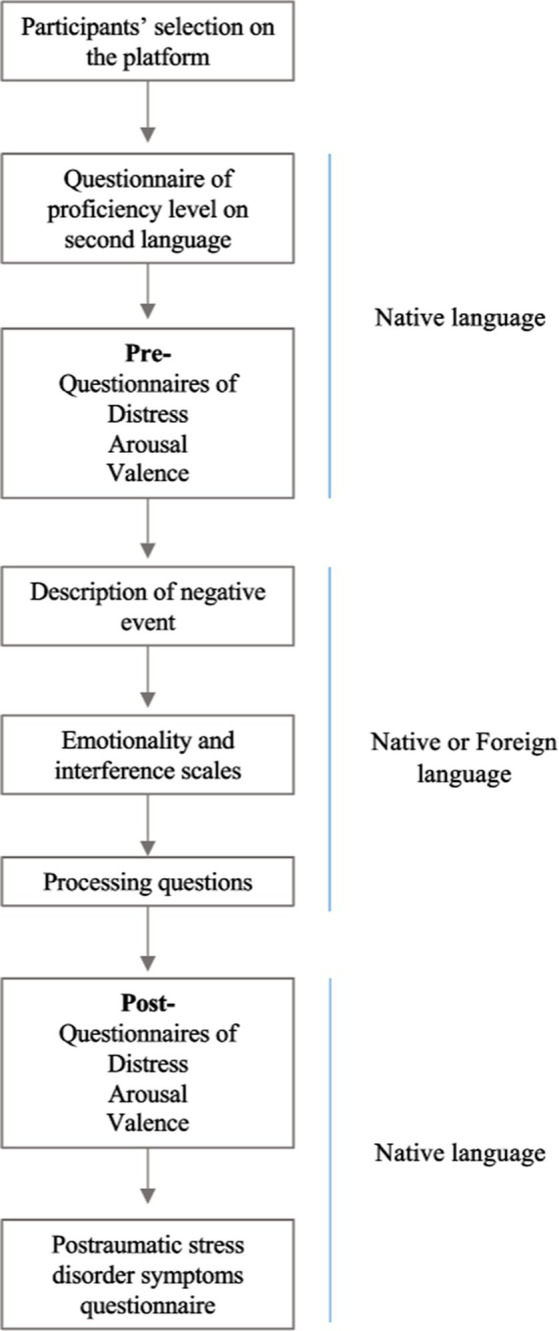
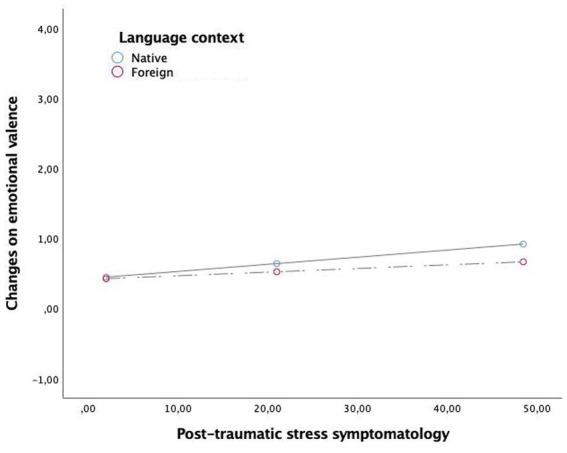
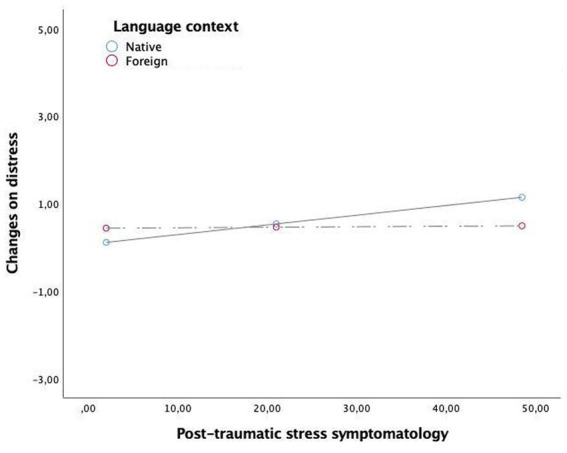
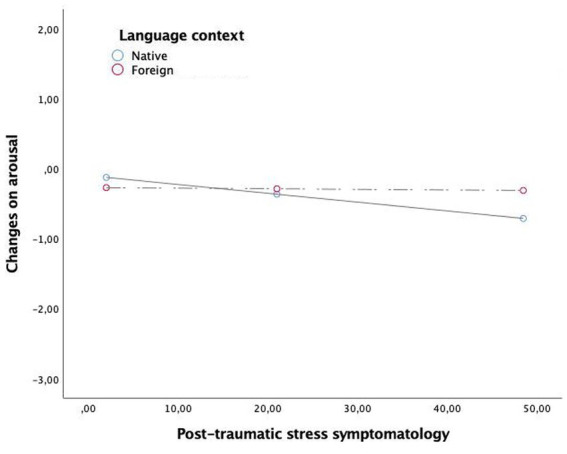
The use of a foreign language has been introduced in the clinical setting as a form of emotional distance to help deal with negative experiences. However, the evidence of foreign language reducing emotionality during processing negative events is still scarce. This study aims to test whether the description and processing of a traumatic or highly emotional event in a foreign language could modulate the strength of the connection between traumatic symptomatology and emotional reaction. For this purpose, a sample of 128 healthy participants completed a series of questionnaires an online platform. Firstly, their levels of distress, arousal and valence were assessed in their native language. Secondly, they were assigned to either the native language or the foreign language group and described a negative childhood event in the assigned language (English or Spanish), followed by five questions for processing the event. Next, their emotionality was assessed again in their native language. Finally, a questionnaire of traumatic stress symptoms and an avoidance scale were completed. Results showed that the relationship between traumatic symptomatology and emotionality was moderated by the language of processing the negative event. Specifically, traumatic symptomatology was more strongly associated with distress and arousal change when the processing task was performed in the native language. These findings suggest the influence of a foreign language on emotional reactivity when a negative experience is processed, which could be an essential tool in the treatment of disorders related to stress and trauma.
在临床环境中,使用外语作为一种情感距离的形式,以帮助应对负面经历。然而,关于外语在处理负面事件时降低情感性的证据仍然很少。本研究旨在测试用外语描述和处理创伤性或高度情绪化事件是否能调节创伤症状与情感反应之间联系的强度。为此,128名健康参与者的样本在一个在线平台上完成了一系列问卷。首先,用母语评估他们的痛苦、唤醒和效价水平。其次,他们被分配到母语组或外语组,并用指定的语言(英语或西班牙语)描述一个童年负面事件,随后是五个用于处理该事件的问题。接下来,再次用母语评估他们的情感性。最后,完成一份创伤应激症状问卷和一个回避量表。结果表明,创伤症状与情感性之间的关系受到处理负面事件语言的调节。具体而言,当用母语进行处理任务时,创伤症状与痛苦和唤醒变化的关联更强。这些发现表明,在处理负面经历时,外语对情感反应有影响,这可能是治疗与压力和创伤相关障碍的重要工具。