Max Planck Institute for Marine Microbiology, Bremen, Germany.
MARUM, Center for Marine Environmental Sciences, University of Bremen, Bremen, Germany.
Nat Microbiol. 2023 Jul;8(7):1199-1212. doi: 10.1038/s41564-023-01400-3. Epub 2023 Jun 1.
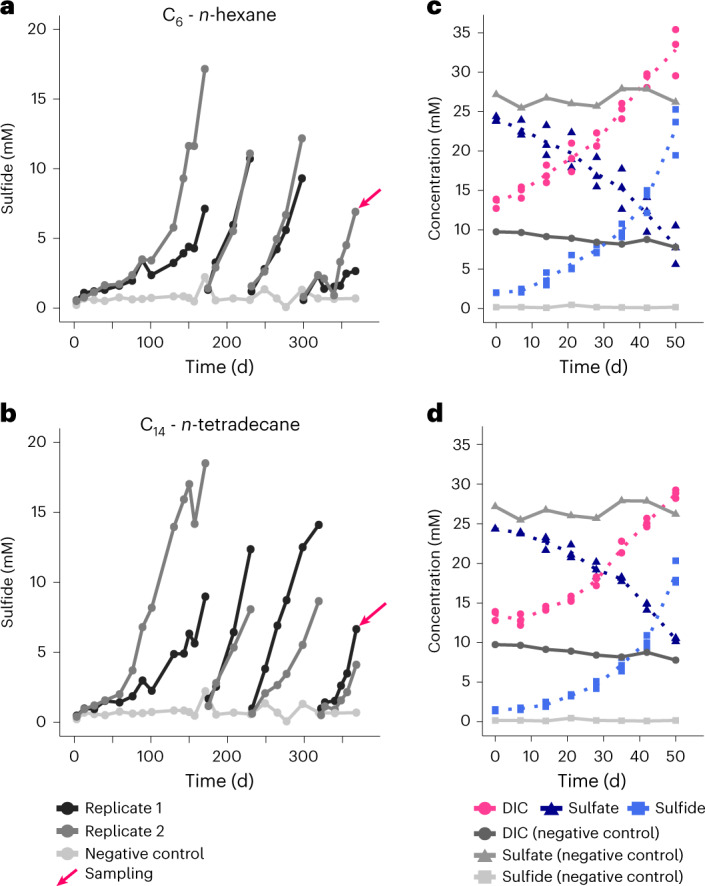
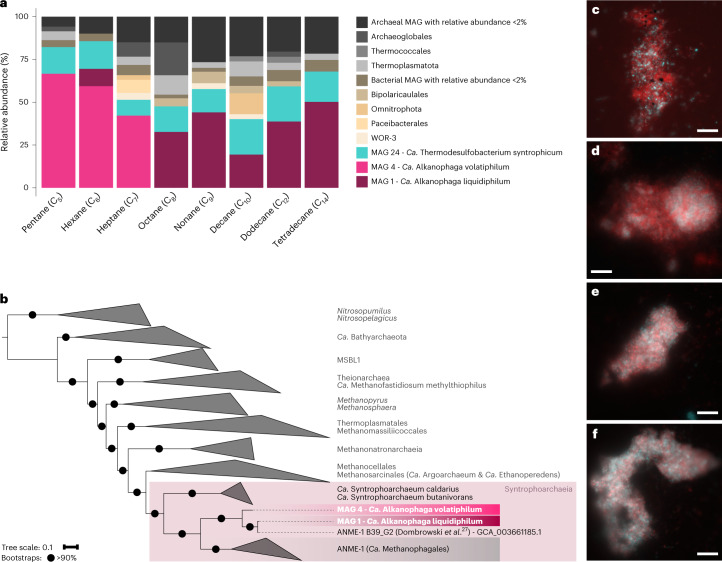
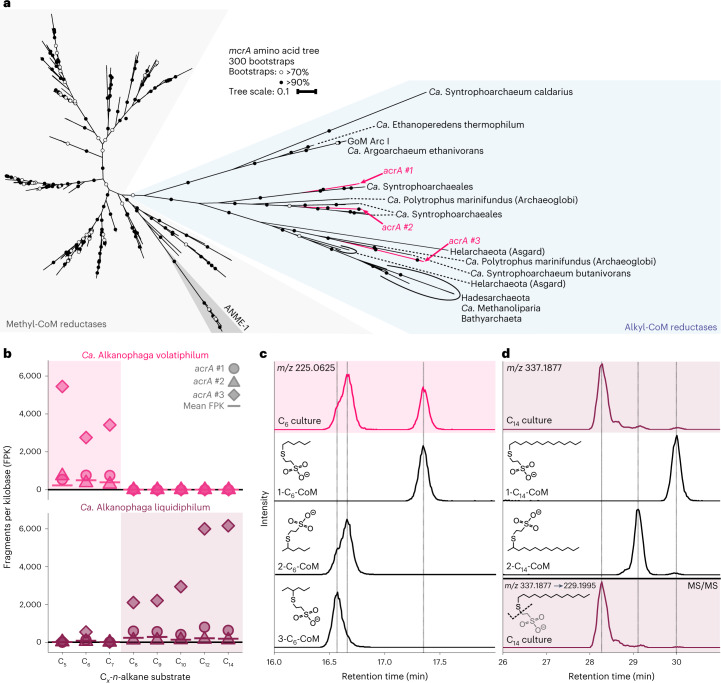
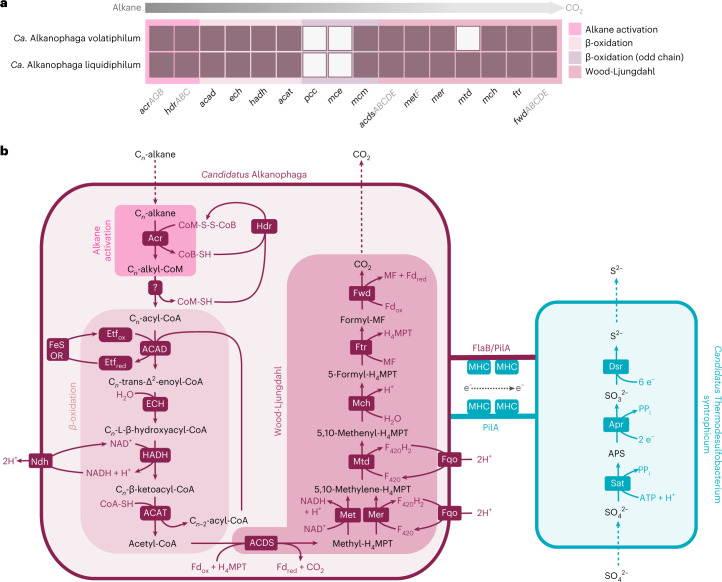
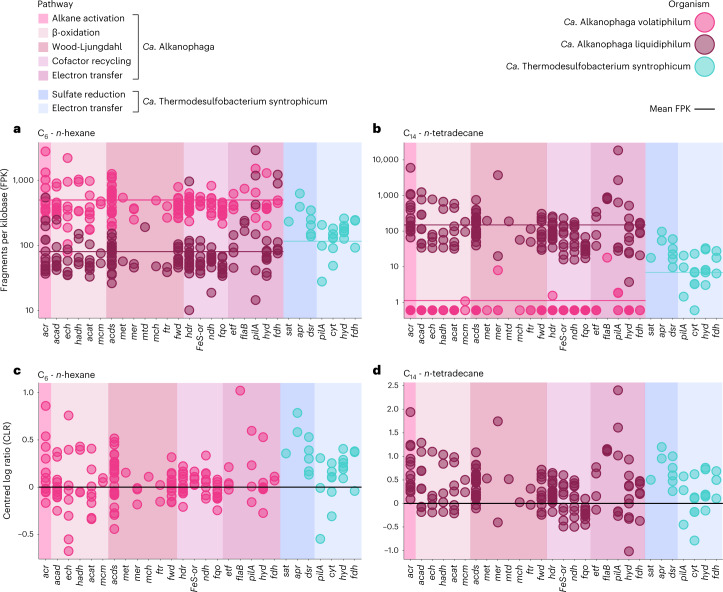
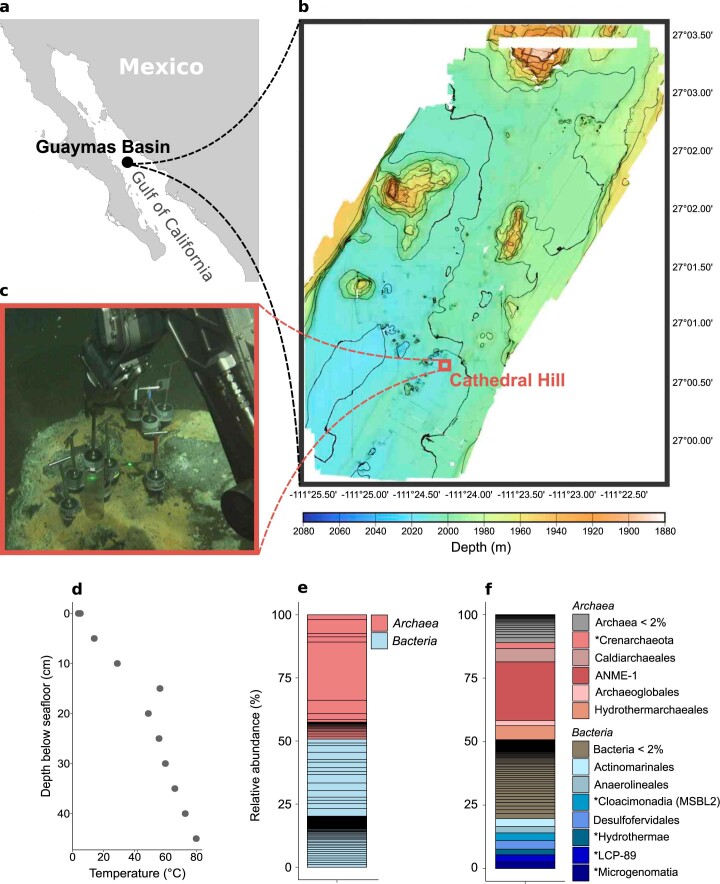
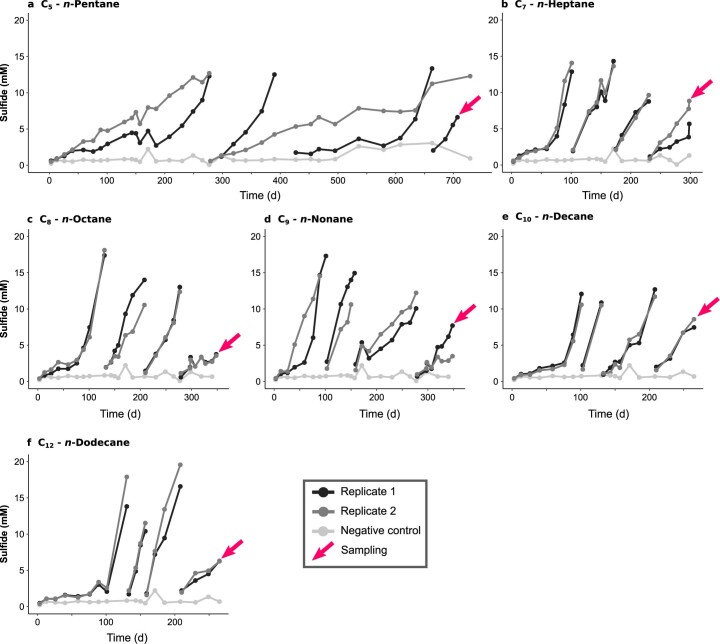
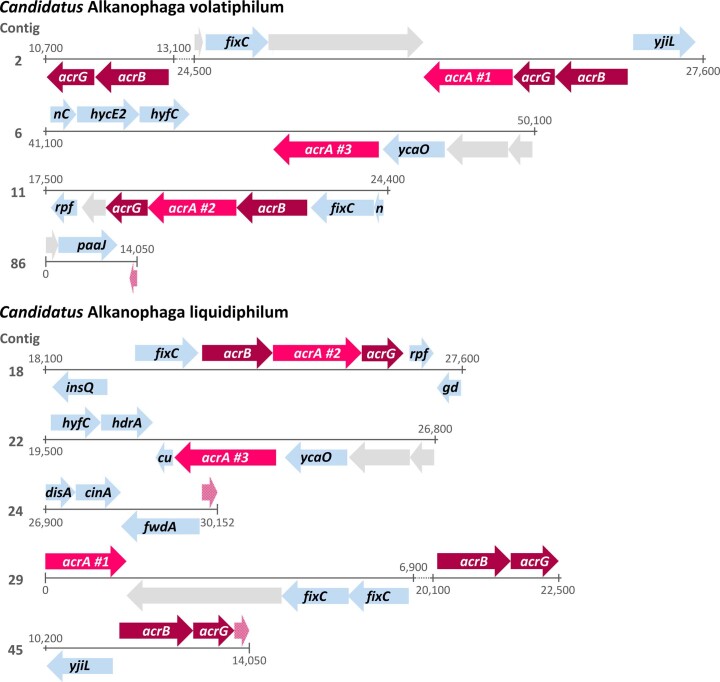
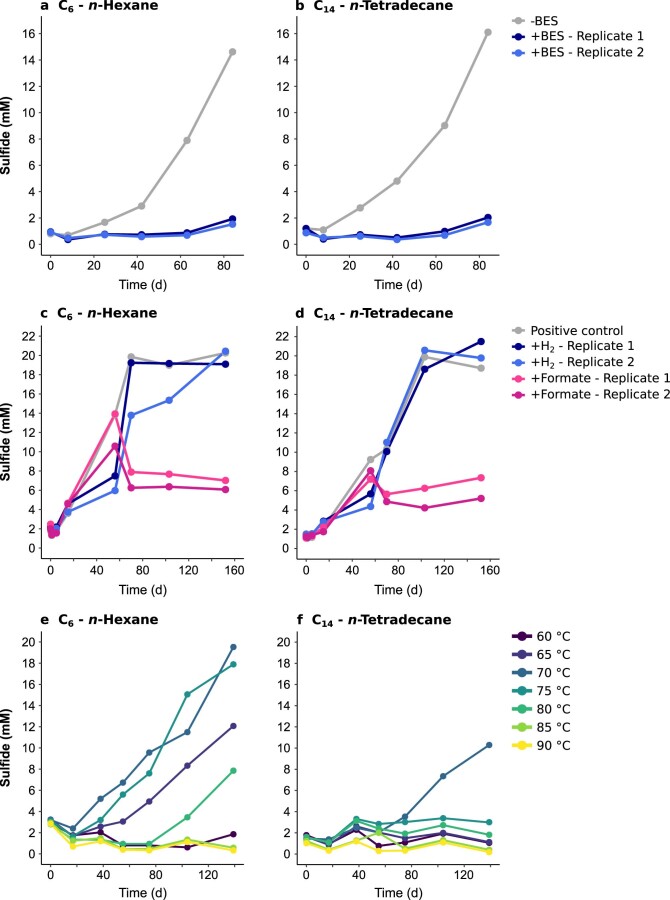
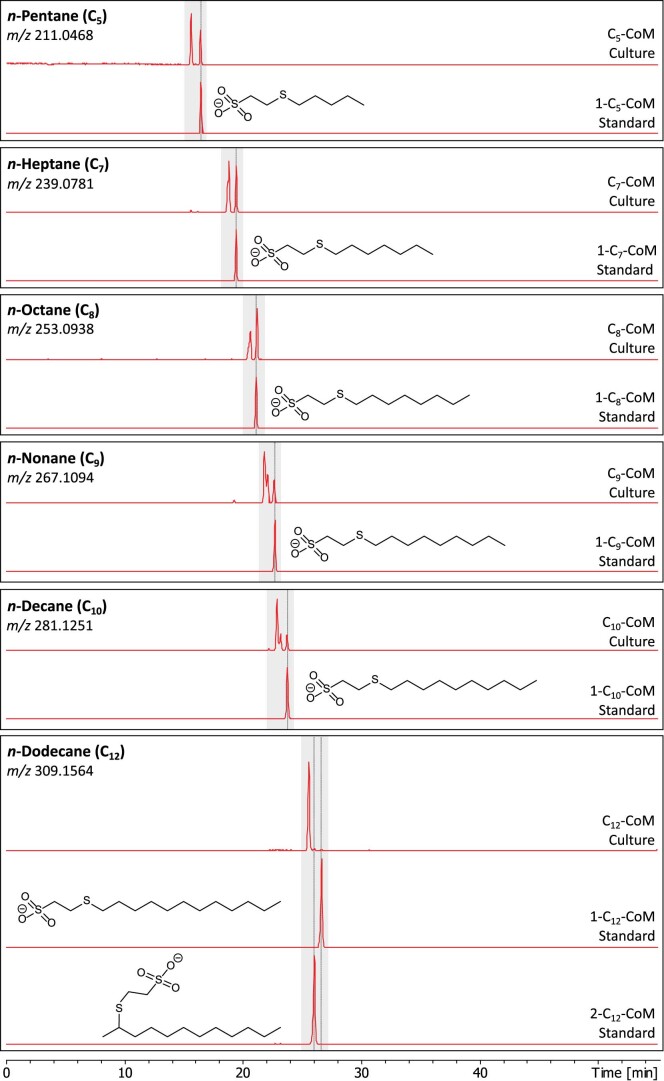
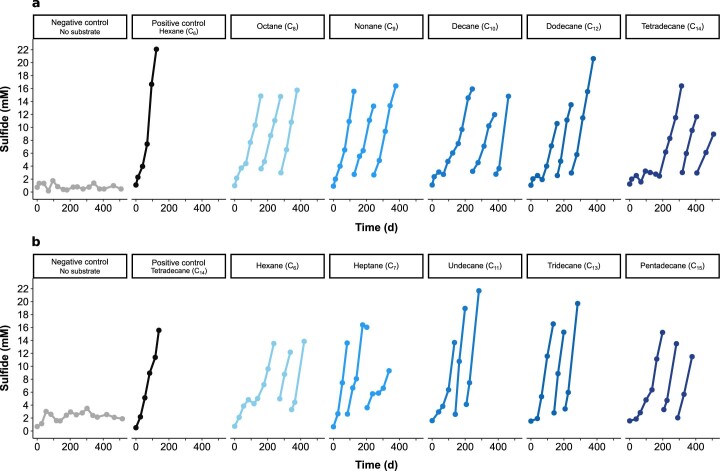
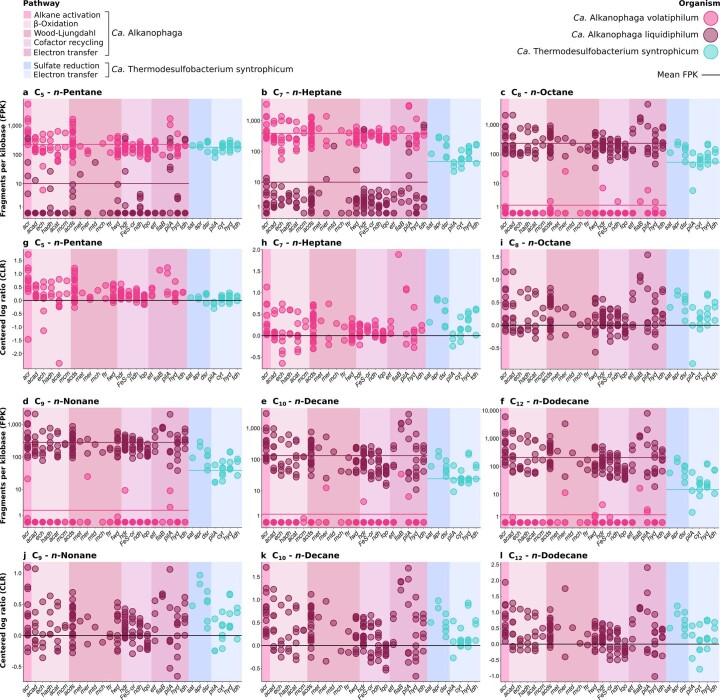
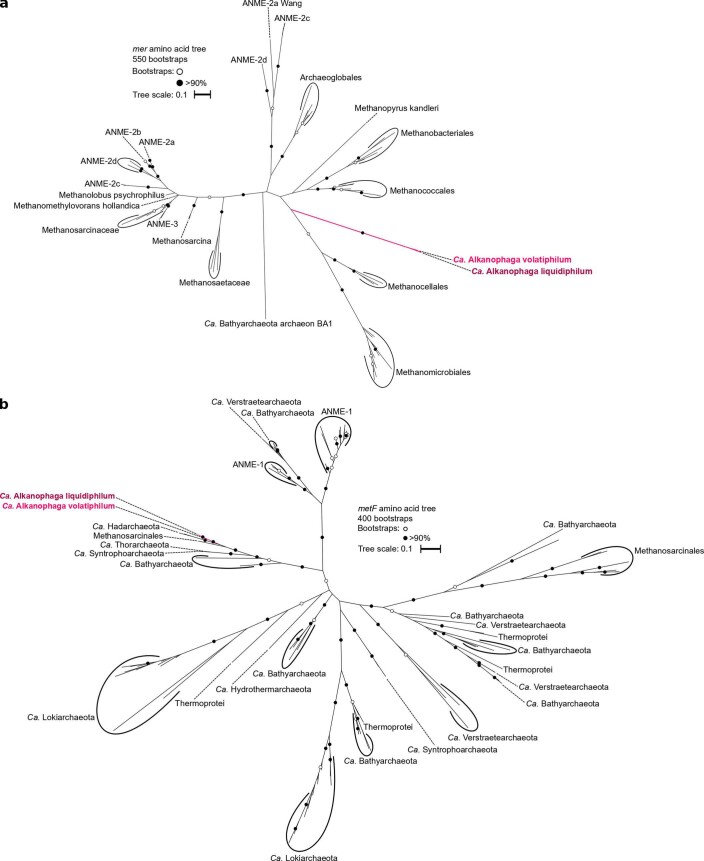
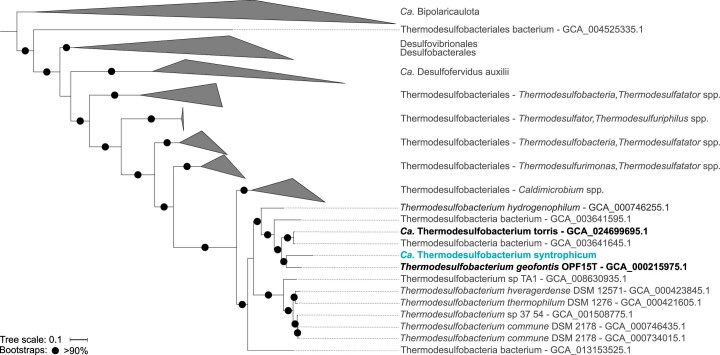
Methanogenic and methanotrophic archaea produce and consume the greenhouse gas methane, respectively, using the reversible enzyme methyl-coenzyme M reductase (Mcr). Recently, Mcr variants that can activate multicarbon alkanes have been recovered from archaeal enrichment cultures. These enzymes, called alkyl-coenzyme M reductase (Acrs), are widespread in the environment but remain poorly understood. Here we produced anoxic cultures degrading mid-chain petroleum n-alkanes between pentane (C) and tetradecane (C) at 70 °C using oil-rich Guaymas Basin sediments. In these cultures, archaea of the genus Candidatus Alkanophaga activate the alkanes with Acrs and completely oxidize the alkyl groups to CO. Ca. Alkanophaga form a deep-branching sister clade to the methanotrophs ANME-1 and are closely related to the short-chain alkane oxidizers Ca. Syntrophoarchaeum. Incapable of sulfate reduction, Ca. Alkanophaga shuttle electrons released from alkane oxidation to the sulfate-reducing Ca. Thermodesulfobacterium syntrophicum. These syntrophic consortia are potential key players in petroleum degradation in heated oil reservoirs.
产甲烷菌和甲烷营养菌分别利用可逆转的酶甲基辅酶 M 还原酶(Mcr)来产生和消耗温室气体甲烷。最近,从古菌富集培养物中回收了可以激活多碳烷烃的 Mcr 变体。这些酶被称为烷基辅酶 M 还原酶(Acrs),在环境中广泛存在,但仍知之甚少。在这里,我们使用富含油的瓜伊马斯盆地沉积物,在 70°C 下培养缺氧培养物,降解中链石油正烷烃,范围从戊烷(C)到十四烷(C)。在这些培养物中,Candidatus Alkanophaga 属的古菌用 Acrs 激活烷烃,并将烷基完全氧化为 CO。Ca. Alkanophaga 与甲烷营养菌 ANME-1 形成一个深分支的姐妹分支,与短链烷烃氧化剂 Ca. Syntrophoarchaeum 密切相关。不能进行硫酸盐还原的 Ca. Alkanophaga 将从烷烃氧化释放的电子转移到硫酸盐还原的 Ca. Thermodesulfobacterium syntrophicum。这些共生联合体可能是加热油藏中石油降解的关键参与者。