Department of Mechanical and Industrial Engineering, University of Toronto, 5 King's College Road, Toronto, Ontario, M5S 3G8, Canada.
Department of Electrical and Computer Engineering, University of Toronto, 10 King's College Road, Toronto, Ontario, M5S 3G4, Canada.
Nat Commun. 2023 Jun 7;14(1):3314. doi: 10.1038/s41467-023-38935-2.
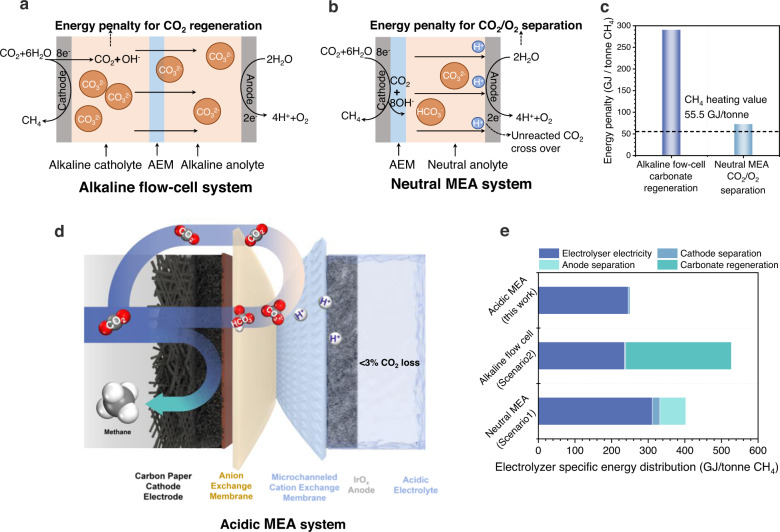
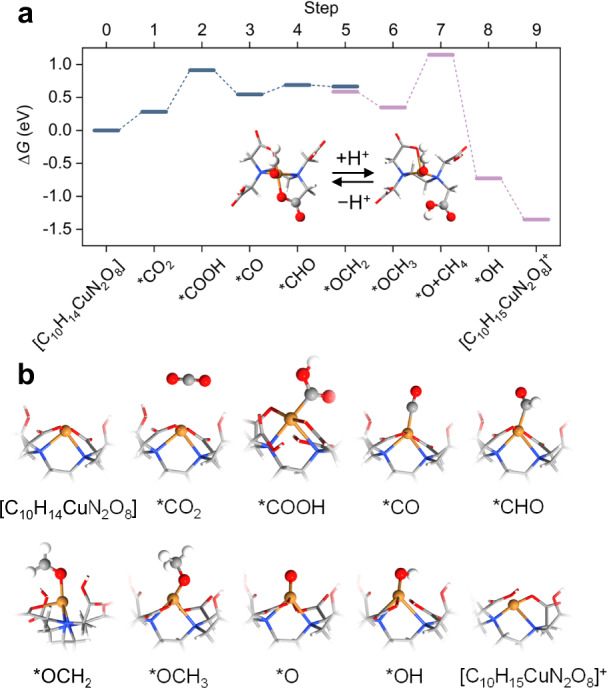
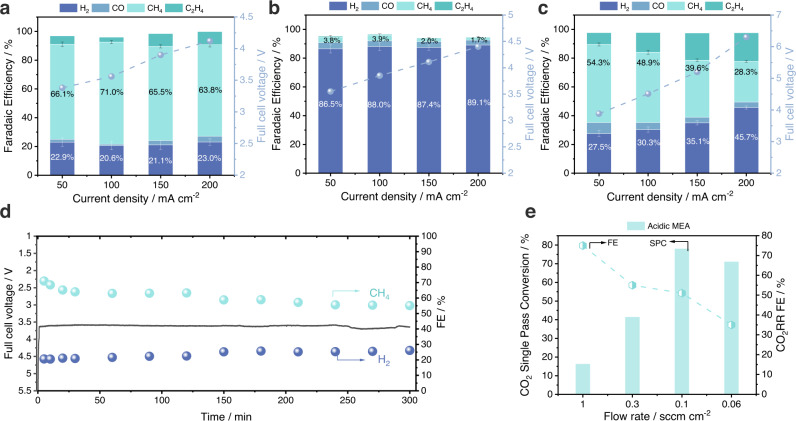
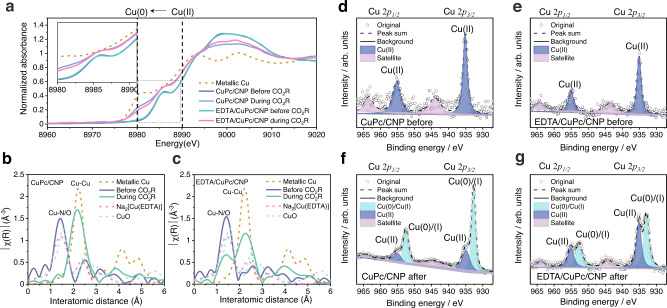
Renewable CH produced from electrocatalytic CO reduction is viewed as a sustainable and versatile energy carrier, compatible with existing infrastructure. However, conventional alkaline and neutral CO-to-CH systems suffer CO loss to carbonates, and recovering the lost CO requires input energy exceeding the heating value of the produced CH. Here we pursue CH-selective electrocatalysis in acidic conditions via a coordination method, stabilizing free Cu ions by bonding Cu with multidentate donor sites. We find that hexadentate donor sites in ethylenediaminetetraacetic acid enable the chelation of Cu ions, regulating Cu cluster size and forming Cu-N/O single sites that achieve high CH selectivity in acidic conditions. We report a CH Faradaic efficiency of 71% (at 100 mA cm) with <3% loss in total input CO that results in an overall energy intensity (254 GJ/tonne CH), half that of existing electroproduction routes.
通过配位方法在酸性条件下进行 CH 选择性电催化,通过将 Cu 与多齿供体位点键合来稳定游离的 Cu 离子。我们发现乙二胺四乙酸中的六齿供体位点能够螯合 Cu 离子,调节 Cu 簇的大小,并形成 Cu-N/O 单原子位,从而在酸性条件下实现高 CH 选择性。我们报告了在 100 mA cm 下 CH 的法拉第效率为 71%(总输入 CO 的损失<3%),这导致整体能量强度(254 GJ/吨 CH)为现有电合成路线的一半。