Chitiva Luis Carlos, Lozano-Puentes Hair Santiago, Londoño Ximena, Leão Tiago F, Cala Mónica P, Ruiz-Sanchez Eduardo, Díaz-Ariza Lucía Ana, Prieto-Rodríguez Juliet A, Castro-Gamboa Ian, Costa Geison M
Department of Chemistry, Faculty of Sciences, Pontificia Universidad Javeriana, Bogotá, Colombia.
Institute of Chemistry, São Paulo State University (UNESP), Araraquara, Brazil.
Front Mol Biosci. 2023 May 24;10:1192088. doi: 10.3389/fmolb.2023.1192088. eCollection 2023.
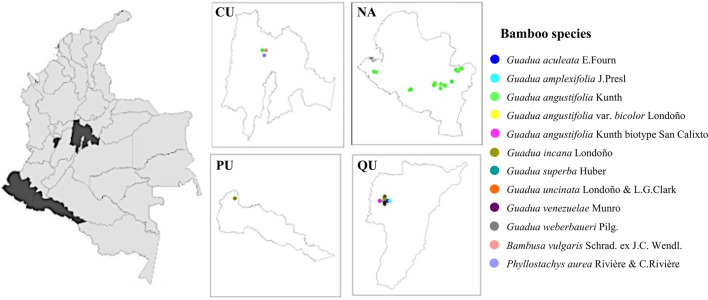
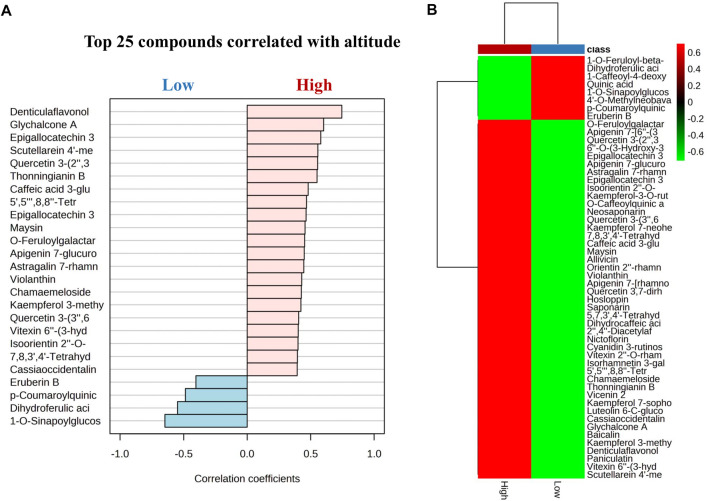
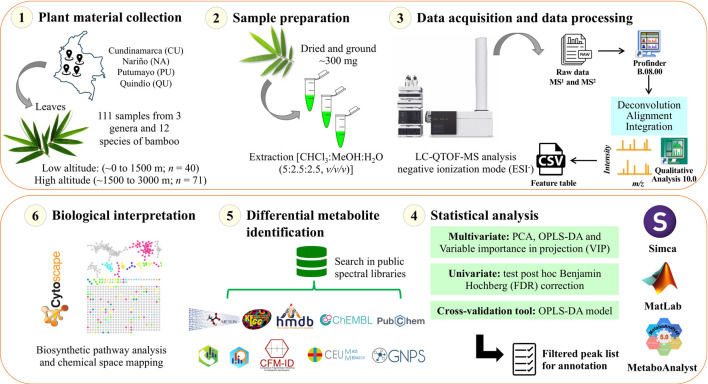
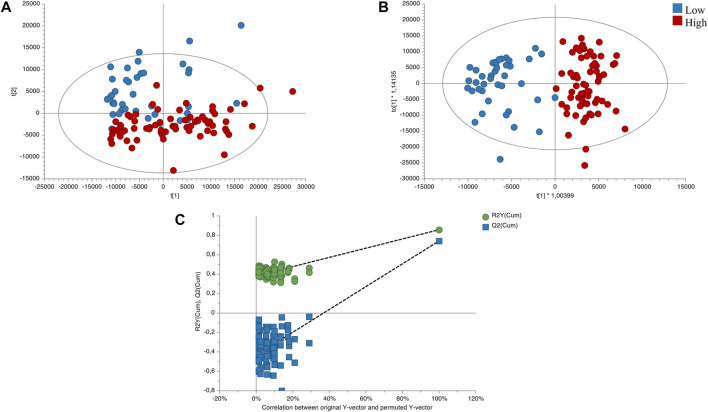
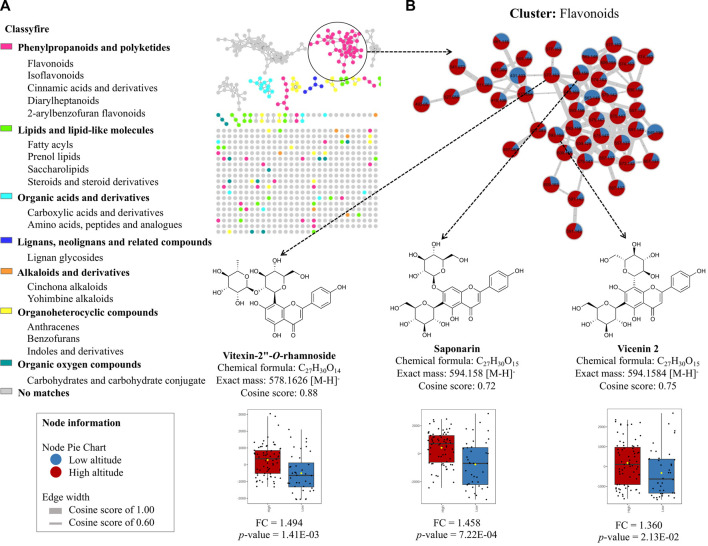
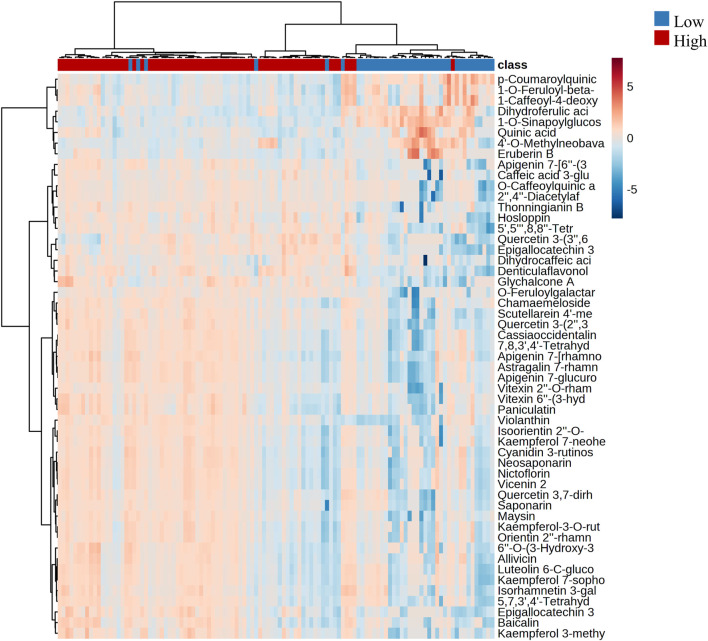
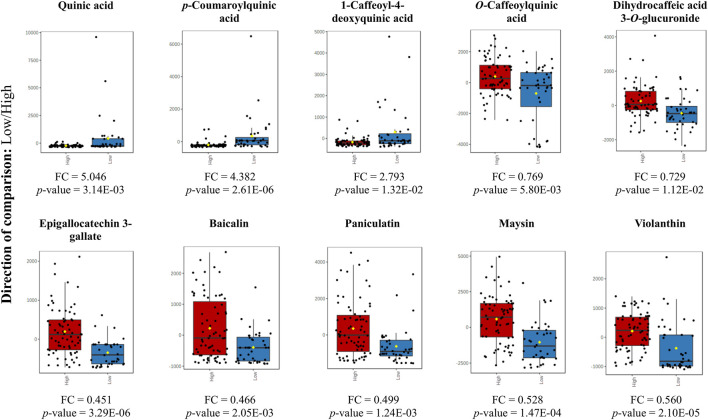
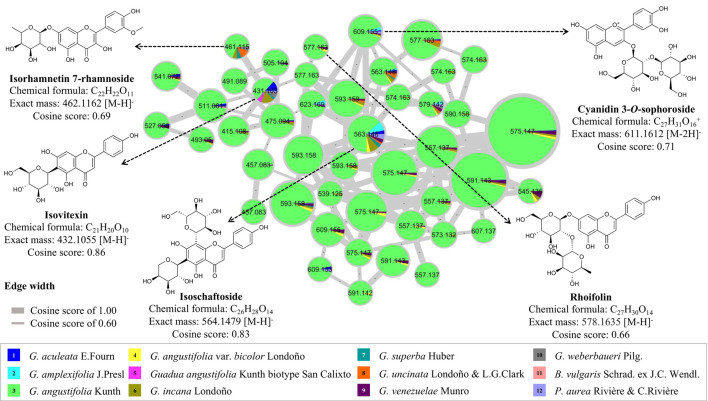
Bamboo species have traditionally been used as building material and potential source of bioactive substances, as they produce a wide variety of phenolic compounds, including flavonoids and cinnamic acid derivatives that are considered biologically active. However, the effects of growth conditions such as location, altitude, climate, and soil on the metabolome of these species still need to be fully understood. This study aimed to evaluate variations in chemical composition induced by altitudinal gradient (0-3000 m) by utilizing an untargeted metabolomics approach and mapping chemical space using molecular networking analysis. We analyzed 111 samples from 12 bamboo species collected from different altitudinal ranges using liquid chromatography coupled with quadrupole time-of-flight mass spectrometry (LC-QTOF-MS). We used multivariate and univariate statistical analyses to identify the metabolites that showed significant differences in the altitude environments. Additionally, we used the Global Natural Products Social Molecular Networking (GNPS) web platform to perform chemical mapping by comparing the metabolome among the studied species and the reference spectra from its database. The results showed 89 differential metabolites between the altitudinal ranges investigated, wherein high altitude environments significantly increased the profile of flavonoids. While, low altitude environments significantly boosted the profile of cinnamic acid derivatives, particularly caffeoylquinic acids (CQAs). MolNetEnhancer networks confirmed the same differential molecular families already found, revealing metabolic diversity. Overall, this study provides the first report of variations induced by altitude in the chemical profile of bamboo species. The findings may possess fascinating active biological properties, thus offering an alternative use for bamboo.
竹子种类传统上一直被用作建筑材料和生物活性物质的潜在来源,因为它们能产生多种酚类化合物,包括被认为具有生物活性的黄酮类化合物和肉桂酸衍生物。然而,诸如地理位置、海拔、气候和土壤等生长条件对这些竹子种类代谢组的影响仍有待充分了解。本研究旨在利用非靶向代谢组学方法评估海拔梯度(0 - 3000米)引起的化学成分变化,并使用分子网络分析绘制化学空间图。我们使用液相色谱-四极杆飞行时间质谱联用技术(LC-QTOF-MS)分析了从不同海拔范围采集的12种竹子的111个样本。我们使用多变量和单变量统计分析来鉴定在海拔环境中显示出显著差异的代谢物。此外,我们使用全球天然产物社会分子网络(GNPS)网络平台,通过比较所研究物种的代谢组与其数据库中的参考光谱来进行化学图谱绘制。结果表明,在所研究的海拔范围内有89种差异代谢物,其中高海拔环境显著增加了黄酮类化合物的含量。而低海拔环境则显著提高了肉桂酸衍生物的含量,尤其是咖啡酰奎宁酸(CQAs)。MolNetEnhancer网络证实了已发现的相同差异分子家族,揭示了代谢多样性。总体而言,本研究首次报道了海拔对竹子种类化学特征的影响。这些发现可能具有迷人的生物活性特性,从而为竹子提供了一种新的用途。