Southern California Orthopedic Institute, Los Angeles, CA, USA.
Department of Surgery, McMaster University, Hamilton, ON, Canada.
Cartilage. 2023 Dec;14(4):424-432. doi: 10.1177/19476035231154530. Epub 2023 Jun 14.
There are many intra-articular hyaluronic acid (IA-HA) products on the market that have known intrinsic differences in molecular size, source, and structure. The current review summarizes existing evidence describing and assessing these differences, while also identifying whether these differences have an impact on clinical outcomes.
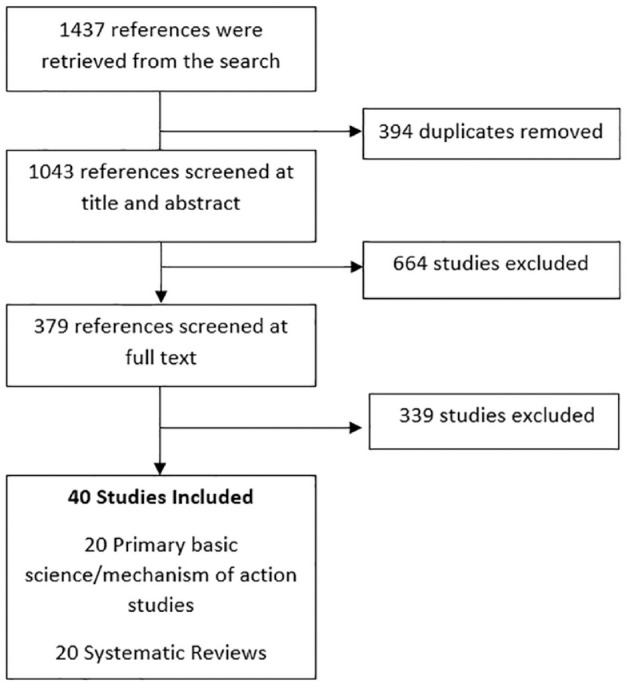
This systematic review summarized all literature that specifically addresses IA-HA product differences. Included studies summarized basic science and mechanism of action comparisons of IA-HA product differences, or systematic reviews that assess differences in clinical outcomes between IA-HA product differences.
A total of 20 investigations assessed basic science differences between IA-HA products, while 20 investigations provided assessments of the clinical outcome differences between IA-HA product characteristics. The published basic science literature provided a differentiation between low molecular weight (LMW) and high molecular weight (HMW) HA with regard to changes within the synovial fluid, driven by the interactions that these molecules have with receptors in the joint space. These differences in receptor interaction manifest within clinical outcomes, as meta-analyses comparing pain relief after IA-HA suggest that pain reduction is superior in patients who receive HMW HA as opposed to LMW HA.
This review highlights differences between IA-HA characteristics, and how important the molecular weight, derivation of the product, and structure are to variances in reported clinical outcomes to treat osteoarthritis (OA) of the knee. HMW IA-HAs have shown greater efficacy compared to the alternative of LMW products, while avian-derived and cross-linked products have potentially demonstrated an increase in inflammatory events over non-avian-derived, non-cross-linked HAs.
市场上有许多关节内透明质酸(IA-HA)产品,其分子大小、来源和结构存在已知的固有差异。本综述总结了现有的描述和评估这些差异的证据,同时确定这些差异是否对临床结果有影响。
本系统综述总结了专门讨论 IA-HA 产品差异的所有文献。纳入的研究总结了 IA-HA 产品差异的基础科学和作用机制比较,或评估 IA-HA 产品差异对临床结果差异的系统评价。
共有 20 项研究评估了 IA-HA 产品之间的基础科学差异,而 20 项研究提供了关于 IA-HA 产品特性之间临床结果差异的评估。已发表的基础科学文献区分了低分子量(LMW)和高分子量(HMW)HA 之间的差异,这是由于这些分子与关节空间中的受体相互作用而导致的滑液内变化。这些受体相互作用的差异在临床结果中表现出来,因为比较 IA-HA 后疼痛缓解的荟萃分析表明,接受 HMW HA 的患者疼痛减轻优于接受 LMW HA 的患者。
本综述强调了 IA-HA 特性之间的差异,以及分子量、产品来源和结构对治疗膝骨关节炎(OA)的报告临床结果差异的重要性。与低分子量产品相比,高分子量 IA-HA 显示出更大的疗效,而禽类衍生和交联产品在炎症事件方面可能比非禽类衍生、非交联 HA 增加。