Schlicht Ipek Baris, Fernandez Eugenia, Chulvi Berta, Rosso Paolo
Universitat Politècnica de València, Valencia, Spain.
Independent Researcher, Valencia, Spain.
J Ambient Intell Humaniz Comput. 2023 May 27:1-13. doi: 10.1007/s12652-023-04619-4.
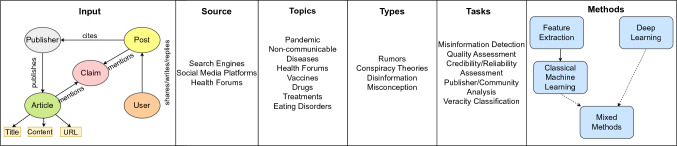
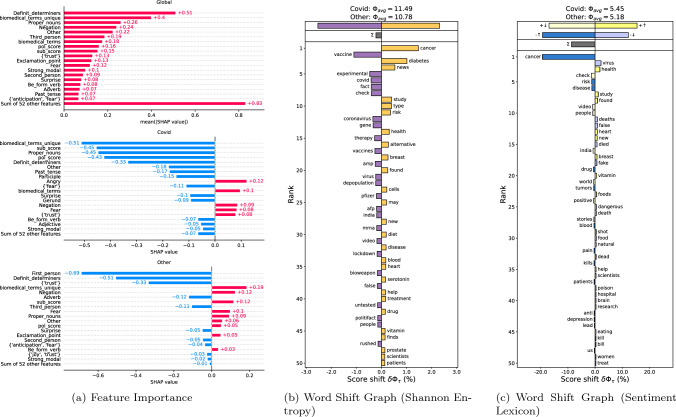
The spread of health misinformation has the potential to cause serious harm to public health, from leading to vaccine hesitancy to adoption of unproven disease treatments. In addition, it could have other effects on society such as an increase in hate speech towards ethnic groups or medical experts. To counteract the sheer amount of misinformation, there is a need to use automatic detection methods. In this paper we conduct a systematic review of the computer science literature exploring text mining techniques and machine learning methods to detect health misinformation. To organize the reviewed papers, we propose a taxonomy, examine publicly available datasets, and conduct a content-based analysis to investigate analogies and differences among Covid-19 datasets and datasets related to other health domains. Finally, we describe open challenges and conclude with future directions.
健康错误信息的传播有可能对公众健康造成严重危害,从导致疫苗犹豫到采用未经证实的疾病治疗方法。此外,它还可能对社会产生其他影响,比如针对特定种族群体或医学专家的仇恨言论增加。为了应对大量的错误信息,有必要使用自动检测方法。在本文中,我们对计算机科学文献进行了系统综述,探索文本挖掘技术和机器学习方法来检测健康错误信息。为了组织所审查的论文,我们提出了一种分类法,检查公开可用的数据集,并进行基于内容的分析,以研究新冠疫情数据集与其他健康领域相关数据集之间的异同。最后,我们描述了开放挑战并给出了未来的方向。