Demkiv Olha, Nogala Wojciech, Stasyuk Nataliya, Grynchyshyn Nadiya, Vus Bohdan, Gonchar Mykhailo
Institute of Cell Biology, National Academy of Sciences of Ukraine, 79005 Lviv, Ukraine.
Faculty of Veterinary Hygiene, Ecology and Law, Stepan Gzhytskyi National University of Veterinary Medicine and Biotechnologies, 79000 Lviv, Ukraine.
J Funct Biomater. 2023 Jun 7;14(6):315. doi: 10.3390/jfb14060315.
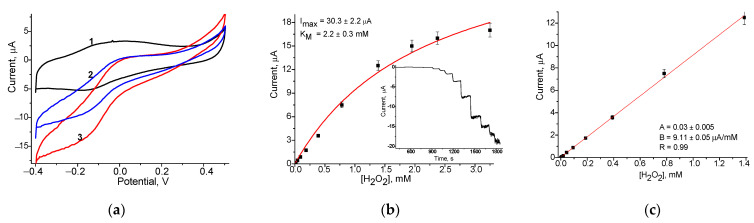
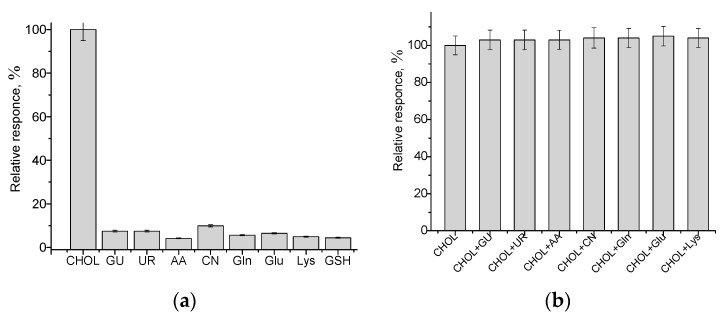
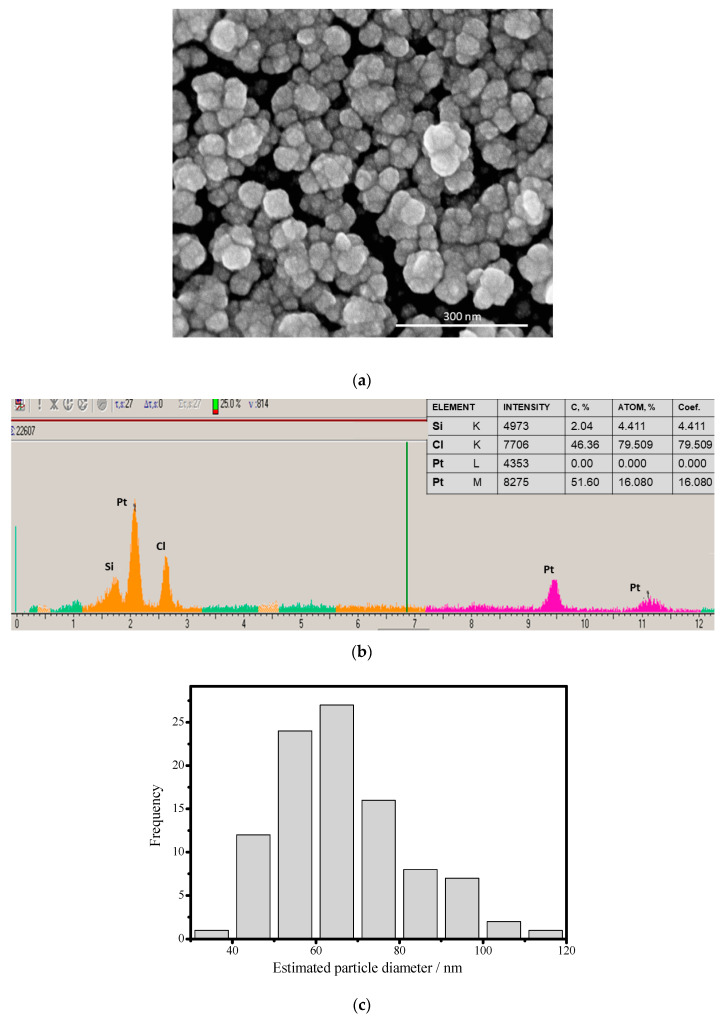
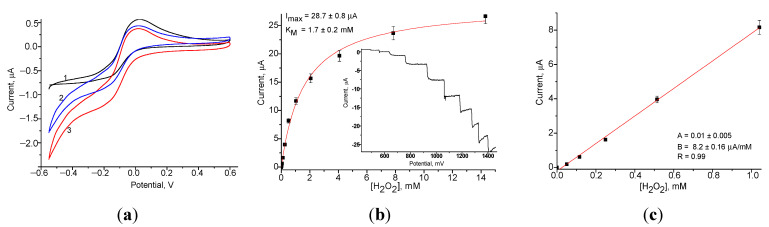
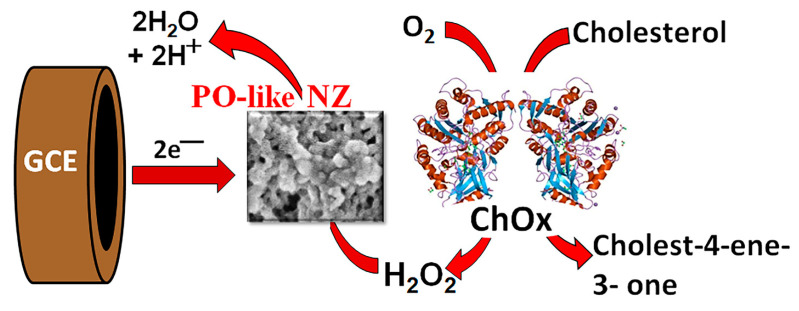
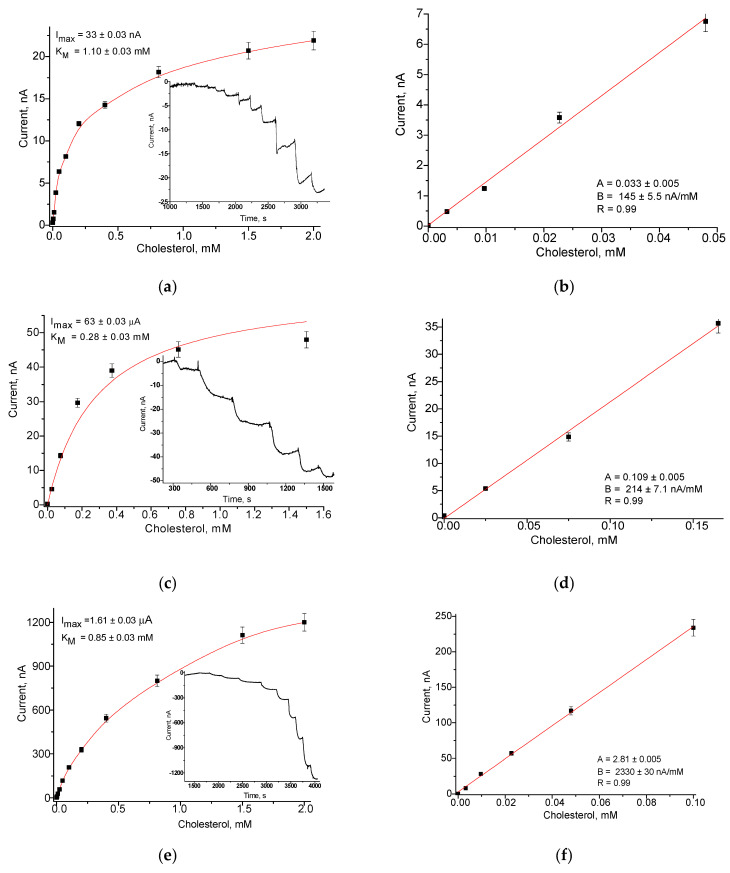
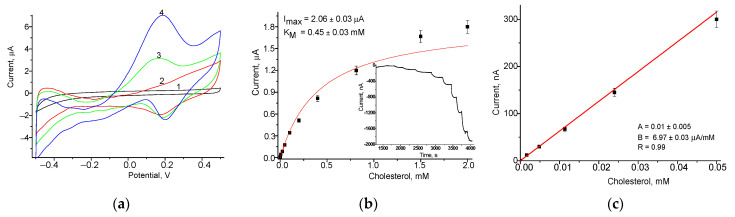
Catalytically active nanomaterials, in particular, nanozymes, are promising candidates for applications in biosensors due to their excellent catalytic activity, stability and cost-effective preparation. Nanozymes with peroxidase-like activities are prospective candidates for applications in biosensors. The purpose of the current work is to develop cholesterol oxidase-based amperometric bionanosensors using novel nanocomposites as peroxidase (HRP) mimetics. To select the most electroactive chemosensor on hydrogen peroxide, a wide range of nanomaterials were synthesized and characterized using cyclic voltammetry (CV) and chronoamperometry. Pt NPs were deposited on the surface of a glassy carbon electrode (GCE) in order to improve the conductivity and sensitivity of the nanocomposites. The most HRP-like active bi-metallic CuFe nanoparticles (nCuFe) were placed on a previously nano-platinized electrode, followed by conjugation of cholesterol oxidase (ChOx) in a cross-linking film formed by cysteamine and glutaraldehyde. The constructed nanostructured bioelectrode ChOx/nCuFe/nPt/GCE was characterized by CV and chronoamperometry in the presence of cholesterol. The bionanosensor (ChOx/nCuFe/nPt/GCE) shows a high sensitivity (3960 A·M·m) for cholesterol, a wide linear range (2-50 µM) and good storage stability at a low working potential (-0.25 V vs. Ag/AgCl/3 M KCl). The constructed bionanosensor was tested on a real serum sample. A detailed comparative analysis of the bioanalytical characteristics of the developed cholesterol bionanosensor and the known analogs is presented.
具有催化活性的纳米材料,特别是纳米酶,由于其优异的催化活性、稳定性和经济高效的制备方法,是生物传感器应用中有前景的候选材料。具有过氧化物酶样活性的纳米酶是生物传感器应用中的潜在候选材料。当前工作的目的是使用新型纳米复合材料作为过氧化物酶(HRP)模拟物来开发基于胆固醇氧化酶的安培型生物纳米传感器。为了选择对过氧化氢最具电活性的化学传感器,合成了多种纳米材料,并使用循环伏安法(CV)和计时电流法进行了表征。将铂纳米颗粒(Pt NPs)沉积在玻碳电极(GCE)表面,以提高纳米复合材料的导电性和灵敏度。将最具HRP样活性的双金属铜铁纳米颗粒(nCuFe)置于先前进行过纳米铂化的电极上,然后在由半胱胺和戊二醛形成的交联膜中偶联胆固醇氧化酶(ChOx)。在存在胆固醇的情况下,通过CV和计时电流法对构建的纳米结构生物电极ChOx/nCuFe/nPt/GCE进行了表征。该生物纳米传感器(ChOx/nCuFe/nPt/GCE)对胆固醇表现出高灵敏度(3960 A·M⁻¹·cm⁻²)、宽线性范围(2 - 50 μM),并且在低工作电位(相对于Ag/AgCl/3 M KCl为 - 0.25 V)下具有良好的储存稳定性。在实际血清样本上测试了构建的生物纳米传感器。对所开发的胆固醇生物纳米传感器与已知类似物的生物分析特性进行了详细的比较分析。