Department of Dermatology, Xiangya Hospital, Central South University, Changsha, Hunan, China.
Hunan Key Laboratory of Aging Biology, Xiangya Hospital, Central South University, Changsha, Hunan, China.
Nat Commun. 2023 Jul 5;14(1):3958. doi: 10.1038/s41467-023-39761-2.
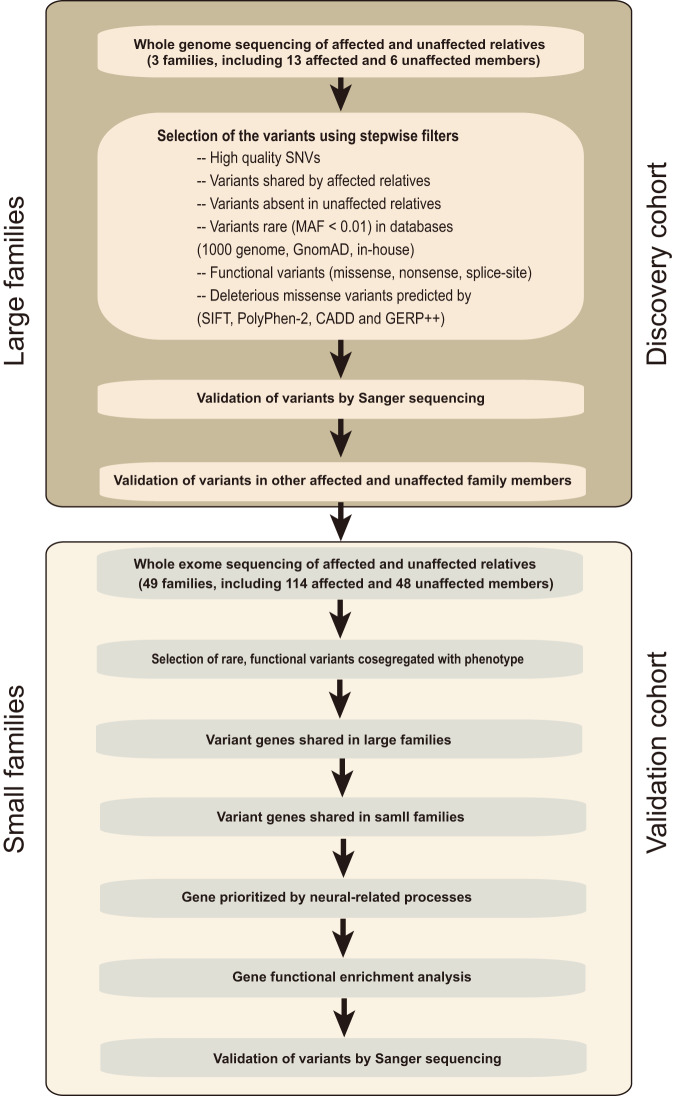
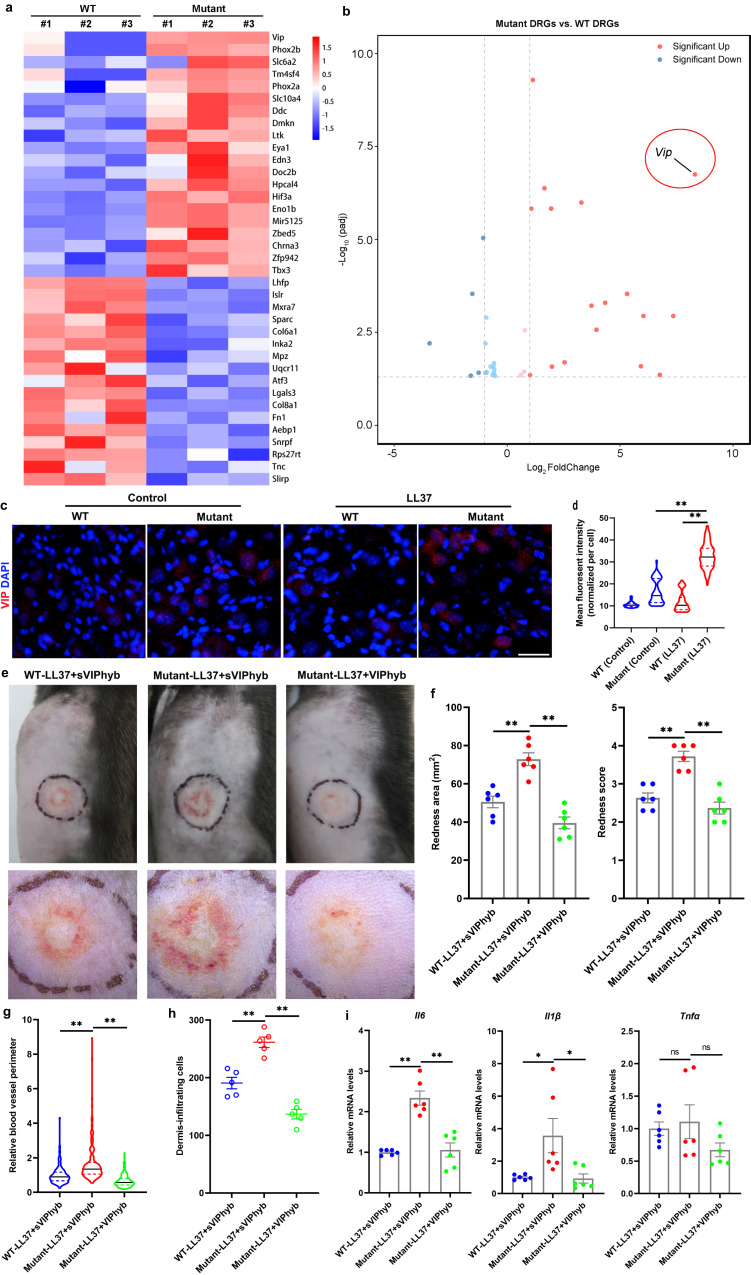
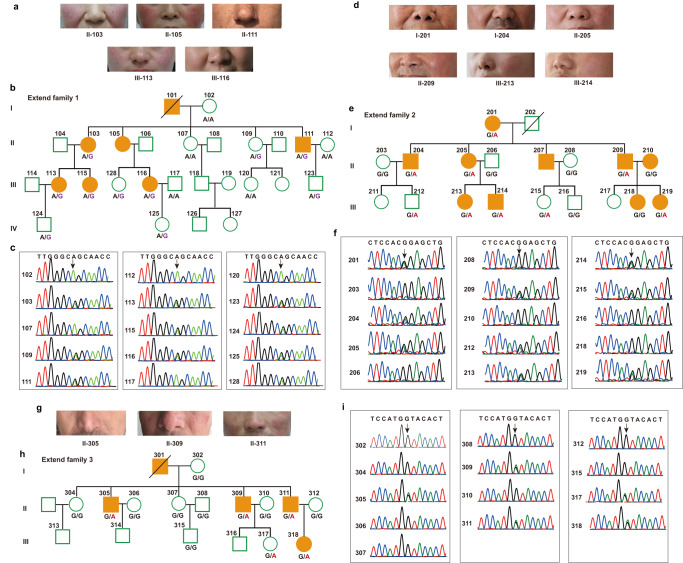
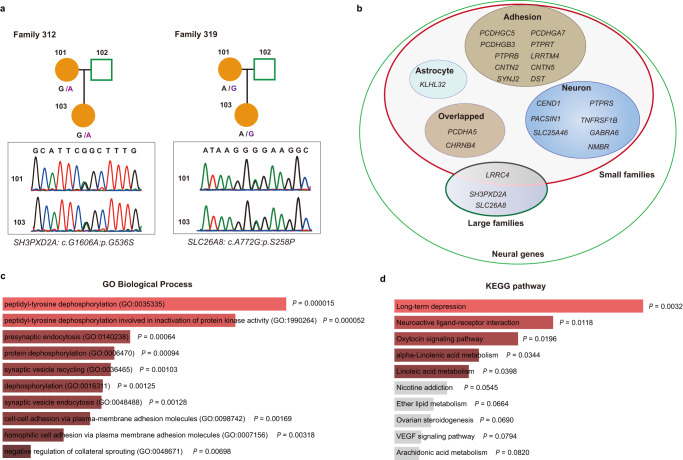
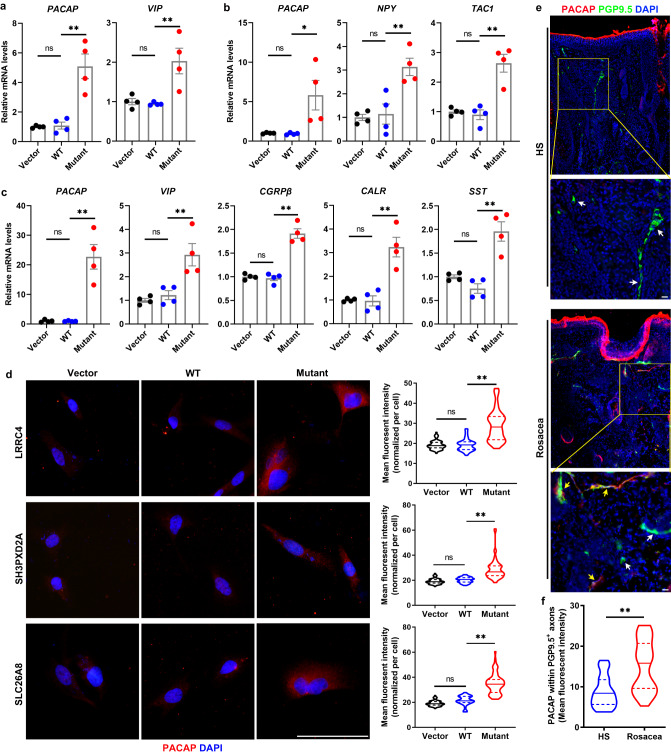
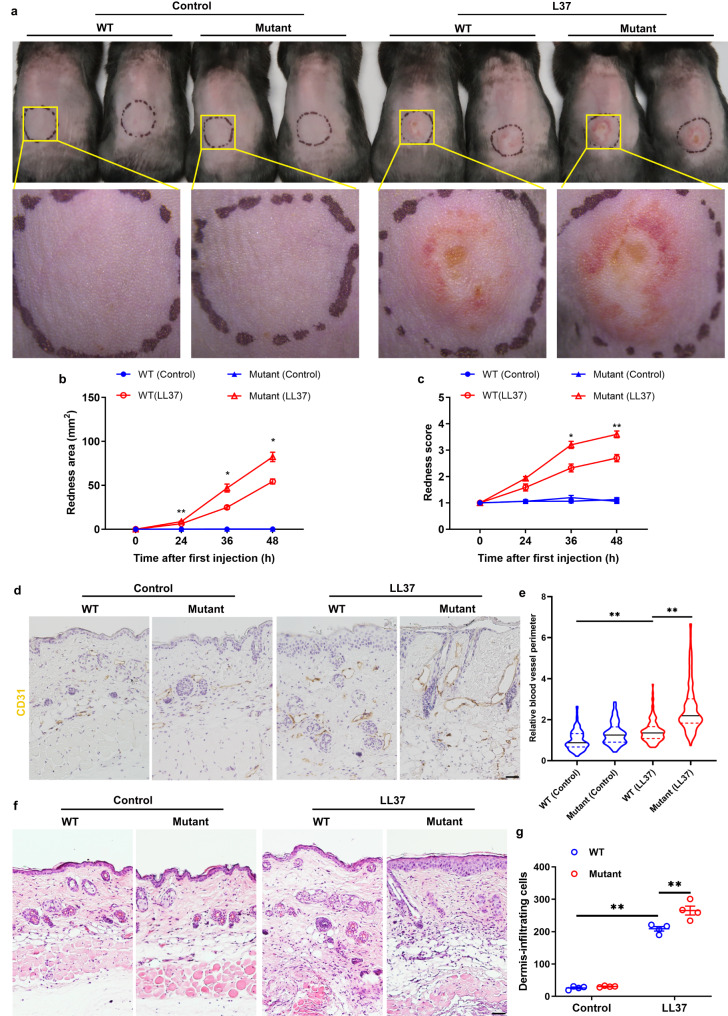
Rosacea is a chronic inflammatory skin disorder with high incidence rate. Although genetic predisposition to rosacea is suggested by existing evidence, the genetic basis remains largely unknown. Here we present the integrated results of whole genome sequencing (WGS) in 3 large rosacea families and whole exome sequencing (WES) in 49 additional validation families. We identify single rare deleterious variants of LRRC4, SH3PXD2A and SLC26A8 in large families, respectively. The relevance of SH3PXD2A, SLC26A8 and LRR family genes in rosacea predisposition is underscored by presence of additional variants in independent families. Gene ontology analysis suggests that these genes encode proteins taking part in neural synaptic processes and cell adhesion. In vitro functional analysis shows that mutations in LRRC4, SH3PXD2A and SLC26A8 induce the production of vasoactive neuropeptides in human neural cells. In a mouse model recapitulating a recurrent Lrrc4 mutation from human patients, we find rosacea-like skin inflammation, underpinned by excessive vasoactive intestinal peptide (VIP) release by peripheral neurons. These findings strongly support familial inheritance and neurogenic inflammation in rosacea development and provide mechanistic insight into the etiopathogenesis of the condition.
酒渣鼻是一种慢性炎症性皮肤疾病,发病率很高。虽然现有证据表明酒渣鼻存在遗传易感性,但遗传基础仍很大程度上未知。在这里,我们展示了对 3 个大型酒渣鼻家族进行全基因组测序(WGS)和对 49 个额外验证家族进行全外显子组测序(WES)的综合结果。我们分别在大型家族中发现了 LRRC4、SH3PXD2A 和 SLC26A8 中的单个罕见有害变异。SH3PXD2A、SLC26A8 和 LRR 家族基因在酒渣鼻易感性中的相关性,通过在独立家族中存在额外的变异得到了强调。基因本体分析表明,这些基因编码参与神经突触过程和细胞黏附的蛋白质。体外功能分析表明,LRRC4、SH3PXD2A 和 SLC26A8 中的突变诱导人神经细胞产生血管活性神经肽。在一个重现人类患者 Lrrc4 突变的小鼠模型中,我们发现了类似酒渣鼻的皮肤炎症,其特征是外周神经元过度释放血管活性肠肽(VIP)。这些发现强烈支持酒渣鼻发病过程中的家族遗传和神经源性炎症,并为该疾病的发病机制提供了机制见解。