Department of Nutrition and Food Hygiene, School of Public Health, Soochow University, Suzhou, China.
Department of Nutrition and Food Hygiene, School of Public Health, Soochow University, Suzhou, China.
Adv Nutr. 2023 Sep;14(5):1187-1196. doi: 10.1016/j.advnut.2023.06.010. Epub 2023 Jul 4.
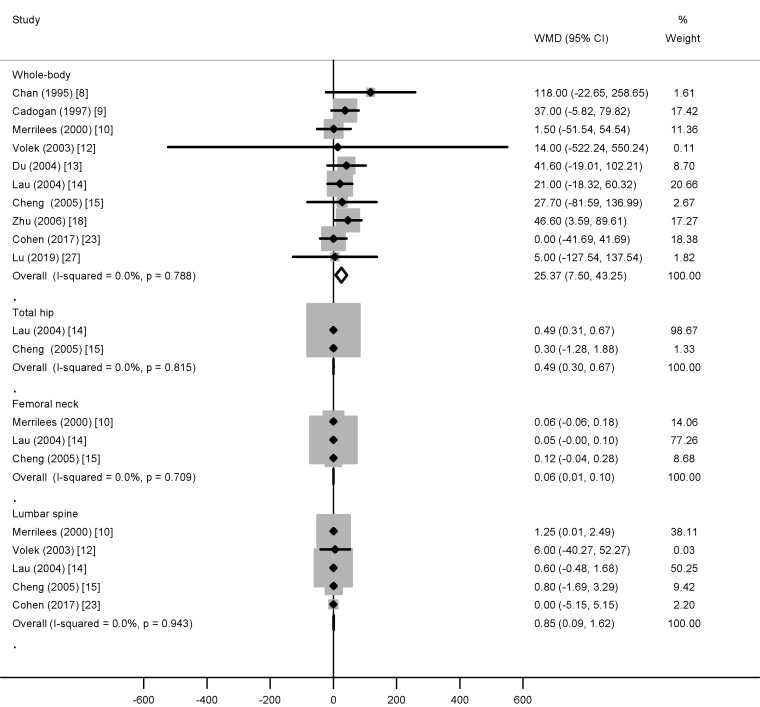
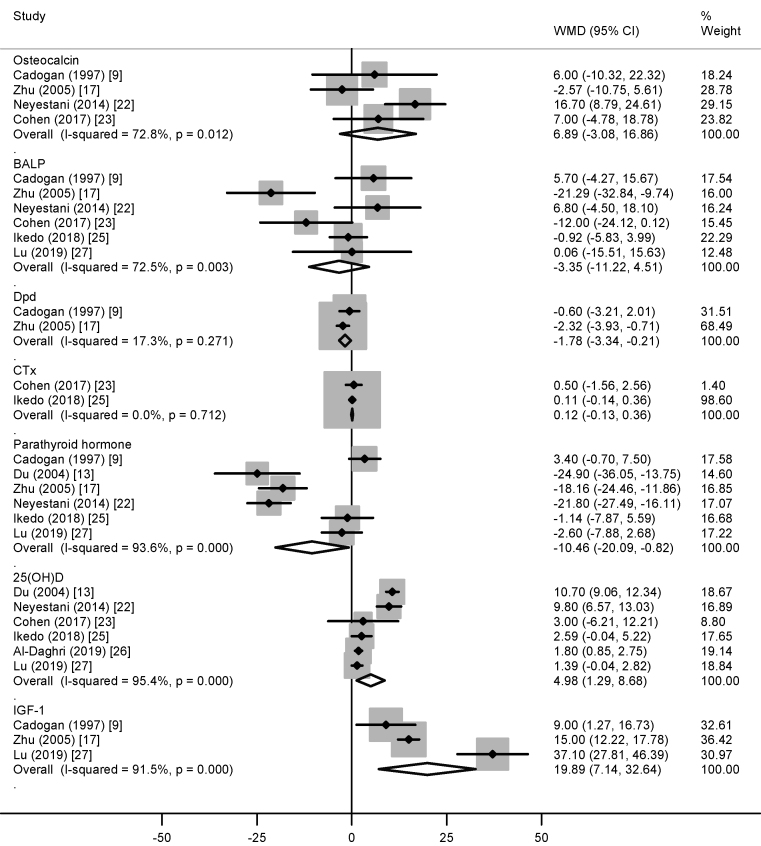
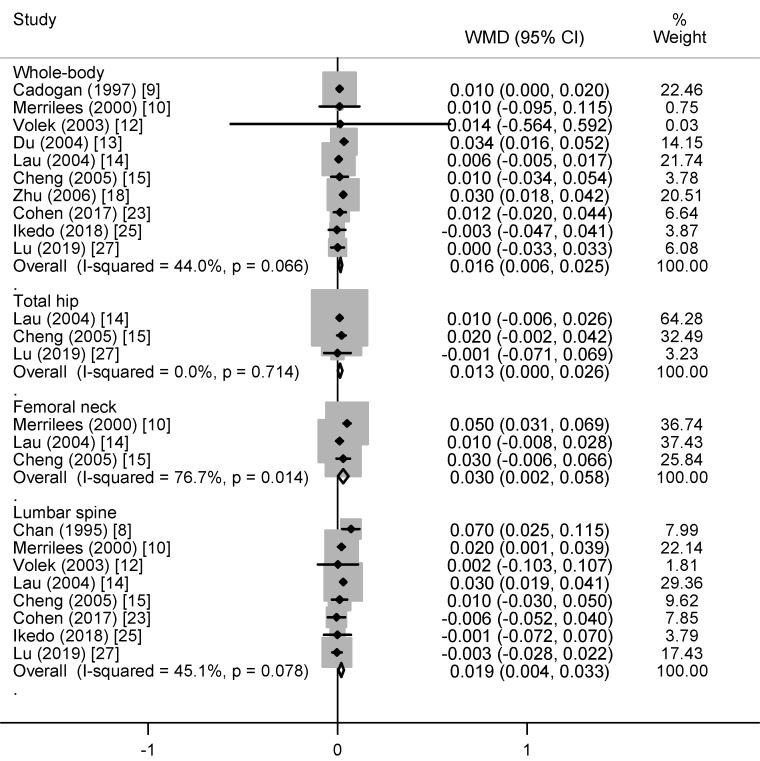
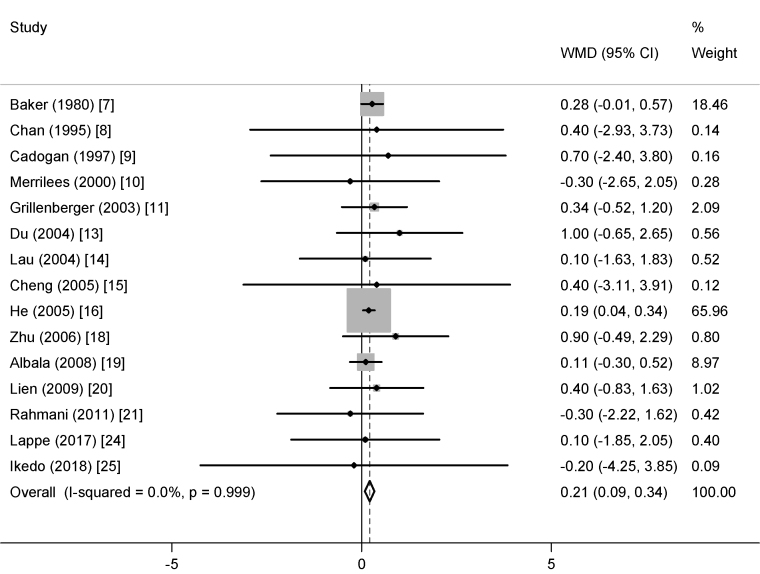
Childhood and adolescence are critical periods for optimizing skeletal growth. Dairy products are valuable sources of bone-beneficial nutrients, particularly calcium and protein. A random-effects meta-analysis of published randomized controlled trials was performed to quantitatively assess the effects of dairy supplementation on bone health indices in children and adolescents. The PubMed and Web of Science databases were searched. Dairy supplementation increased whole-body bone mineral content (BMC) (+25.37 g) and areal bone mineral density (aBMD) (+0.016 g/cm), total hip BMC (+0.49 g) and aBMD (+0.013 g/cm), femoral neck BMC (+0.06 g) and aBMD (+0.030 g/cm), lumbar spine BMC (+0.85 g) and aBMD (+0.019 g/cm), and height (0.21 cm). When expressed as a percentage difference, whole-body BMC was increased by 3.0%, total hip BMC by 3.3%, femoral neck BMC by 4.0%, lumbar spine BMC by 4.1%, whole-body aBMD by 1.8%, total hip aBMD by 1.2%, femoral neck aBMD by 1.5%, and lumbar spine aBMD by 2.6%. Dairy supplementation increased serum insulin-like growth factor I concentrations (19.89 nmol/L) and reduced concentrations of urinary deoxypyridinoline (-1.78 nmol/mmol creatinine) and serum parathyroid hormone (-10.46 pg/mL) but did not significantly affect the serum concentrations of osteocalcin, bone alkaline phosphatase, and C-terminal telopeptide of type 1 collagen. Serum 25-hydroxyvitamin D concentrations (+4.98 ng/mL) increased with vitamin D-fortified dairy supplementation. The positive effects on bone mineral mass parameters and height were generally consistent across subgroups defined by sex, geographical region, baseline calcium intake, calcium from the supplementation, trial duration, and Tanner stages. In summary, dairy supplementation during growth leads to a small but significant increase in bone mineral mass parameters, and these findings are generally supported by the changes in several biochemical parameters related to bone health.
儿童和青少年时期是优化骨骼生长的关键时期。乳制品是有益于骨骼的营养物质的重要来源,特别是钙和蛋白质。对已发表的随机对照试验进行了随机效应荟萃分析,以定量评估乳制品补充对儿童和青少年骨骼健康指标的影响。检索了 PubMed 和 Web of Science 数据库。乳制品补充增加了全身骨矿物质含量(BMC)(+25.37 g)和面积骨矿物质密度(aBMD)(+0.016 g/cm)、全髋 BMC(+0.49 g)和 aBMD(+0.013 g/cm)、股骨颈 BMC(+0.06 g)和 aBMD(+0.030 g/cm)、腰椎 BMC(+0.85 g)和 aBMD(+0.019 g/cm)和身高(+0.21 cm)。当以百分比差异表示时,全身 BMC 增加了 3.0%,全髋 BMC 增加了 3.3%,股骨颈 BMC 增加了 4.0%,腰椎 BMC 增加了 4.1%,全身 aBMD 增加了 1.8%,全髋 aBMD 增加了 1.2%,股骨颈 aBMD 增加了 1.5%,腰椎 aBMD 增加了 2.6%。乳制品补充增加了血清胰岛素样生长因子 I 浓度(19.89 nmol/L),降低了尿脱氧吡啶啉(-1.78 nmol/mmol 肌酐)和血清甲状旁腺激素(-10.46 pg/mL)的浓度,但对血清骨钙素、骨碱性磷酸酶和 1 型胶原 C 端肽的浓度没有显著影响。血清 25-羟维生素 D 浓度(+4.98 ng/mL)随着维生素 D 强化乳制品的补充而增加。在按性别、地理位置、基线钙摄入量、补充钙、试验持续时间和 Tanner 阶段定义的亚组中,骨骼矿物质质量参数和身高的阳性影响通常是一致的。总之,生长期间的乳制品补充可导致骨矿物质质量参数的微小但显著增加,这些发现通常得到与骨骼健康相关的几个生化参数变化的支持。