• 文献检索
  • 文档翻译
  • 深度研究
  • 学术资讯
  • Suppr Zotero 插件Zotero 插件
  • 邀请有礼
  • 套餐&价格
  • 历史记录
应用&插件
Suppr Zotero 插件Zotero 插件浏览器插件Mac 客户端Windows 客户端微信小程序
定价
高级版会员购买积分包购买API积分包
服务
文献检索文档翻译深度研究API 文档MCP 服务
关于我们
关于 Suppr公司介绍联系我们用户协议隐私条款
关注我们

Suppr 超能文献

核心技术专利:CN118964589B侵权必究
粤ICP备2023148730 号-1Suppr @ 2026

文献检索

告别复杂PubMed语法,用中文像聊天一样搜索,搜遍4000万医学文献。AI智能推荐,让科研检索更轻松。

立即免费搜索

文件翻译

保留排版,准确专业,支持PDF/Word/PPT等文件格式,支持 12+语言互译。

免费翻译文档

深度研究

AI帮你快速写综述,25分钟生成高质量综述,智能提取关键信息,辅助科研写作。

立即免费体验

通过适用于便携式和可穿戴设备的单导联心电图检测左心室收缩功能障碍。

Detection of left ventricular systolic dysfunction from single-lead electrocardiography adapted for portable and wearable devices.

作者信息

Khunte Akshay, Sangha Veer, Oikonomou Evangelos K, Dhingra Lovedeep S, Aminorroaya Arya, Mortazavi Bobak J, Coppi Andreas, Brandt Cynthia A, Krumholz Harlan M, Khera Rohan

机构信息

Department of Computer Science, Yale University, New Haven, CT, USA.

Section of Cardiovascular Medicine, Department of Internal Medicine, Yale School of Medicine, New Haven, CT, USA.

出版信息

NPJ Digit Med. 2023 Jul 11;6(1):124. doi: 10.1038/s41746-023-00869-w.

DOI:10.1038/s41746-023-00869-w
PMID:37433874
原文链接:https://pmc.ncbi.nlm.nih.gov/articles/PMC10336107/
Abstract

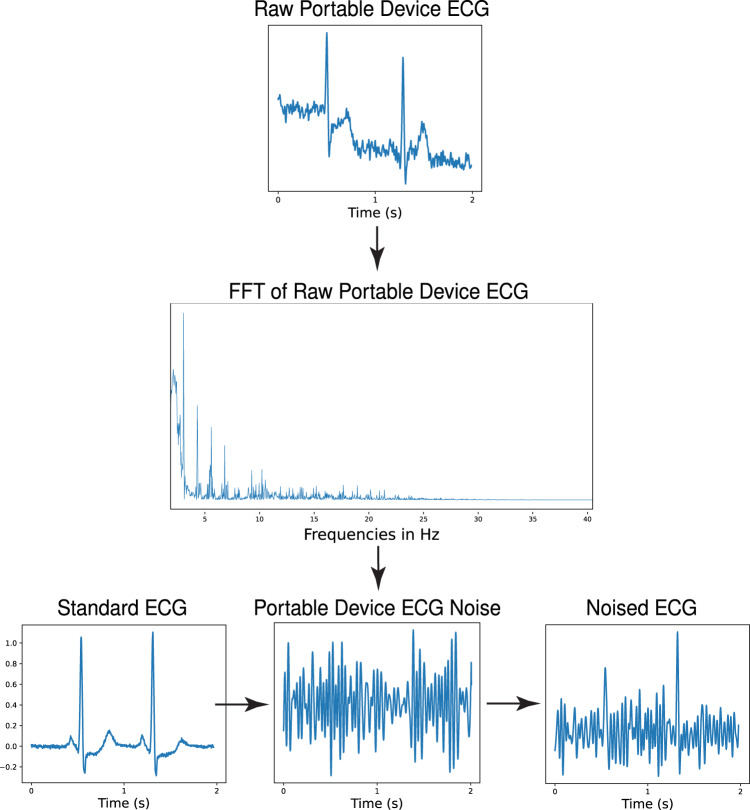
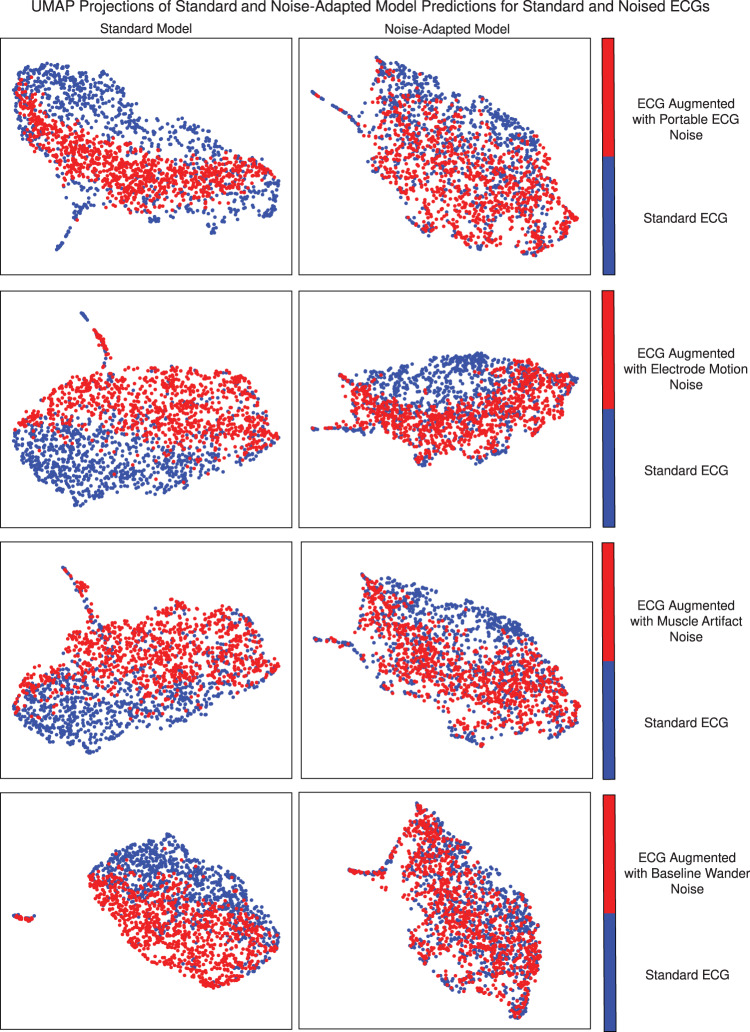
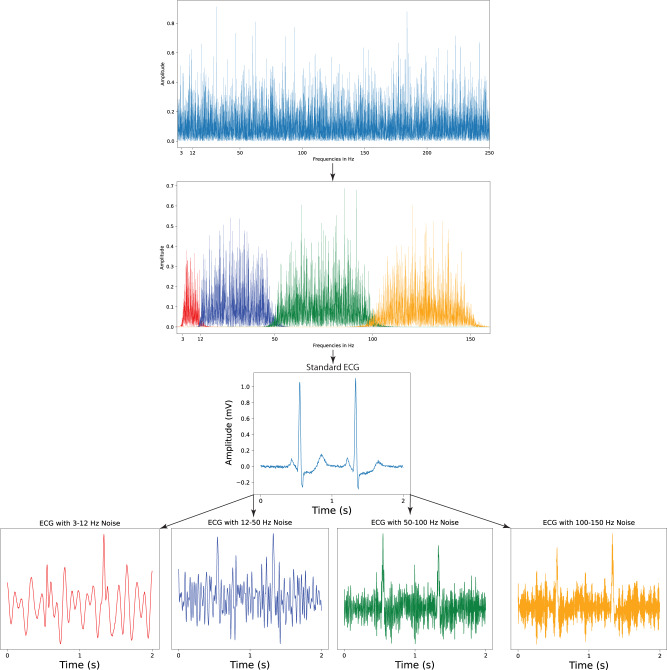
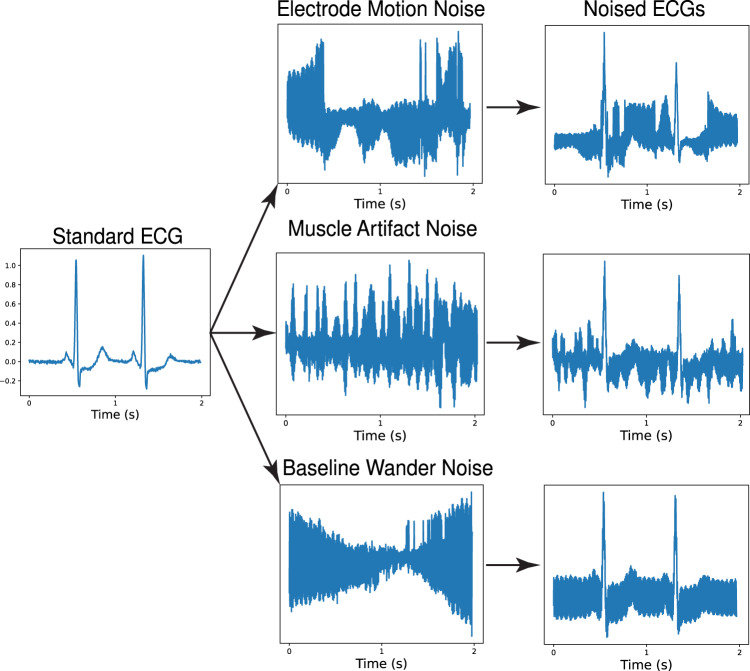
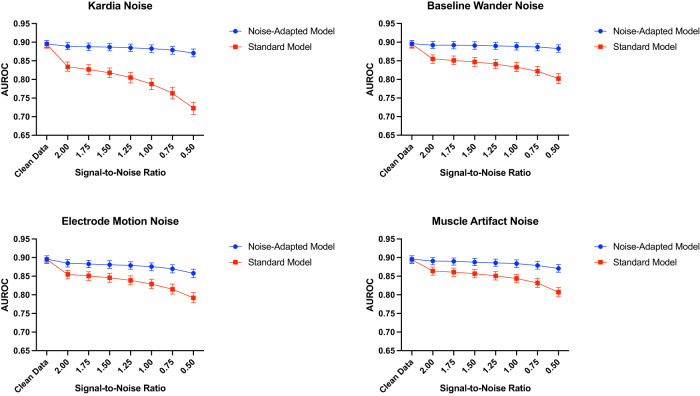
Artificial intelligence (AI) can detect left ventricular systolic dysfunction (LVSD) from electrocardiograms (ECGs). Wearable devices could allow for broad AI-based screening but frequently obtain noisy ECGs. We report a novel strategy that automates the detection of hidden cardiovascular diseases, such as LVSD, adapted for noisy single-lead ECGs obtained on wearable and portable devices. We use 385,601 ECGs for development of a standard and noise-adapted model. For the noise-adapted model, ECGs are augmented during training with random gaussian noise within four distinct frequency ranges, each emulating real-world noise sources. Both models perform comparably on standard ECGs with an AUROC of 0.90. The noise-adapted model performs significantly better on the same test set augmented with four distinct real-world noise recordings at multiple signal-to-noise ratios (SNRs), including noise isolated from a portable device ECG. The standard and noise-adapted models have an AUROC of 0.72 and 0.87, respectively, when evaluated on ECGs augmented with portable ECG device noise at an SNR of 0.5. This approach represents a novel strategy for the development of wearable-adapted tools from clinical ECG repositories.

摘要

人工智能(AI)可从心电图(ECG)检测左心室收缩功能障碍(LVSD)。可穿戴设备能够实现基于AI的广泛筛查,但经常会获取到噪声较大的ECG。我们报告了一种新颖的策略,该策略可自动检测隐藏的心血管疾病,如LVSD,适用于在可穿戴和便携式设备上获取的噪声单导联ECG。我们使用385,601份ECG来开发标准模型和噪声适应模型。对于噪声适应模型,在训练期间,ECG会添加四个不同频率范围内的随机高斯噪声进行增强,每个频率范围模拟实际噪声源。两个模型在标准ECG上的表现相当,曲线下面积(AUROC)为0.90。在同一测试集上,当添加四个不同的实际噪声记录且具有多个信噪比(SNR)时,包括从便携式设备ECG中分离出的噪声,噪声适应模型的表现明显更好。当在信噪比为0.5的便携式ECG设备噪声增强的ECG上进行评估时,标准模型和噪声适应模型的AUROC分别为0.72和0.87。这种方法代表了一种从临床ECG存储库开发适用于可穿戴设备工具的新颖策略。
https://cdn.ncbi.nlm.nih.gov/pmc/blobs/de6d/10336107/547c68a0839f/41746_2023_869_Fig5_HTML.jpg
https://cdn.ncbi.nlm.nih.gov/pmc/blobs/de6d/10336107/91b4bfc40e85/41746_2023_869_Fig1_HTML.jpg
https://cdn.ncbi.nlm.nih.gov/pmc/blobs/de6d/10336107/77e20e922091/41746_2023_869_Fig2_HTML.jpg
https://cdn.ncbi.nlm.nih.gov/pmc/blobs/de6d/10336107/ff9018d87202/41746_2023_869_Fig3_HTML.jpg
https://cdn.ncbi.nlm.nih.gov/pmc/blobs/de6d/10336107/591849b62cb2/41746_2023_869_Fig4_HTML.jpg
https://cdn.ncbi.nlm.nih.gov/pmc/blobs/de6d/10336107/547c68a0839f/41746_2023_869_Fig5_HTML.jpg
https://cdn.ncbi.nlm.nih.gov/pmc/blobs/de6d/10336107/91b4bfc40e85/41746_2023_869_Fig1_HTML.jpg
https://cdn.ncbi.nlm.nih.gov/pmc/blobs/de6d/10336107/77e20e922091/41746_2023_869_Fig2_HTML.jpg
https://cdn.ncbi.nlm.nih.gov/pmc/blobs/de6d/10336107/ff9018d87202/41746_2023_869_Fig3_HTML.jpg
https://cdn.ncbi.nlm.nih.gov/pmc/blobs/de6d/10336107/591849b62cb2/41746_2023_869_Fig4_HTML.jpg
https://cdn.ncbi.nlm.nih.gov/pmc/blobs/de6d/10336107/547c68a0839f/41746_2023_869_Fig5_HTML.jpg

相似文献

1
Detection of left ventricular systolic dysfunction from single-lead electrocardiography adapted for portable and wearable devices.通过适用于便携式和可穿戴设备的单导联心电图检测左心室收缩功能障碍。
NPJ Digit Med. 2023 Jul 11;6(1):124. doi: 10.1038/s41746-023-00869-w.
2
Artificial Intelligence Enabled Prediction of Heart Failure Risk from Single-lead Electrocardiograms.基于单导联心电图的人工智能辅助心力衰竭风险预测
medRxiv. 2024 Dec 21:2024.05.27.24307952. doi: 10.1101/2024.05.27.24307952.
3
Artificial intelligence-based identification of left ventricular systolic dysfunction from 12-lead electrocardiograms: external validation and advanced application of an existing model.基于人工智能从12导联心电图识别左心室收缩功能障碍:现有模型的外部验证及进阶应用
Eur Heart J Digit Health. 2023 Dec 20;5(2):144-151. doi: 10.1093/ehjdh/ztad081. eCollection 2024 Mar.
4
Artificial Intelligence-Augmented Electrocardiogram Detection of Left Ventricular Systolic Dysfunction in the General Population.人工智能增强心电图在普通人群中检测左心室收缩功能障碍
Mayo Clin Proc. 2021 Oct;96(10):2576-2586. doi: 10.1016/j.mayocp.2021.02.029. Epub 2021 Jun 10.
5
CarDS-Plus ECG Platform: Development and Feasibility Evaluation of a Multiplatform Artificial Intelligence Toolkit for Portable and Wearable Device Electrocardiograms.CarDS-Plus心电图平台:用于便携式和可穿戴设备心电图的多平台人工智能工具包的开发与可行性评估
medRxiv. 2023 Oct 3:2023.10.02.23296404. doi: 10.1101/2023.10.02.23296404.
6
Study Protocol for the Artificial Intelligence-Driven Evaluation of Structural Heart Diseases Using Wearable Electrocardiogram (ID-SHD).使用可穿戴心电图进行人工智能驱动的结构性心脏病评估的研究方案(ID-SHD)。
medRxiv. 2024 Jun 3:2024.03.18.24304477. doi: 10.1101/2024.03.18.24304477.
7
Detection of Left Ventricular Systolic Dysfunction From Electrocardiographic Images.从心电图图像中检测左心室收缩功能障碍。
Circulation. 2023 Aug 29;148(9):765-777. doi: 10.1161/CIRCULATIONAHA.122.062646. Epub 2023 Jul 25.
8
Development and Multinational Validation of an Ensemble Deep Learning Algorithm for Detecting and Predicting Structural Heart Disease Using Noisy Single-lead Electrocardiograms.一种用于使用嘈杂单导联心电图检测和预测结构性心脏病的集成深度学习算法的开发与多国验证
medRxiv. 2024 Oct 8:2024.10.07.24314974. doi: 10.1101/2024.10.07.24314974.
9
Artificial intelligence-enabled electrocardiographic screening for left ventricular systolic dysfunction and mortality risk prediction.基于人工智能的心电图筛查左心室收缩功能障碍及死亡风险预测
Front Cardiovasc Med. 2023 Mar 3;10:1070641. doi: 10.3389/fcvm.2023.1070641. eCollection 2023.
10
External validation of a deep learning electrocardiogram algorithm to detect ventricular dysfunction.深度学习心电图算法检测心室功能障碍的外部验证。
Int J Cardiol. 2021 Apr 15;329:130-135. doi: 10.1016/j.ijcard.2020.12.065. Epub 2021 Jan 2.

引用本文的文献

1
Development and multinational validation of an ensemble deep learning algorithm for detecting and predicting structural heart disease using noisy single-lead electrocardiograms.一种用于使用噪声单导联心电图检测和预测结构性心脏病的集成深度学习算法的开发与多中心验证。
Eur Heart J Digit Health. 2025 Apr 10;6(4):554-566. doi: 10.1093/ehjdh/ztaf034. eCollection 2025 Jul.
2
Scalable screening for structural heart disease: promises from artificial intelligence-electrocardiogram tools.结构性心脏病的可扩展筛查:人工智能心电图工具带来的前景
Eur Heart J Digit Health. 2025 May 27;6(4):521-523. doi: 10.1093/ehjdh/ztaf048. eCollection 2025 Jul.
3

本文引用的文献

1
Detection of Left Ventricular Systolic Dysfunction From Electrocardiographic Images.从心电图图像中检测左心室收缩功能障碍。
Circulation. 2023 Aug 29;148(9):765-777. doi: 10.1161/CIRCULATIONAHA.122.062646. Epub 2023 Jul 25.
2
Clinical Validation of 5 Direct-to-Consumer Wearable Smart Devices to Detect Atrial Fibrillation: BASEL Wearable Study.5 款直接面向消费者的可穿戴智能设备检测心房颤动的临床验证:巴塞尔可穿戴研究。
JACC Clin Electrophysiol. 2023 Feb;9(2):232-242. doi: 10.1016/j.jacep.2022.09.011. Epub 2023 Jan 18.
3
Automated detection of low ejection fraction from a one-lead electrocardiogram: application of an AI algorithm to an electrocardiogram-enabled Digital Stethoscope.
Automated transformation of unstructured cardiovascular diagnostic reports into structured datasets using sequentially deployed large language models.
使用顺序部署的大语言模型将非结构化心血管诊断报告自动转换为结构化数据集。
Eur Heart J Digit Health. 2025 Apr 2;6(4):783-796. doi: 10.1093/ehjdh/ztaf030. eCollection 2025 Jul.
4
Flexible Bioelectrodes-Integrated Miniaturized System for Unconstrained ECG Monitoring.用于无约束心电图监测的集成柔性生物电极微型系统。
Sensors (Basel). 2025 Jul 6;25(13):4213. doi: 10.3390/s25134213.
5
Leveraging AI-enhanced digital health with consumer devices for scalable cardiovascular screening, prediction, and monitoring.利用人工智能增强的数字健康技术与消费设备,实现可扩展的心血管筛查、预测和监测。
NPJ Cardiovasc Health. 2025;2(1):34. doi: 10.1038/s44325-025-00071-9. Epub 2025 Jul 2.
6
Wearable-Echo-FM: An ECG-echo foundation model for single lead electrocardiography.可穿戴式回声调频:一种用于单导联心电图的心电图-回声基础模型。
medRxiv. 2025 Jun 12:2025.06.10.25329163. doi: 10.1101/2025.06.10.25329163.
7
An Artificial Intelligence Algorithm for Early Detection of Left Ventricular Systolic Dysfunction in Patients with Normal Sinus Rhythm.一种用于早期检测窦性心律正常患者左心室收缩功能障碍的人工智能算法。
J Clin Med. 2025 Jun 15;14(12):4257. doi: 10.3390/jcm14124257.
8
Artificial Intelligence-Enabled Prediction of Heart Failure Risk From Single-Lead Electrocardiograms.基于单导联心电图的人工智能心力衰竭风险预测
JAMA Cardiol. 2025 Apr 16. doi: 10.1001/jamacardio.2025.0492.
9
Synthetic generation of cardiac tissue motion from surface electrocardiograms.从体表心电图合成心脏组织运动
Nat Cardiovasc Res. 2025 Apr;4(4):445-457. doi: 10.1038/s44161-025-00629-x. Epub 2025 Apr 14.
10
Artificial Intelligence in Diagnosis of Heart Failure.人工智能在心力衰竭诊断中的应用
J Am Heart Assoc. 2025 Apr 15;14(8):e039511. doi: 10.1161/JAHA.124.039511. Epub 2025 Apr 10.
基于单导联心电图自动检测低射血分数:人工智能算法在配备心电图功能的数字听诊器中的应用。
Eur Heart J Digit Health. 2022 May 23;3(3):373-379. doi: 10.1093/ehjdh/ztac030. eCollection 2022 Sep.
4
Prospective evaluation of smartwatch-enabled detection of left ventricular dysfunction.智能手表辅助检测左心室功能障碍的前瞻性评估。
Nat Med. 2022 Dec;28(12):2497-2503. doi: 10.1038/s41591-022-02053-1. Epub 2022 Nov 14.
5
The Use of Wearable ECG Devices in the Clinical Setting: a Review.可穿戴式心电图设备在临床环境中的应用:综述
Curr Emerg Hosp Med Rep. 2022;10(3):67-72. doi: 10.1007/s40138-022-00248-x. Epub 2022 Jun 25.
6
2022 AHA/ACC/HFSA Guideline for the Management of Heart Failure: A Report of the American College of Cardiology/American Heart Association Joint Committee on Clinical Practice Guidelines.2022年美国心脏协会/美国心脏病学会/美国心力衰竭学会心力衰竭管理指南:美国心脏病学会/美国心脏协会临床实践指南联合委员会报告
Circulation. 2022 May 3;145(18):e895-e1032. doi: 10.1161/CIR.0000000000001063. Epub 2022 Apr 1.
7
Point-of-care screening for heart failure with reduced ejection fraction using artificial intelligence during ECG-enabled stethoscope examination in London, UK: a prospective, observational, multicentre study.在英国伦敦,使用配备心电图功能的听诊器进行检查时,通过人工智能进行射血分数降低性心力衰竭的即时筛查:一项前瞻性、观察性、多中心研究。
Lancet Digit Health. 2022 Feb;4(2):e117-e125. doi: 10.1016/S2589-7500(21)00256-9. Epub 2022 Jan 5.
8
Heart Failure Hospitalization and Guideline-Directed Prescribing Patterns Among Heart Failure With Reduced Ejection Fraction Patients.心力衰竭伴射血分数降低患者的心力衰竭住院和指南指导的处方模式。
JACC Heart Fail. 2021 Jan;9(1):28-38. doi: 10.1016/j.jchf.2020.08.017. Epub 2020 Dec 9.
9
The independent reduction in mortality associated with guideline-directed medical therapy in patients with coronary artery disease and heart failure with reduced ejection fraction.指南指导下的医学治疗可独立降低冠心病和射血分数降低的心力衰竭患者的死亡率。
Eur Heart J Qual Care Clin Outcomes. 2021 Jul 21;7(4):416-421. doi: 10.1093/ehjqcco/qcaa032.
10
Lead-I ECG for detecting atrial fibrillation in patients attending primary care with an irregular pulse using single-time point testing: A systematic review and economic evaluation.采用单点检测技术的导联 I 心电图在不规则脉搏的初级保健患者中检测心房颤动的系统评价和经济评估。
PLoS One. 2019 Dec 23;14(12):e0226671. doi: 10.1371/journal.pone.0226671. eCollection 2019.