Alfaifi Abdullah
Department of Clinical Pharmacy, College of Pharmacy, Prince Sattam Bin Abdulaziz University, P.O. Box 173, Al-Kharj, 11942, Saudi Arabia.
Saudi Pharm J. 2023 Aug;31(8):101685. doi: 10.1016/j.jsps.2023.06.018. Epub 2023 Jun 24.
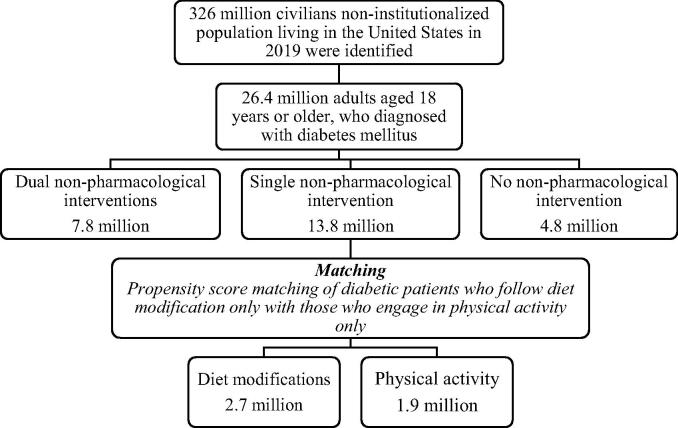
This study explored the sociodemographic and clinical characteristics of patients with diabetes who incorporated two non-pharmacological therapies into their lifestyle and the association between non-pharmacological therapy and healthcare utilization and expenditure. In the USA, 26.4 million people were reportedly diagnosed with diabetes and treated with diet modification or physical activity in the 2019 Medical Expenditure Panel Survey. Physical activity was defined as moderate-to-vigorous physical exercise five times per week, whereas dietary modification involved healthy eating that reduced glucose levels. Only 4.8 million patients with diabetes did not integrate any non-pharmacological intervention into their therapy regimen. Those who did not include non-pharmacological interventions had higher annual total healthcare expenditures (M = $18,428) than those who incorporated either single (M = $17,058) or dual intervention (M = $15,134). A significant difference was observed in prescribed medicine utilization per year for those who did not include lifestyle modifications or non-pharmacological interventions. Propensity score-matched participants revealed significant differences in hospital stays, outpatient visits, and emergency department expenditures. Patients with diabetes who adhered to two non-pharmacological interventions showed significantly lower healthcare utilization. Being active and following a healthy diet can help prevent the progression of diabetes mellitus complications and reduce the cost associated with diabetes.
本研究探讨了将两种非药物疗法纳入生活方式的糖尿病患者的社会人口统计学和临床特征,以及非药物疗法与医疗保健利用和支出之间的关联。在美国,据报道,在2019年医疗支出小组调查中,有2640万人被诊断患有糖尿病并接受饮食调整或体育锻炼治疗。体育活动被定义为每周进行五次中度至剧烈的体育锻炼,而饮食调整则包括有助于降低血糖水平的健康饮食。只有480万糖尿病患者在治疗方案中未纳入任何非药物干预措施。未纳入非药物干预措施的患者每年的医疗总支出(中位数 = 18428美元)高于纳入单一干预措施(中位数 = 17058美元)或双重干预措施(中位数 = 15134美元)的患者。对于未进行生活方式改变或非药物干预的患者,每年的处方药使用情况存在显著差异。倾向得分匹配的参与者在住院时间、门诊就诊次数和急诊科支出方面存在显著差异。坚持两种非药物干预措施的糖尿病患者的医疗保健利用率显著较低。积极锻炼和遵循健康饮食有助于预防糖尿病并发症的进展,并降低与糖尿病相关的成本。