Qiao Haoduo, Xu Qing, Xu Yunfei, Zhao Yao, He Nina, Tang Jie, Zhao Jie, Liu Ying
Department of Neurosurgery, Xiangya Hospital, Central South University; Department of Pathophysiology, Xiangya School of Medicine, Central South University; Sepsis Translational Medicine Key Laboratory of Hunan Province; National Medicine Functional Experimental Teaching Center, Changsha, Hunan Province, China.
Department of Clinical Pharmacology, Xiangya Hospital, Central South University, Changsha, Hunan Province, China.
Neural Regen Res. 2023 Dec;18(12):2638-2644. doi: 10.4103/1673-5374.373678.
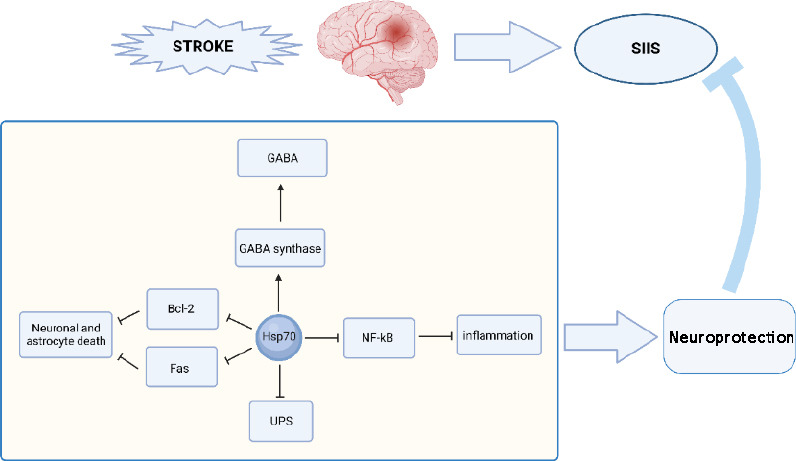
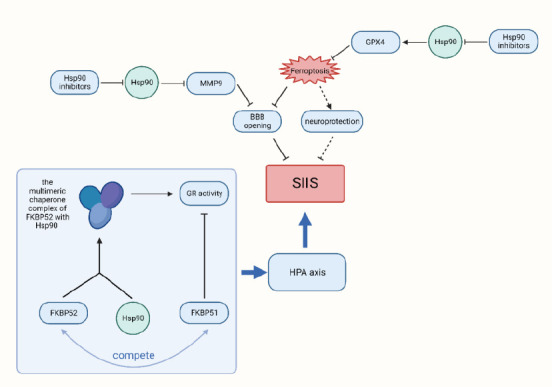
Stroke-induced immunosuppression is a process that leads to peripheral suppression of the immune system after a stroke and belongs to the central nervous system injury-induced immunosuppressive syndrome. Stroke-induced immunosuppression leads to increased susceptibility to post-stroke infections, such as urinary tract infections and stroke-associated pneumonia, worsening prognosis. Molecular chaperones are a large class of proteins that are able to maintain proteostasis by directing the folding of nascent polypeptide chains, refolding misfolded proteins, and targeting misfolded proteins for degradation. Various molecular chaperones have been shown to play roles in stroke-induced immunosuppression by modulating the activity of other molecular chaperones, cochaperones, and their associated pathways. This review summarizes the role of molecular chaperones in stroke-induced immunosuppression and discusses new approaches to restore host immune defense after stroke.
中风诱导的免疫抑制是一个在中风后导致免疫系统外周抑制的过程,属于中枢神经系统损伤诱导的免疫抑制综合征。中风诱导的免疫抑制会导致中风后感染(如尿路感染和中风相关性肺炎)的易感性增加,从而使预后恶化。分子伴侣是一大类蛋白质,能够通过指导新生多肽链的折叠、重新折叠错误折叠的蛋白质以及将错误折叠的蛋白质靶向降解来维持蛋白质稳态。各种分子伴侣已被证明通过调节其他分子伴侣、共伴侣及其相关途径的活性,在中风诱导的免疫抑制中发挥作用。本综述总结了分子伴侣在中风诱导的免疫抑制中的作用,并讨论了中风后恢复宿主免疫防御的新方法。