National Engineering Research Center for Biomaterials, Sichuan University, Chengdu 610064, China.
Departments of Pathology, Biomedical Engineering and Macromolecular Science and Engineering, Case Western Reserve University, Cleveland, OH 44106, USA.
Sci Adv. 2023 Jul 21;9(29):eadd9871. doi: 10.1126/sciadv.add9871. Epub 2023 Jul 19.
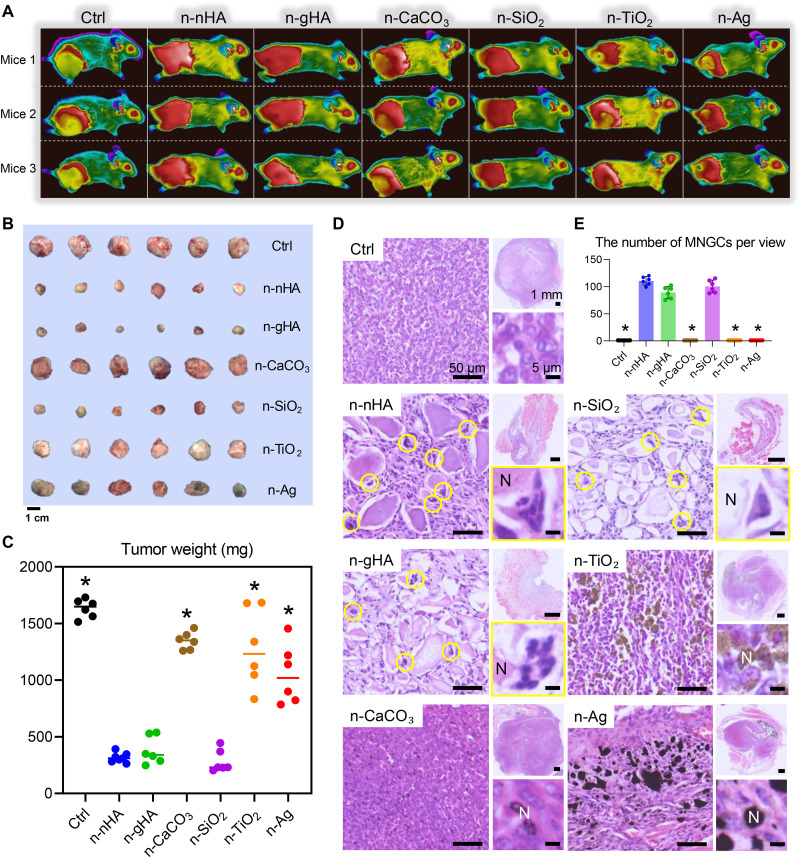
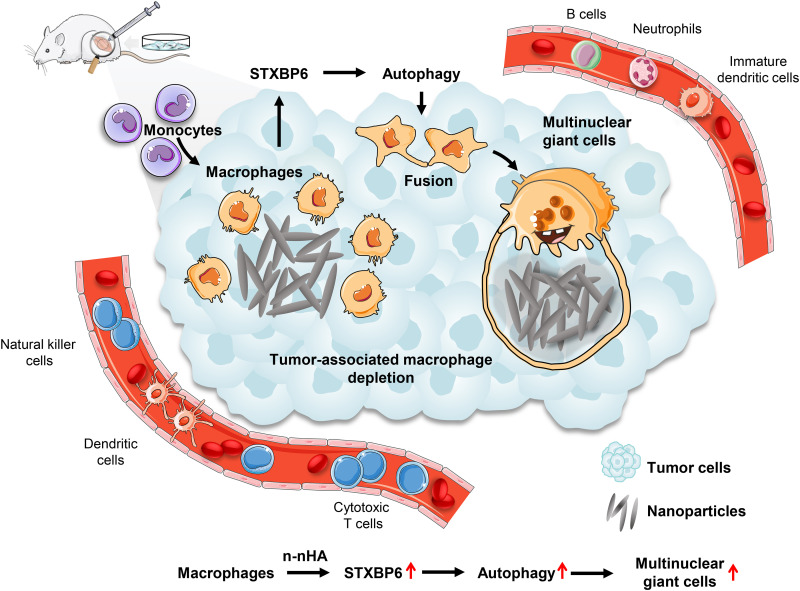
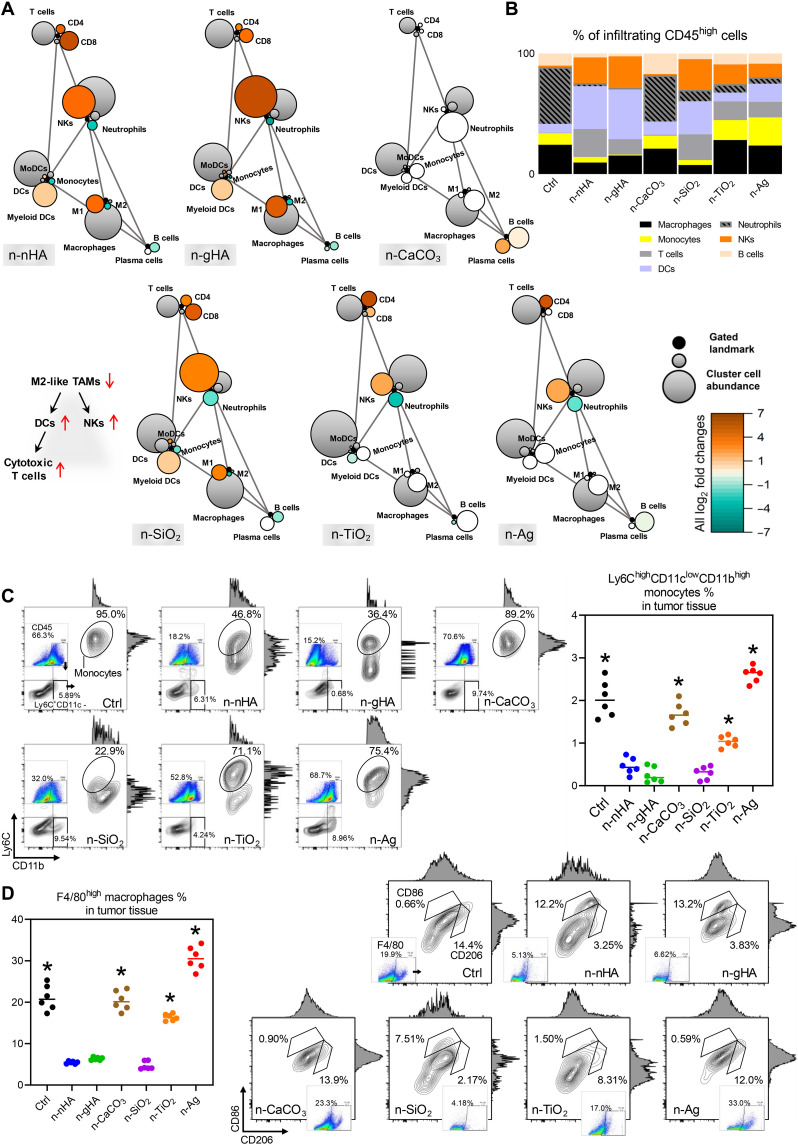
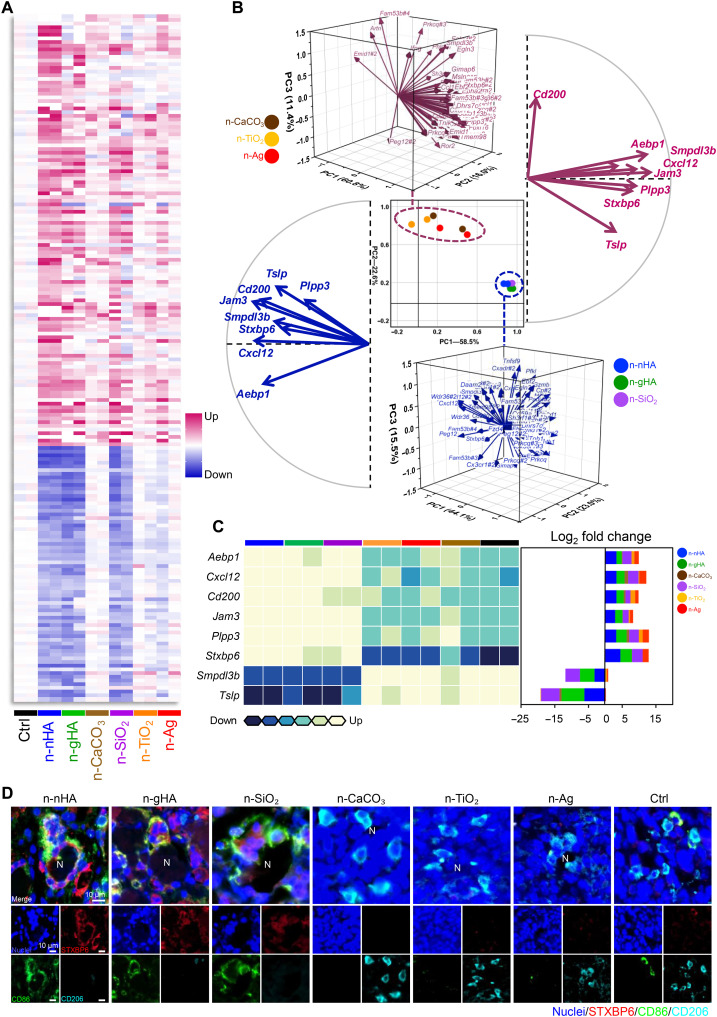
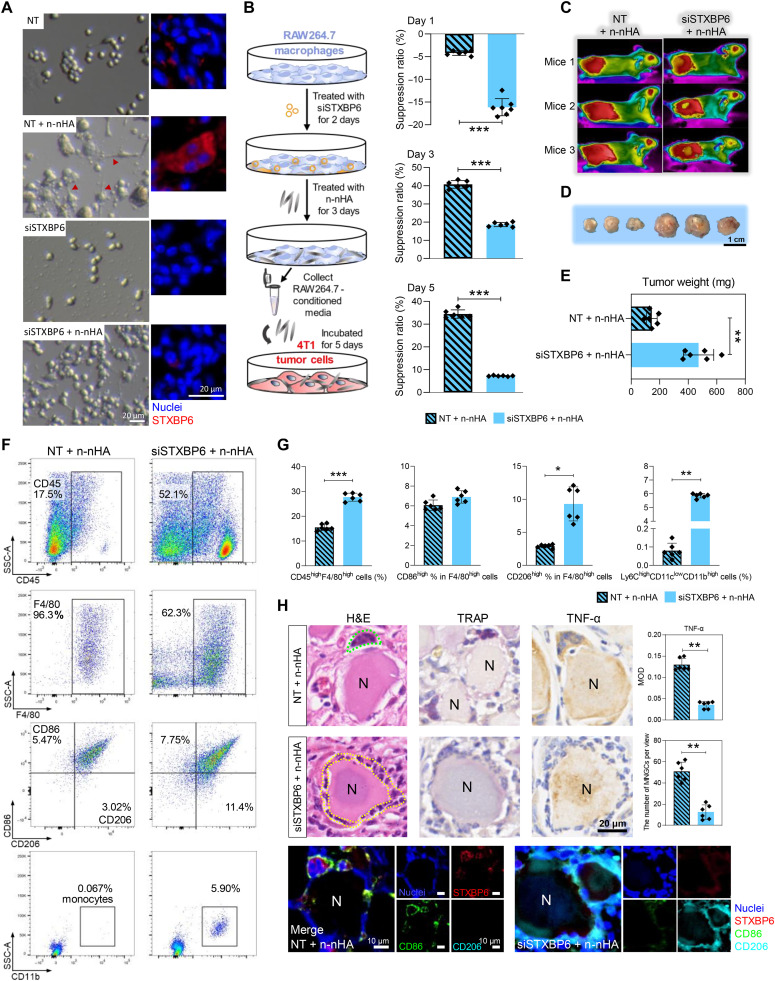
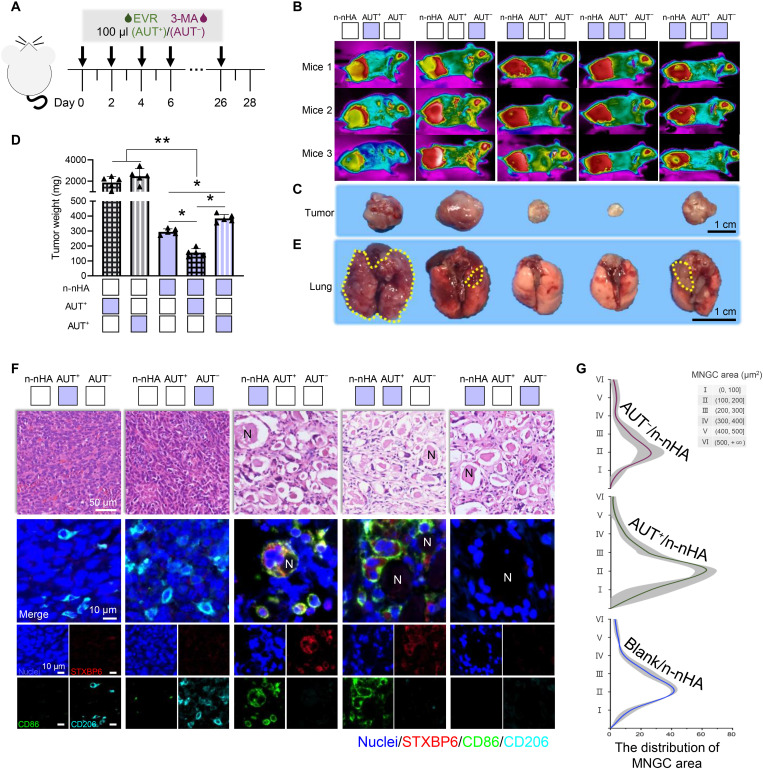
While most nanomaterials are designed to assist tumor therapy, some inorganic nanoparticles have been reported to impede cancer development. We assume that the immune response elicited by these foreign nanoparticles might be associated with the remodeling of immune landscape in the tumor microenvironment (TME). We studied representative inorganic nanoparticles widely used in the biomedical field and first demonstrated that needle-shaped hydroxyapatite (n-nHA), granule-shaped hydroxyapatite, and silicon dioxide can effectively impair tumor progression in vivo. Substantial multinucleated giant cells (MNGCs) were formed around these antitumor nanoparticles, while the ratio of monocytes and macrophages was decreased in the TME. We found that high expression of the STXBP6 protein induced by n-nHA-treated macrophages triggers autophagy, which markedly promotes macrophage fusion into MNGCs. In this way, extensive depletion of tumor-associated macrophages in the TME was achieved, which suppressed tumor growth and metastasis. This intrinsic antitumor immunity of inorganic nanoparticles should not be neglected when designing future nanomedicines to treat cancer.
虽然大多数纳米材料被设计用于辅助肿瘤治疗,但一些无机纳米粒子已被报道会阻碍癌症的发展。我们假设这些外来纳米粒子引起的免疫反应可能与肿瘤微环境(TME)中免疫景观的重塑有关。我们研究了生物医学领域广泛使用的代表性无机纳米粒子,首次证明针状羟基磷灰石(n-nHA)、颗粒状羟基磷灰石和二氧化硅可以有效地在体内抑制肿瘤进展。这些抗肿瘤纳米粒子周围形成了大量多核巨细胞(MNGCs),而 TME 中的单核细胞和巨噬细胞的比例下降。我们发现,n-nHA 处理的巨噬细胞中 STXBP6 蛋白的高表达触发自噬,这显著促进了巨噬细胞融合为 MNGCs。通过这种方式,TME 中大量的肿瘤相关巨噬细胞被消耗,从而抑制了肿瘤的生长和转移。在设计未来用于治疗癌症的纳米药物时,不应忽视无机纳米粒子的这种内在抗肿瘤免疫性。