Department of General Surgery, University of Witwatersrand, Johannesburg, South Africa.
Department of General Surgery, Oxford University Hospitals, Oxford, UK.
Dis Esophagus. 2023 Nov 30;36(12). doi: 10.1093/dote/doad048.
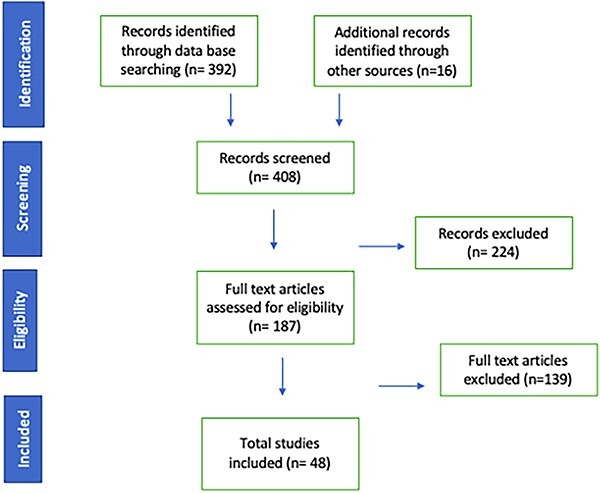
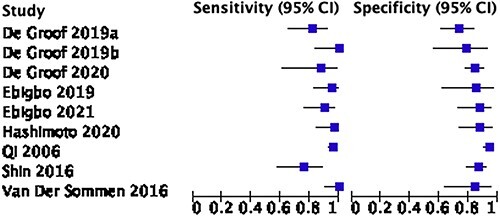
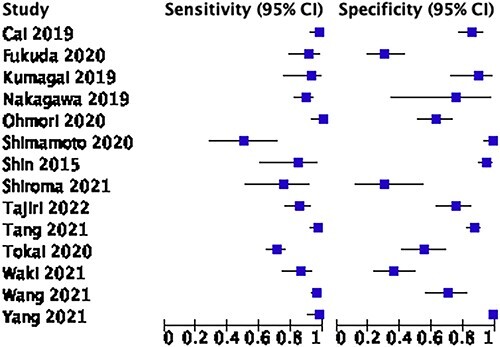
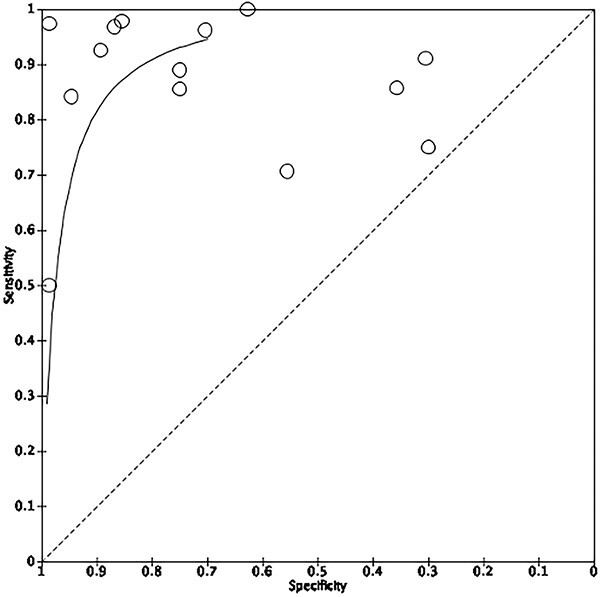
Early detection of esophageal cancer is limited by accurate endoscopic diagnosis of subtle macroscopic lesions. Endoscopic interpretation is subject to expertise, diagnostic skill, and thus human error. Artificial intelligence (AI) in endoscopy is increasingly bridging this gap. This systematic review and meta-analysis consolidate the evidence on the use of AI in the endoscopic diagnosis of esophageal cancer. The systematic review was carried out using Pubmed, MEDLINE and Ovid EMBASE databases and articles on the role of AI in the endoscopic diagnosis of esophageal cancer management were included. A meta-analysis was also performed. Fourteen studies (1590 patients) assessed the use of AI in endoscopic diagnosis of esophageal squamous cell carcinoma-the pooled sensitivity and specificity were 91.2% (84.3-95.2%) and 80% (64.3-89.9%). Nine studies (478 patients) assessed AI capabilities of diagnosing esophageal adenocarcinoma with the pooled sensitivity and specificity of 93.1% (86.8-96.4) and 86.9% (81.7-90.7). The remaining studies formed the qualitative summary. AI technology, as an adjunct to endoscopy, can assist in accurate, early detection of esophageal malignancy. It has shown superior results to endoscopists alone in identifying early cancer and assessing depth of tumor invasion, with the added benefit of not requiring a specialized skill set. Despite promising results, the application in real-time endoscopy is limited, and further multicenter trials are required to accurately assess its use in routine practice.
早期食管癌的检测受到内镜下对细微宏观病变进行准确诊断的限制。内镜解释受到专业知识、诊断技能的影响,因此存在人为错误。内镜中的人工智能(AI)正在逐渐弥补这一差距。本系统评价和荟萃分析综合了 AI 在内镜诊断食管癌中的应用证据。系统评价使用了 Pubmed、MEDLINE 和 Ovid EMBASE 数据库,纳入了关于 AI 在食管癌内镜诊断管理中作用的文章。还进行了荟萃分析。14 项研究(1590 名患者)评估了 AI 在诊断食管鳞状细胞癌中的作用,汇总的敏感性和特异性分别为 91.2%(84.3-95.2%)和 80%(64.3-89.9%)。9 项研究(478 名患者)评估了 AI 诊断食管腺癌的能力,汇总的敏感性和特异性分别为 93.1%(86.8-96.4%)和 86.9%(81.7-90.7%)。其余研究形成定性总结。人工智能技术作为内镜的辅助手段,可以帮助准确、早期发现食管恶性肿瘤。与单独使用内镜相比,它在识别早期癌症和评估肿瘤浸润深度方面具有更好的效果,并且不需要专门的技能集。尽管结果很有前景,但在实时内镜中的应用受到限制,需要进一步的多中心试验来准确评估其在常规实践中的应用。