Goetzman Eric, Gong Zhenwei, Zhang Bob, Muzumdar Radhika
Division of Genetic and Genomic Medicine, Department of Pediatrics, University of Pittsburgh, Pittsburgh, PA 15260, USA.
Division of Endocrinology, Department of Pediatrics, University of Pittsburgh, Pittsburgh, PA 15260, USA.
Antioxidants (Basel). 2023 Jul 24;12(7):1477. doi: 10.3390/antiox12071477.
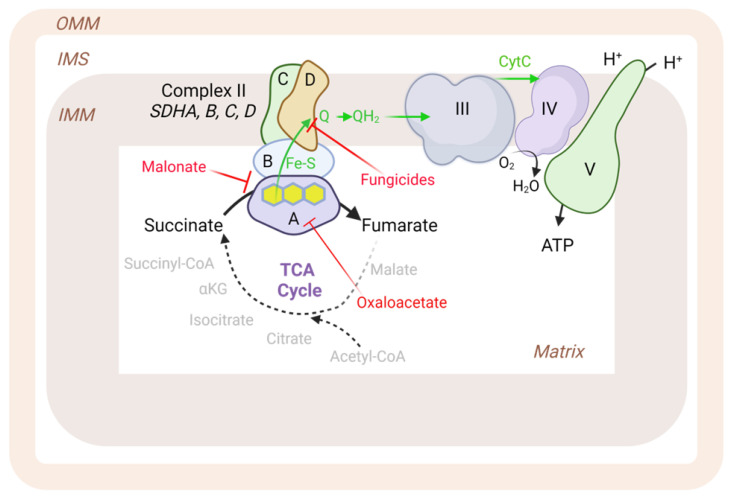
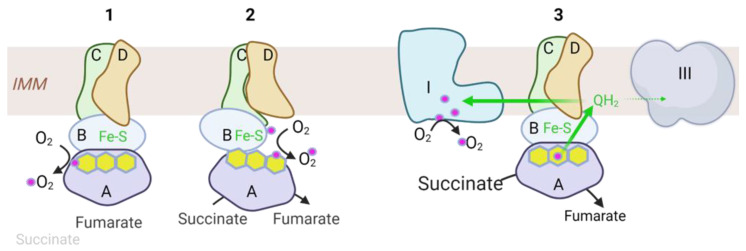
Aging is associated with a decline in mitochondrial function which may contribute to age-related diseases such as neurodegeneration, cancer, and cardiovascular diseases. Recently, mitochondrial Complex II has emerged as an important player in the aging process. Mitochondrial Complex II converts succinate to fumarate and plays an essential role in both the tricarboxylic acid (TCA) cycle and the electron transport chain (ETC). The dysfunction of Complex II not only limits mitochondrial energy production; it may also promote oxidative stress, contributing, over time, to cellular damage, aging, and disease. Intriguingly, succinate, the substrate for Complex II which accumulates during mitochondrial dysfunction, has been shown to have widespread effects as a signaling molecule. Here, we review recent advances related to understanding the function of Complex II, succinate signaling, and their combined roles in aging and aging-related diseases.
衰老与线粒体功能衰退有关,而线粒体功能衰退可能会导致与年龄相关的疾病,如神经退行性疾病、癌症和心血管疾病。最近,线粒体复合物II已成为衰老过程中的一个重要因素。线粒体复合物II将琥珀酸转化为富马酸,并在三羧酸(TCA)循环和电子传递链(ETC)中发挥重要作用。复合物II功能障碍不仅会限制线粒体能量产生;随着时间的推移,它还可能促进氧化应激,导致细胞损伤、衰老和疾病。有趣的是,琥珀酸作为复合物II的底物,在线粒体功能障碍期间会积累,已被证明作为信号分子具有广泛的作用。在此,我们综述了有关理解复合物II功能、琥珀酸信号传导及其在衰老和衰老相关疾病中的联合作用的最新进展。