Sultana Most Arifa, Hia Raksa Andalib, Akinsiku Oluwatosin, Hegde Vijay
Obesity and Metabolic Health Laboratory, Department of Nutritional Sciences, Texas Tech University, Lubbock, TX 79409, USA.
Biology (Basel). 2023 Jul 19;12(7):1019. doi: 10.3390/biology12071019.
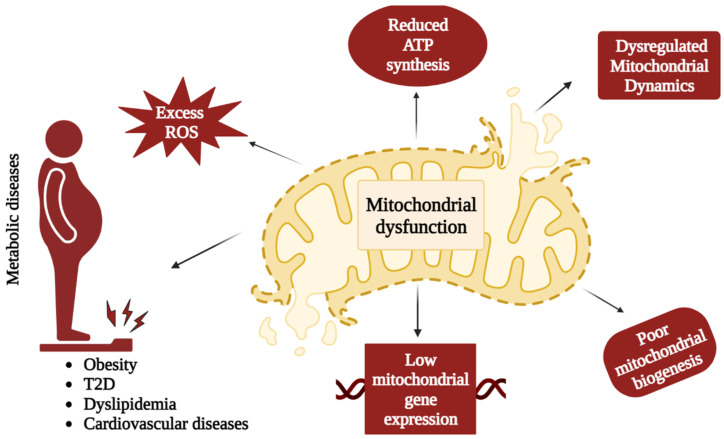
Alzheimer's disease (AD) is a progressive neurodegenerative disease characterized by loss of function and eventual death of neurons in the brain. Multiple studies have highlighted the involvement of mitochondria in the initiation and advancement of neurodegenerative diseases. Mitochondria are essential for ATP generation, bioenergetics processes, the regulation of calcium homeostasis and free radical scavenging. Disrupting any of these processes has been acknowledged as a major contributor to the pathogenesis of common neurodegenerative diseases, especially AD. Several longitudinal studies have demonstrated type 2 diabetes (T2D) as a risk factor for the origin of dementia leading towards AD. Even though emerging research indicates that anti-diabetic intervention is a promising option for AD prevention and therapy, results from clinical trials with anti-diabetic agents have not been effective in AD. Interestingly, defective mitochondrial function has also been reported to contribute towards the onset of metabolic disorders including obesity and T2D. The most prevalent consequences of mitochondrial dysfunction include the generation of inflammatory molecules and reactive oxygen species (ROS), which promote the onset and development of metabolic impairment and neurodegenerative diseases. Current evidence indicates an association of impaired peripheral mitochondrial function with primary AD pathology; however, the mechanisms are still unknown. Therefore, in this review, we discuss if mitochondrial dysfunction-mediated metabolic disorders have a potential connection with AD development, then would addressing peripheral mitochondrial dysfunction have better therapeutic outcomes in preventing metabolic disorder-associated AD pathologies.
阿尔茨海默病(AD)是一种进行性神经退行性疾病,其特征是大脑中的神经元功能丧失并最终死亡。多项研究强调了线粒体在神经退行性疾病的发生和发展中的作用。线粒体对于ATP生成、生物能量学过程、钙稳态调节和自由基清除至关重要。破坏这些过程中的任何一个都被认为是常见神经退行性疾病,尤其是AD发病机制的主要促成因素。几项纵向研究已证明2型糖尿病(T2D)是导致AD的痴呆症起源的一个危险因素。尽管新出现的研究表明抗糖尿病干预是预防和治疗AD的一个有前景的选择,但抗糖尿病药物的临床试验结果在AD中并不有效。有趣的是,据报道线粒体功能缺陷也导致包括肥胖和T2D在内的代谢紊乱的发生。线粒体功能障碍最普遍的后果包括炎症分子和活性氧(ROS)的产生,这促进了代谢损伤和神经退行性疾病的发生和发展。目前的证据表明外周线粒体功能受损与原发性AD病理之间存在关联;然而,其机制仍然未知。因此,在本综述中,我们讨论线粒体功能障碍介导的代谢紊乱是否与AD的发展存在潜在联系,以及解决外周线粒体功能障碍在预防代谢紊乱相关的AD病理方面是否会有更好的治疗效果。