Mongin Denis, Buclin Clement P, Cullati Stephane, Courvoisier Delphine S
Faculty of Medicine, University of Geneva, CH-1211 Geneva, Switzerland.
Division Quality of Care, Geneva University Hospitals, CH-1211 Geneva, Switzerland.
Vaccines (Basel). 2023 Jun 25;11(7):1149. doi: 10.3390/vaccines11071149.
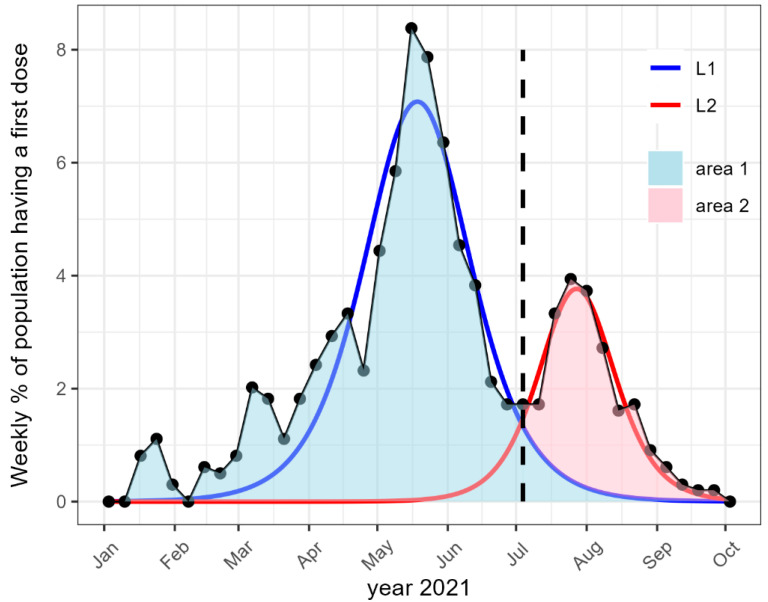
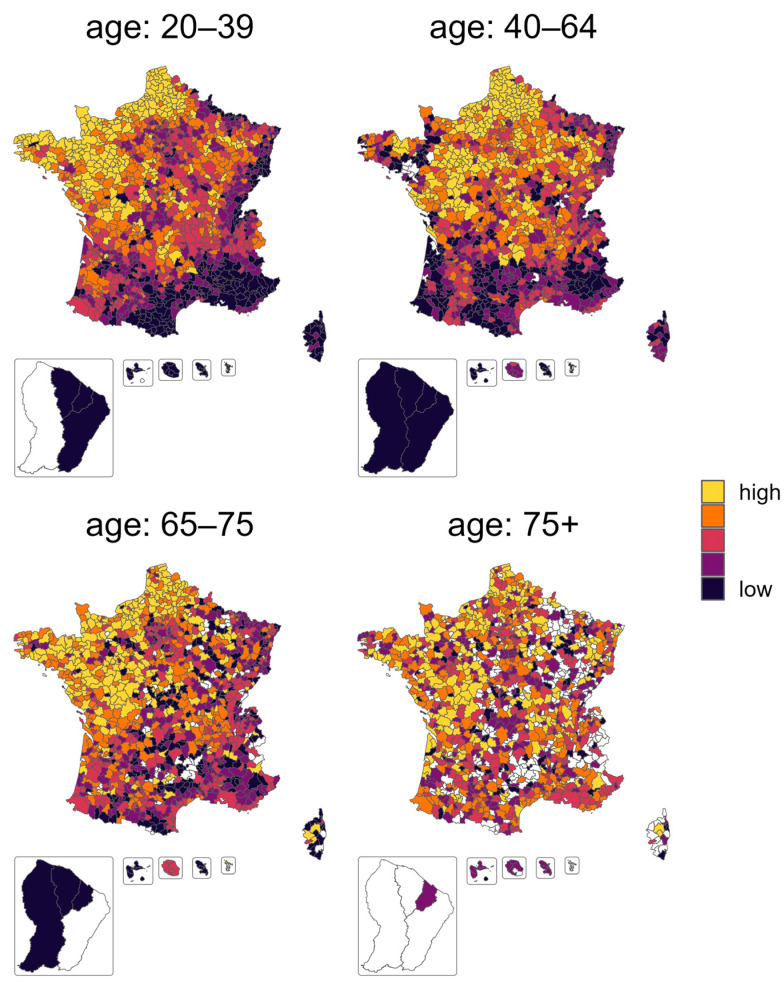
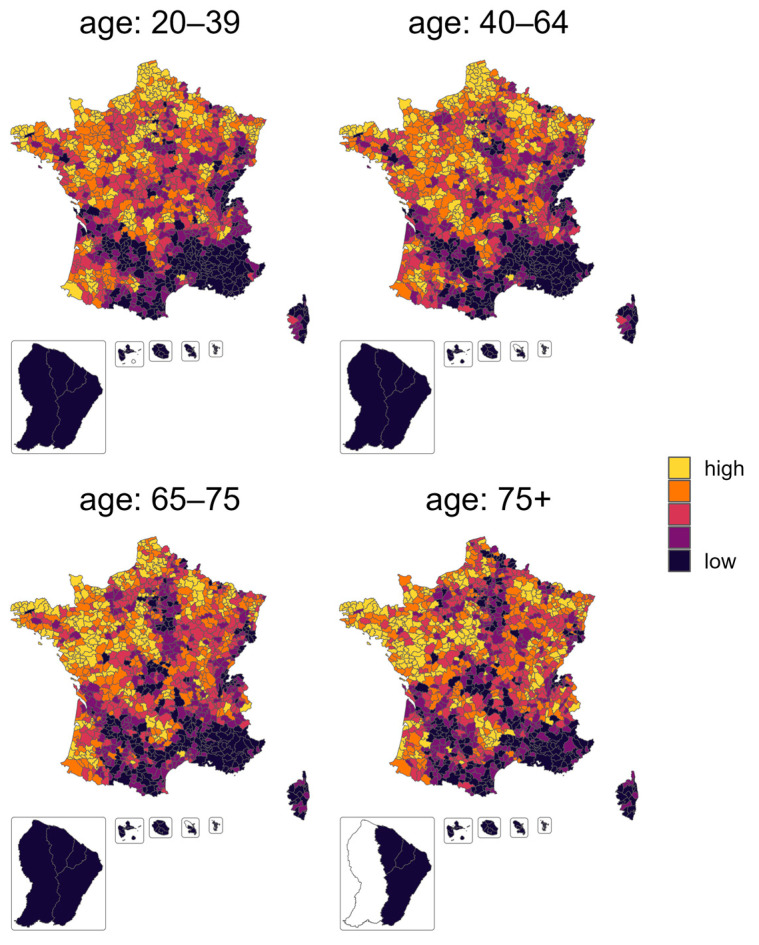
(1) Background: France implemented a COVID-19 certificate in July 2021 to incentivize the population to uptake COVID-19 vaccines. However, little is known about the variation in its impact across age groups and its dependence on socio-demographic, economic, logistic, or political factors. (2) Methods: Using France's weekly first dose vaccination rate, a counterfactual trend approach allowed for the estimation of the vaccination rate across age groups at a small geographical level before and after the implementation of the health pass. The effect of the health pass was operationalized as the vaccination rate among those who would not be vaccinated without it. (3) Results: Vaccination before the health pass varied greatly among age groups and was mainly influenced by territory (lower in rural and overseas territories when compared to urban and metropolitan ones), political beliefs, and socio-economic disparities. Vaccine logistics played a minor but significant role, while the impact of COVID-19 did not affect the vaccination rate. The health pass increased the vaccination overall but with varying efficiency across groups. It convinced mainly young people politically close to the governmental vaccination strategy and living in urban metropolitan areas with low socio-economical discrepancies. The selected variables explained most of the variability of the vaccination rate before the health pass; they explained, at most, a third of the variation in the health pass effect on vaccination. (4) Conclusions: From a public health perspective, the French health pass increased the overall vaccination, but failed to promote preventive behaviours in all segments of society, particularly in vulnerable communities.
(1) 背景:法国于2021年7月实施了新冠病毒通行证,以激励民众接种新冠疫苗。然而,对于其在不同年龄组中的影响差异以及对社会人口、经济、后勤或政治因素的依赖性,我们知之甚少。(2) 方法:利用法国的每周首剂疫苗接种率,一种反事实趋势方法使得我们能够估计在健康通行证实施前后小地理区域内各年龄组的疫苗接种率。健康通行证的效果被定义为没有它就不会接种疫苗的人群的接种率。(3) 结果:在健康通行证实施之前,各年龄组的疫苗接种情况差异很大,主要受地区(与城市和大都市地区相比,农村和海外地区较低)、政治信仰和社会经济差异的影响。疫苗后勤发挥了较小但显著的作用,而新冠疫情的影响并未影响疫苗接种率。健康通行证总体上提高了疫苗接种率,但各群体的效率有所不同。它主要说服了政治上接近政府疫苗接种策略且生活在社会经济差异较小的城市大都市地区的年轻人。所选变量解释了健康通行证实施之前疫苗接种率的大部分变异性;它们最多解释了健康通行证对疫苗接种效果变异的三分之一。(4) 结论:从公共卫生角度来看,法国的健康通行证提高了总体疫苗接种率,但未能在社会的所有阶层,特别是弱势群体中促进预防行为。