Department of Gastroenterology, Rambam Health Care Campus, Haifa 31096, Israel.
Medical School for International Health, Ben-Gurion University of the Negev, Beer-Sheva 84101, Israel.
Viruses. 2023 Jun 22;15(7):1413. doi: 10.3390/v15071413.
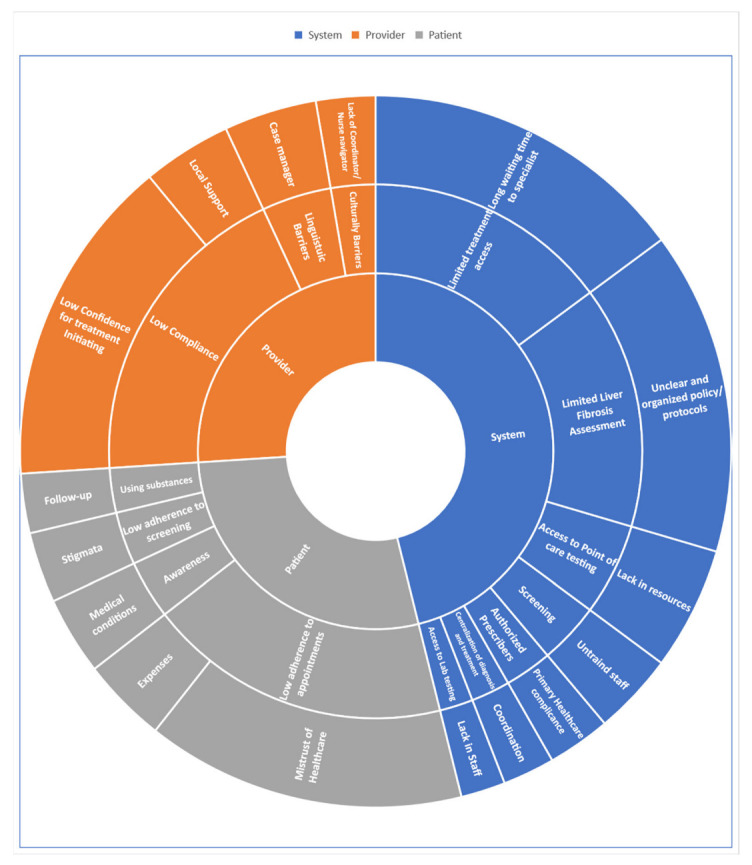
Hepatitis C Virus (HCV) infection is a leading etiology of liver cirrhosis and its associated complications, namely, decompensated cirrhosis. As such, hepatitis C potentially necessitates liver transplantation and may result in death. Recently, HCV treatment has evolved. Current HCV treatment is effective in curing HCV; some of the agents are pan-genotypic. Numerous countries have adopted an initiative to eliminate HCV. Achieving elimination poses many challenges; it requires improved availability and accessibility of pan-genotypic therapy. Barriers exist at the level of the collective healthcare system and at the level of the individual healthcare providers and patients. Therefore, organized national and local efforts are needed. Surmounting these barriers calls for interventions concerning screening, linkage to care, and treatment delivery. Pertinent barriers include inadequate availability of screening, ill-equipped laboratory testing before treatment, and insufficient access to treatment. Interventions should seek to decentralize laboratory testing and treatment provision, increase funding for resources and personnel, and spread awareness. Special consideration should be allocated to at-risk populations, such as intravenous drug users, refugees, and prisoners. Computerized medical filing and telemedicine have the potential to refine HCV management by enhancing detection, availability, accessibility, and cost-effectiveness.
丙型肝炎病毒(HCV)感染是肝硬化及其相关并发症(即失代偿性肝硬化)的主要病因。因此,丙型肝炎可能需要进行肝移植,并可能导致死亡。最近,丙型肝炎的治疗方法已经有了很大的发展。目前的丙型肝炎治疗方法能够有效治愈丙型肝炎;其中一些药物是泛基因型的。许多国家都采取了一项消除丙型肝炎的倡议。实现消除丙型肝炎面临着许多挑战;需要提高泛基因型治疗的可及性和可获得性。这些障碍存在于集体医疗体系层面和个体医疗服务提供者及患者层面。因此,需要有组织的国家和地方努力。克服这些障碍需要采取有关筛查、护理衔接和治疗提供的干预措施。相关的障碍包括筛查服务不足、治疗前实验室检测设备不足以及治疗机会有限。干预措施应设法分散实验室检测和治疗服务,增加资源和人员的资金,并提高认识。应特别关注静脉吸毒者、难民和囚犯等高危人群。计算机化医疗档案和远程医疗有可能通过提高检测、可获得性、可及性和成本效益来改进丙型肝炎管理。