Yang Jinlian, Fang Yaoyu, Wu Hu, Zhao Neng, Guo Xinying, Mackon Enerand, Peng Haowen, Huang Sheng, He Yongqiang, Qin Baoxiang, Liu Yaoguang, Liu Fang, Chen Shengwu, Li Rongbai
State Key Laboratory for Conservation and Utilization of Subtropical Agro-Bioresources, College of Agriculture, Guangxi University, Nanning, China.
State Key Laboratory for Conservation and Utilization of Subtropical Agro-bioresources, College of Life Science and Technology, Guangxi University, Nanning, China.
Front Plant Sci. 2023 Jul 17;14:1209384. doi: 10.3389/fpls.2023.1209384. eCollection 2023.
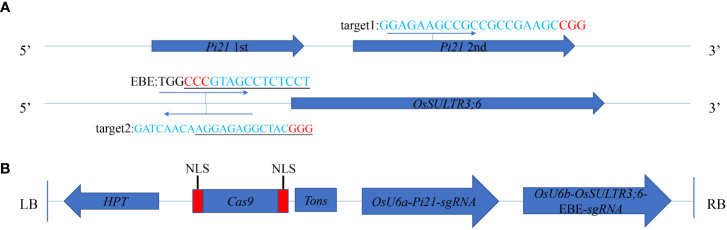
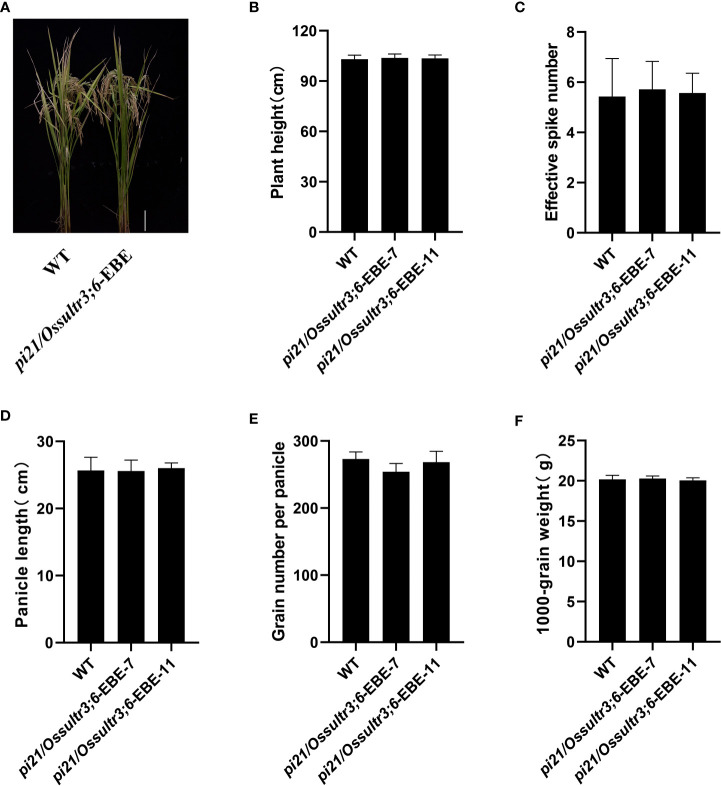
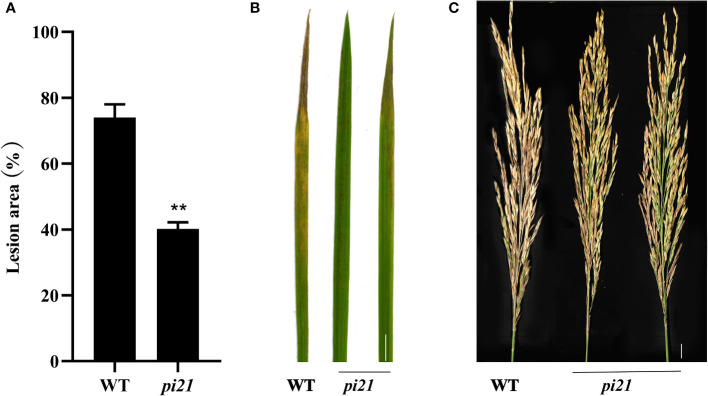
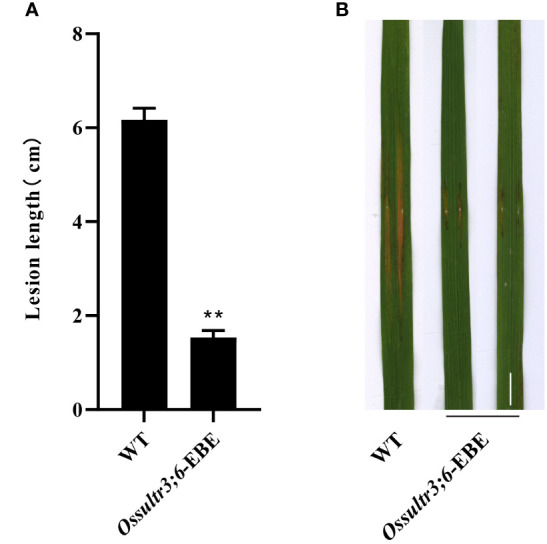
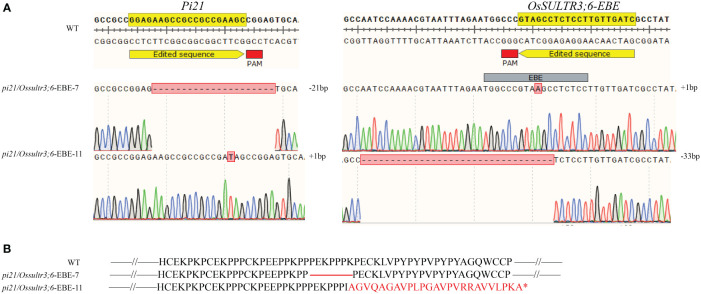
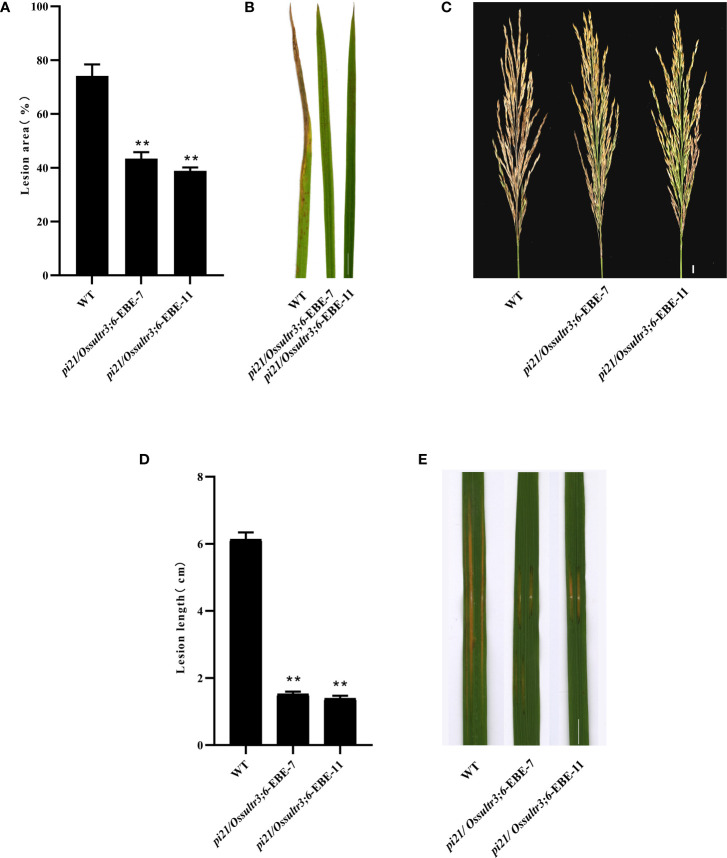
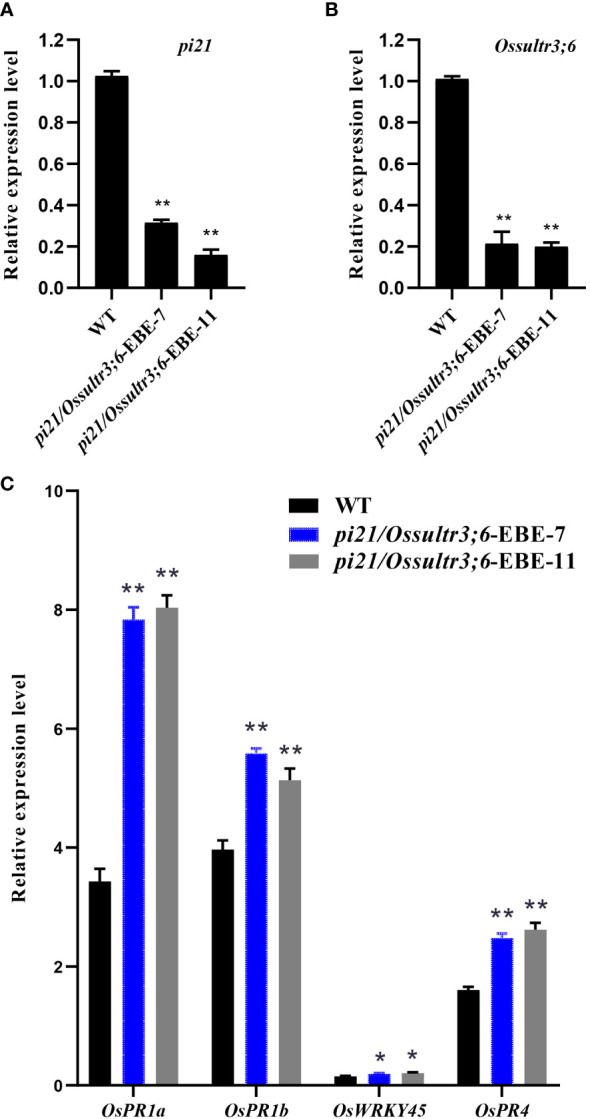
Rice ( L.) is a staple food in many countries around the world, particularly in China. The production of rice is seriously affected by the bacterial leaf streak and rice blast, which can reduce rice yield or even cause it to fail to be harvested. In this study, susceptible material 58B was edited by CRISPR/Cas9, targeting a target of the gene and a target of the effector-binding element (EBE) of the gene, and the mutants were obtained by Agrobacterium-mediated method. The editing efficiency of the two targets in the T generation was higher than 90.09%, the homozygous mutants were successfully selected in the T generation, and the homozygous mutation rate of each target was higher than 26.67%. The expression of the edited and EBE of was significantly reduced, and the expression of defense responsive genes was significantly upregulated after infected with rice blast. The lesion areas of rice blast and bacterial leaf streak were significantly reduced in , and the resistance of both was effectively improved. Furthermore, the gene editing events did not affect the agronomic traits of rice. In this study, the resistance of to rice blast and bacterial leaf streak was improved simultaneously. This study provides a reference for using Clustered Regularly Interspaced Short Palindromic Repeats/Cas9 (CRISPR/Cas9) to accelerate the improvement of rice varieties and the development of new materials for rice breeding.
水稻(L.)是世界上许多国家的主食,尤其是在中国。水稻生产受到细菌性条斑病和稻瘟病的严重影响,这会降低水稻产量,甚至导致无法收获。在本研究中,利用CRISPR/Cas9对感病材料58B进行编辑,靶向一个基因的靶点和该基因效应子结合元件(EBE)的一个靶点,并通过农杆菌介导法获得突变体。两个靶点在T代的编辑效率高于90.09%,在T代成功筛选出纯合突变体,每个靶点的纯合突变率高于26.67%。编辑后的基因和EBE的表达显著降低,接种稻瘟病菌后防御响应基因的表达显著上调。在突变体中,稻瘟病和细菌性条斑病的病斑面积显著减小,两者的抗性均得到有效提高。此外,基因编辑事件不影响水稻的农艺性状。本研究中,突变体对稻瘟病和细菌性条斑病的抗性同时得到提高。本研究为利用成簇规律间隔短回文重复序列/Cas9(CRISPR/Cas9)加速水稻品种改良和水稻育种新材料的开发提供了参考。