Usman Babar, Nawaz Gul, Zhao Neng, Liu Yaoguang, Li Rongbai
College of Agriculture, State Key Laboratory for Conservation and Utilization of Subtropical Agro-Bioresources, Guangxi University, Nanning 530004, China.
State Key Laboratory for Conservation and Utilization of Subtropical Agricultural Bioresources, South China Agricultural University, Guangzhou 510642, China.
Plants (Basel). 2020 Jun 23;9(6):788. doi: 10.3390/plants9060788.
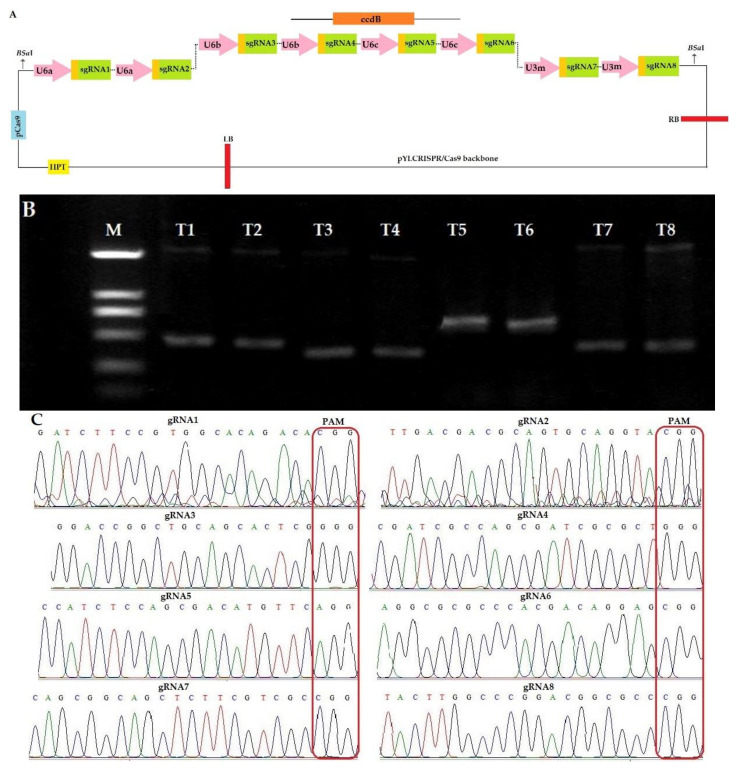
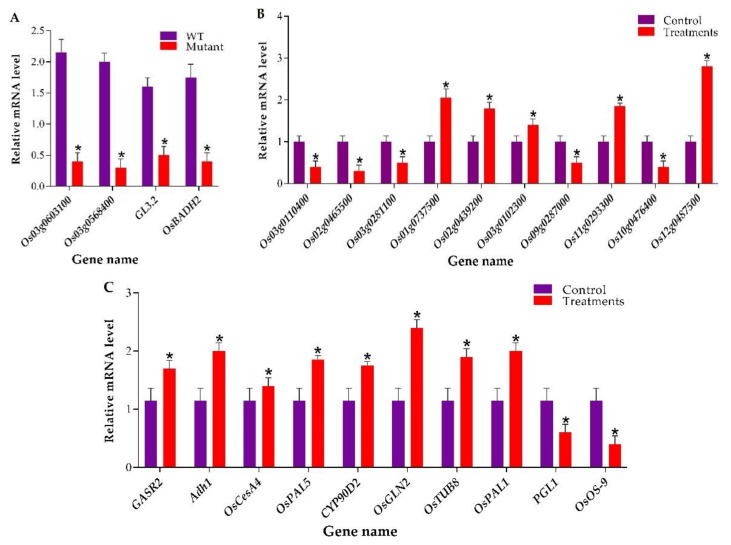
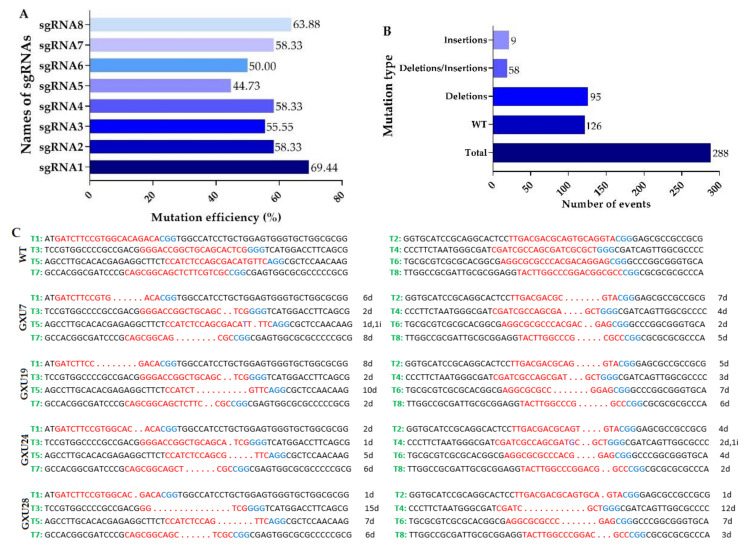
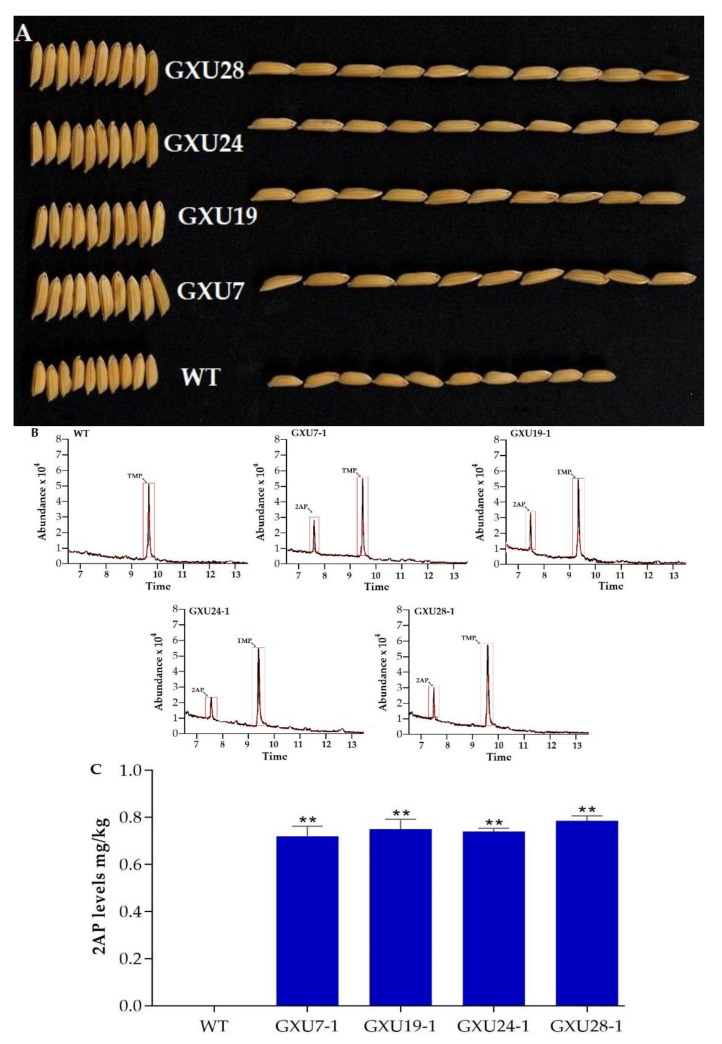
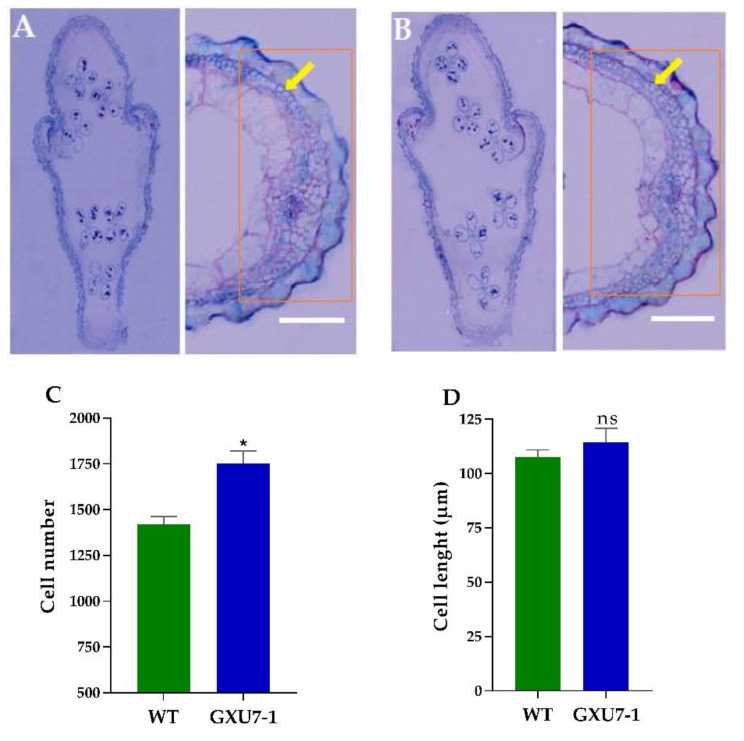
The significant increase in grain yield and quality are often antagonistic but a constant demand for breeders and consumers. Some genes related to cytochrome P450 family are known for rice organ growth but their role in controlling grain yield is still unknown. Here, we generated new rice mutants with high yield and improved aroma by simultaneously editing three cytochrome P450 homoeologs (, , and ) and with the CRISPR/Cas9 system, and RNA-sequencing and proteomic analysis were performed to unveil the subsequent changes. High mutation efficiency was achieved in both target sites of each gene and the mutations were predominantly only deletions, while insertions were rare, and no mutations were detected in the five most likely off-target sites against each sgRNA. Mutants exhibited increased grain size, 2-acetyl-1-pyrroline (2AP) content, and grain cell numbers while there was no change in other agronomic traits. Transgene-DNA-free mutant lines appeared with a frequency of 44.44% and homozygous mutations were stably transmitted, and bi-allelic and heterozygous mutations followed Mendelian inheritance, while the inheritance of chimeric mutations was unpredictable. Deep RNA sequencing and proteomic results revealed the regulation of genes and proteins related to cytochrome P450 family, grain size and development, and cell cycle. The KEGG and hub-gene and protein network analysis showed that the gene and proteins related to ribosomal and photosynthesis pathways were mainly enriched, respectively. Our findings provide a broad and detailed basis to understand the role of CRISPR/Cas9 in rice yield and quality improvement.
谷物产量和品质的显著提高往往是相互矛盾的,但却是育种者和消费者一直以来的需求。一些与细胞色素P450家族相关的基因在水稻器官生长方面已为人所知,但其在控制谷物产量方面的作用仍不清楚。在此,我们利用CRISPR/Cas9系统同时编辑三个细胞色素P450同源基因(、和),培育出了高产且香气改善的新型水稻突变体,并进行了RNA测序和蛋白质组分析,以揭示随后的变化。每个基因的两个靶位点均实现了高突变效率,且突变主要为缺失,插入很少见,针对每个sgRNA的五个最可能的脱靶位点均未检测到突变。突变体的粒型增大、2-乙酰-1-吡咯啉(2AP)含量增加、籽粒细胞数量增多,而其他农艺性状没有变化。无转基因DNA的突变体系出现频率为44.44%,纯合突变稳定遗传,双等位和杂合突变遵循孟德尔遗传,而嵌合突变的遗传则不可预测。深度RNA测序和蛋白质组学结果揭示了与细胞色素P450家族、粒型和发育以及细胞周期相关的基因和蛋白质的调控情况。KEGG以及枢纽基因和蛋白质网络分析表明,与核糖体和光合作用途径相关的基因和蛋白质分别主要富集。我们的研究结果为理解CRISPR/Cas9在水稻产量和品质改良中的作用提供了广泛而详细的基础。