Mendes Lucas William, Raaijmakers Jos M, de Hollander Mattias, Sepo Edis, Gómez Expósito Ruth, Chiorato Alisson Fernando, Mendes Rodrigo, Tsai Siu Mui, Carrión Victor J
Cell and Molecular Biology Laboratory, Center for Nuclear Energy in Agriculture CENA, University of Sao Paulo USP, Piracicaba, SP, 13416-000, Brazil.
Departament of Microbial Ecology, Netherlands Institute of Ecology NIOO-KNAW, Wageningen, 6708 PB, The Netherlands.
Environ Microbiome. 2023 Aug 3;18(1):68. doi: 10.1186/s40793-023-00524-7.
Plants rely on their root microbiome as the first line of defense against soil-borne fungal pathogens. The abundance and activities of beneficial root microbial taxa at the time prior to and during fungal infection are key to their protective success. If and how invading fungal root pathogens can disrupt microbiome assembly and gene expression is still largely unknown. Here, we investigated the impact of the fungal pathogen Fusarium oxysporum (fox) on the assembly of rhizosphere and endosphere microbiomes of a fox-susceptible and fox-resistant common bean cultivar.
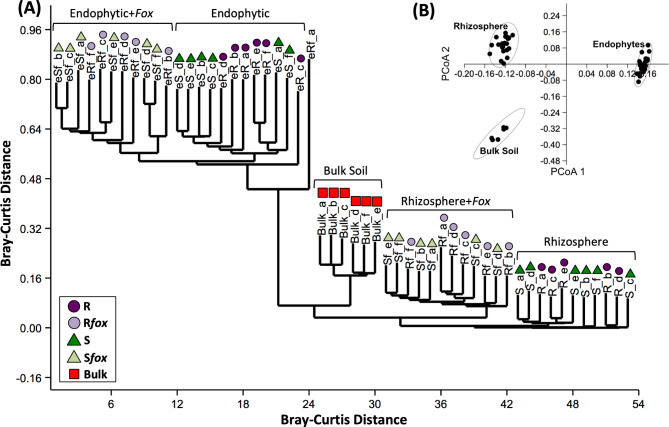
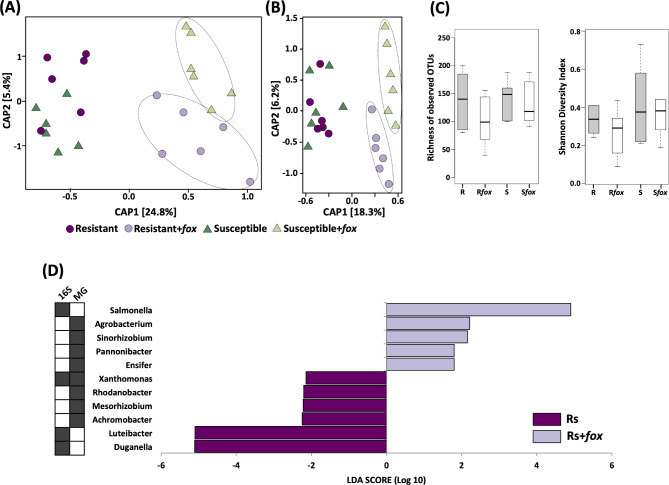
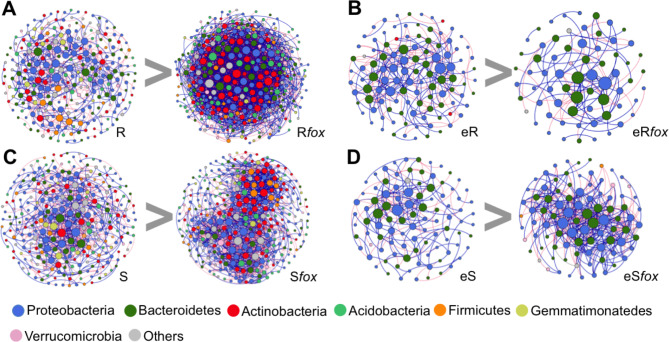
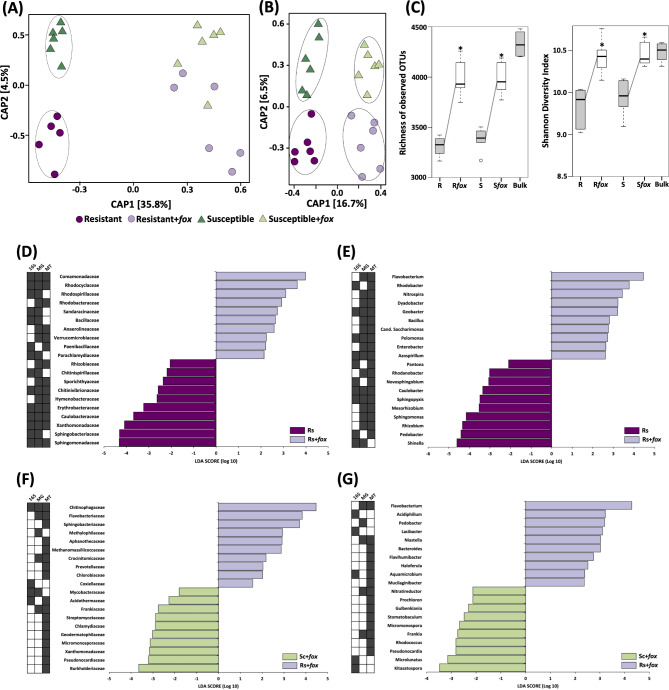
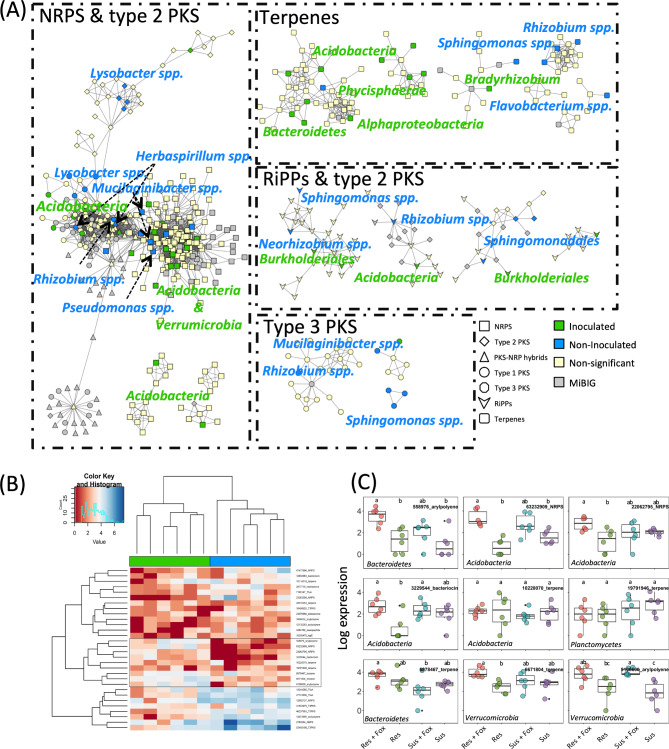
Integration of 16S-amplicon, shotgun metagenome as well as metatranscriptome sequencing with community ecology analysis showed that fox infections significantly changed the composition and gene expression of the root microbiome in a cultivar-dependent manner. More specifically, fox infection led to increased microbial diversity, network complexity, and a higher proportion of the genera Flavobacterium, Bacillus, and Dyadobacter in the rhizosphere of the fox-resistant cultivar compared to the fox-susceptible cultivar. In the endosphere, root infection also led to changes in community assembly, with a higher abundance of the genera Sinorhizobium and Ensifer in the fox-resistant cultivar. Metagenome and metatranscriptome analyses further revealed the enrichment of terpene biosynthesis genes with a potential role in pathogen suppression in the fox-resistant cultivar upon fungal pathogen invasion.
Collectively, these results revealed a cultivar-dependent enrichment of specific bacterial genera and the activation of putative disease-suppressive functions in the rhizosphere and endosphere microbiome of common bean under siege.
植物依靠其根系微生物群作为抵御土壤传播真菌病原体的第一道防线。在真菌感染之前及感染期间,有益根系微生物类群的丰度和活性是其保护成功的关键。入侵的真菌根系病原体是否以及如何破坏微生物群落组装和基因表达在很大程度上仍不清楚。在此,我们研究了真菌病原体尖孢镰刀菌(Fusarium oxysporum,fox)对易感fox和抗fox普通豆品种根际和根内微生物群落组装的影响。
将16S扩增子、鸟枪法宏基因组以及宏转录组测序与群落生态学分析相结合表明,fox感染以品种依赖的方式显著改变了根系微生物群的组成和基因表达。更具体地说,与易感fox品种相比,fox感染导致抗fox品种根际微生物多样性增加、网络复杂性增加,以及黄杆菌属、芽孢杆菌属和双歧杆菌属的比例更高。在根内,根系感染也导致群落组装发生变化,抗fox品种中中华根瘤菌属和剑菌属的丰度更高。宏基因组和宏转录组分析进一步揭示了在真菌病原体入侵后,抗fox品种中萜类生物合成基因的富集,这些基因在病原体抑制中可能发挥作用。
总体而言,这些结果揭示了在受攻击的普通豆根际和根内微生物群中,特定细菌属的品种依赖性富集以及假定的疾病抑制功能的激活。