State Key Laboratory of Medical Neurobiology, MOE Frontiers Center for Brain Science, Institutes of Brain Science, Department of Neurology, Zhongshan Hospital, Fudan University, Shanghai 200032, China.
Ningbo Key Laboratory of Behavioral Neuroscience, Zhejiang Provincial Key Laboratory of Pathophysiology, School of Medicine, Ningbo University, Ningbo 315211, China.
Molecules. 2023 Aug 3;28(15):5846. doi: 10.3390/molecules28155846.
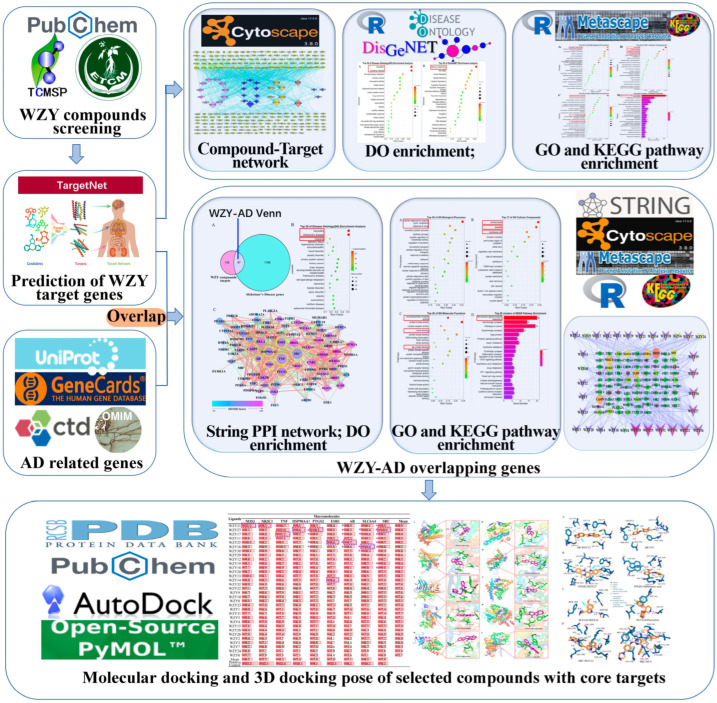
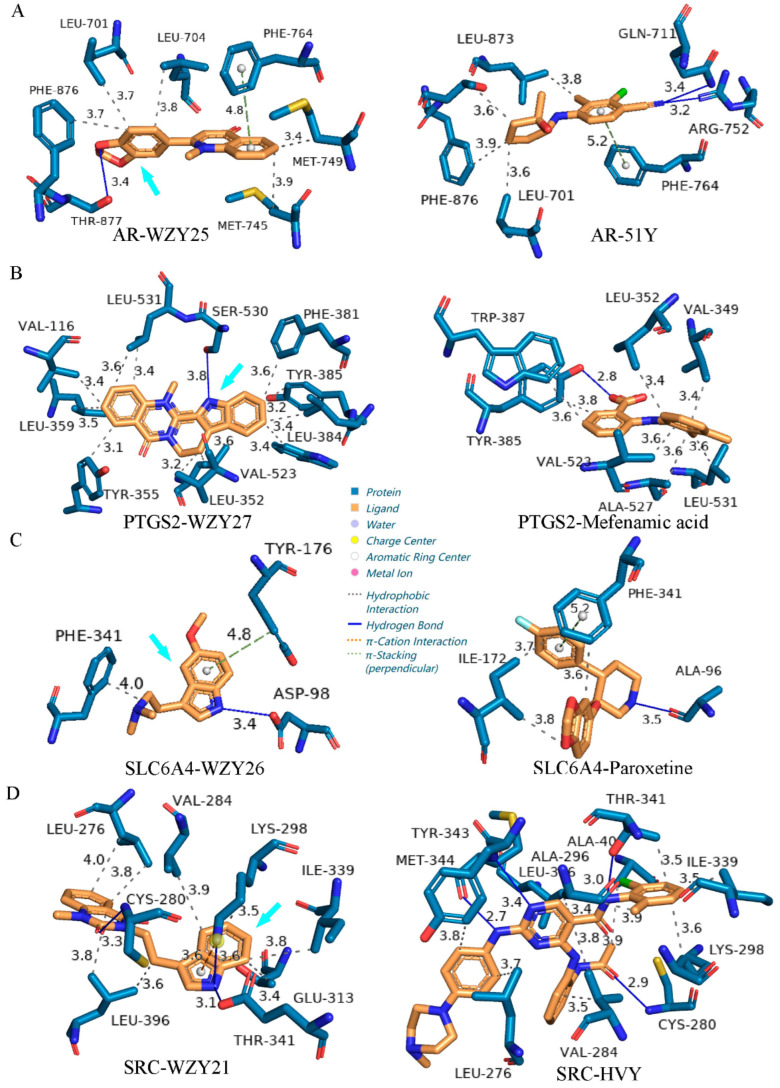
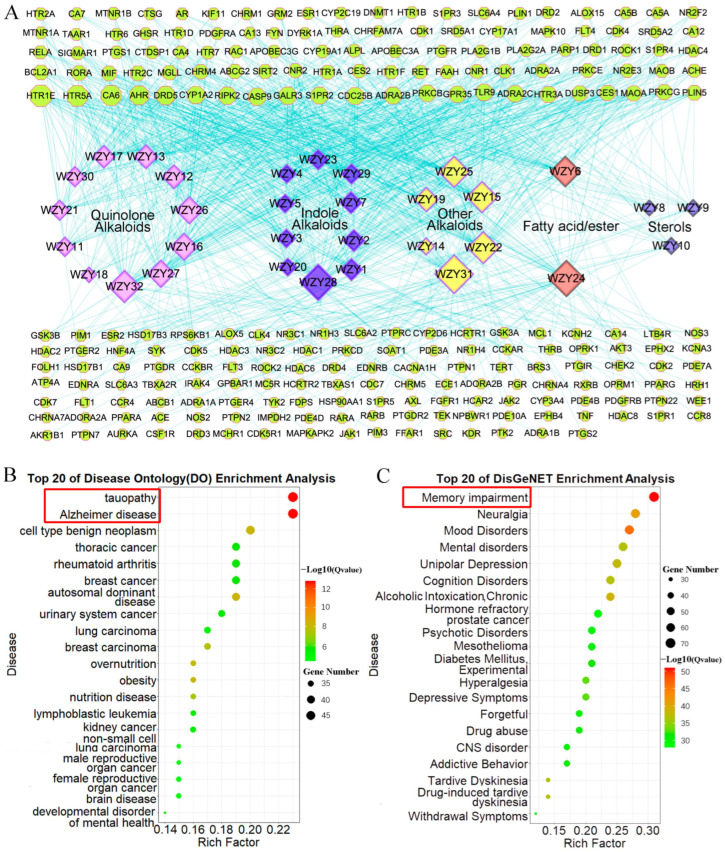
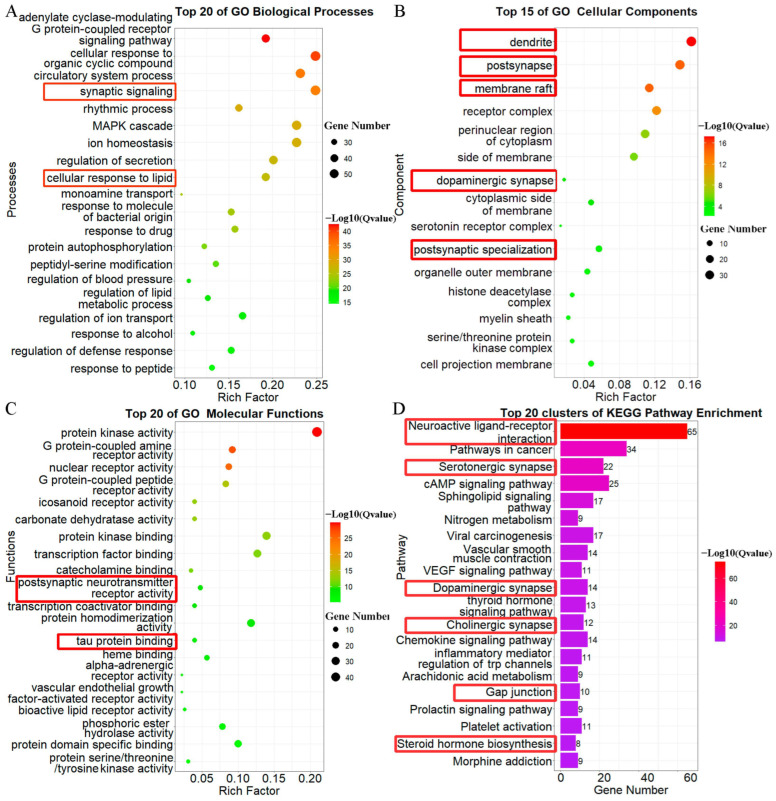
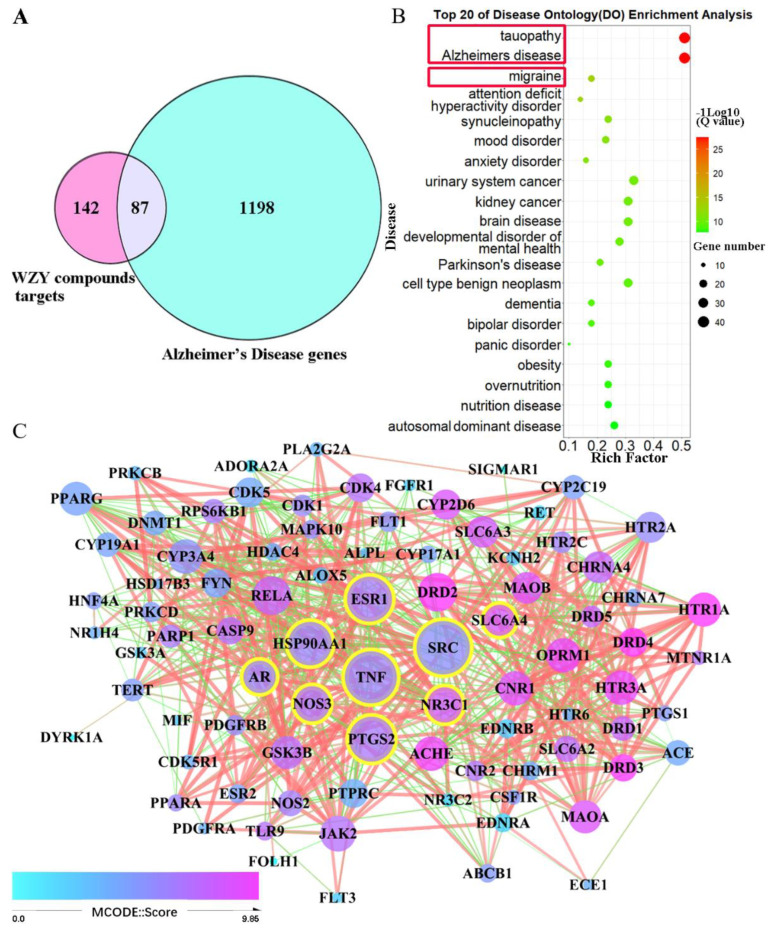
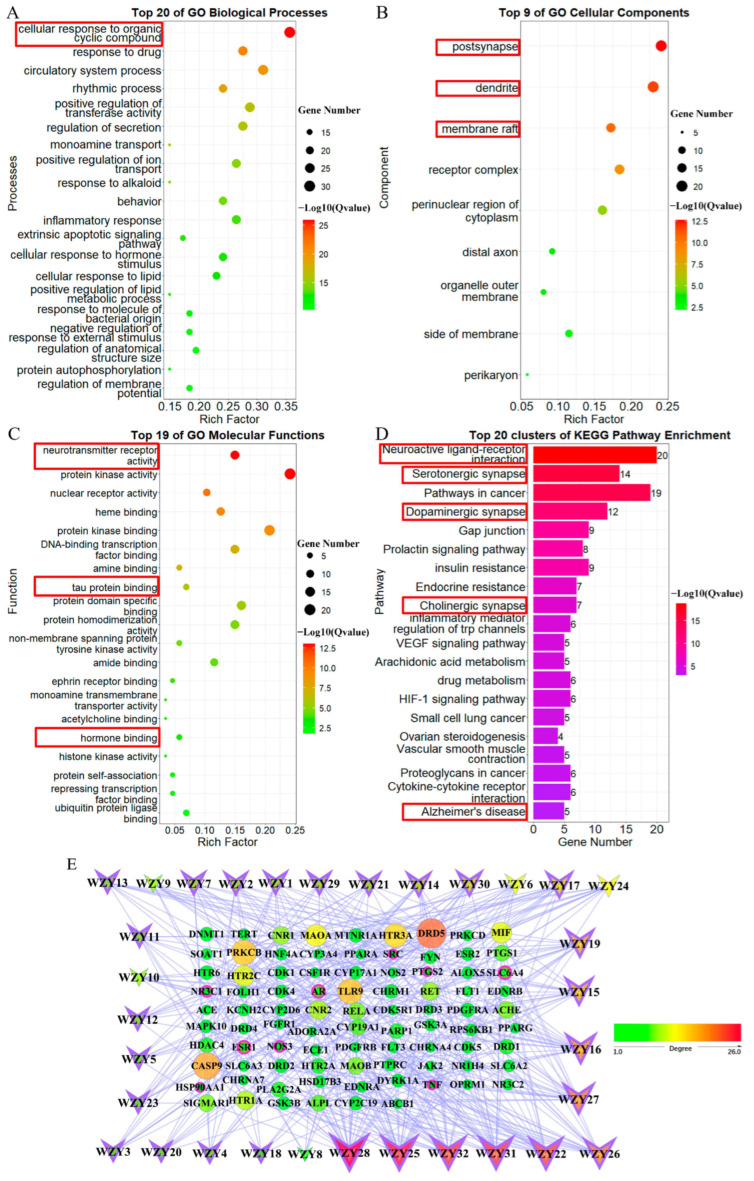
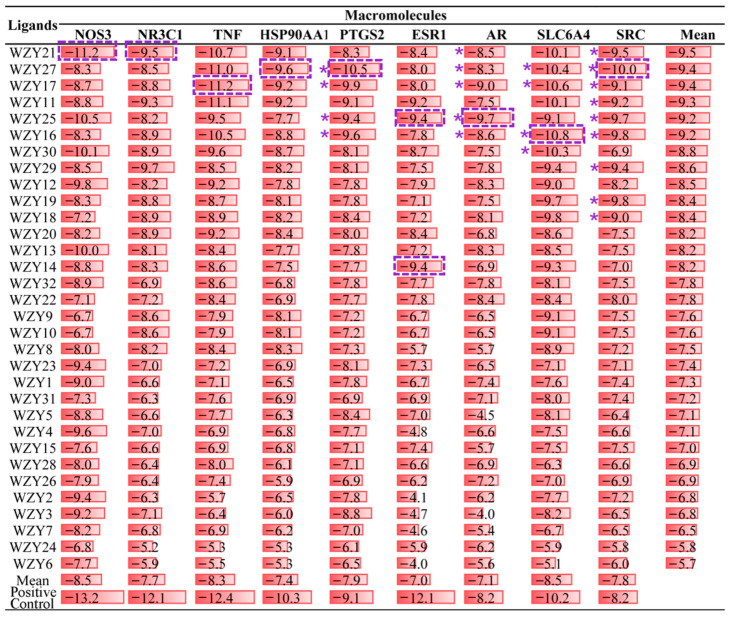
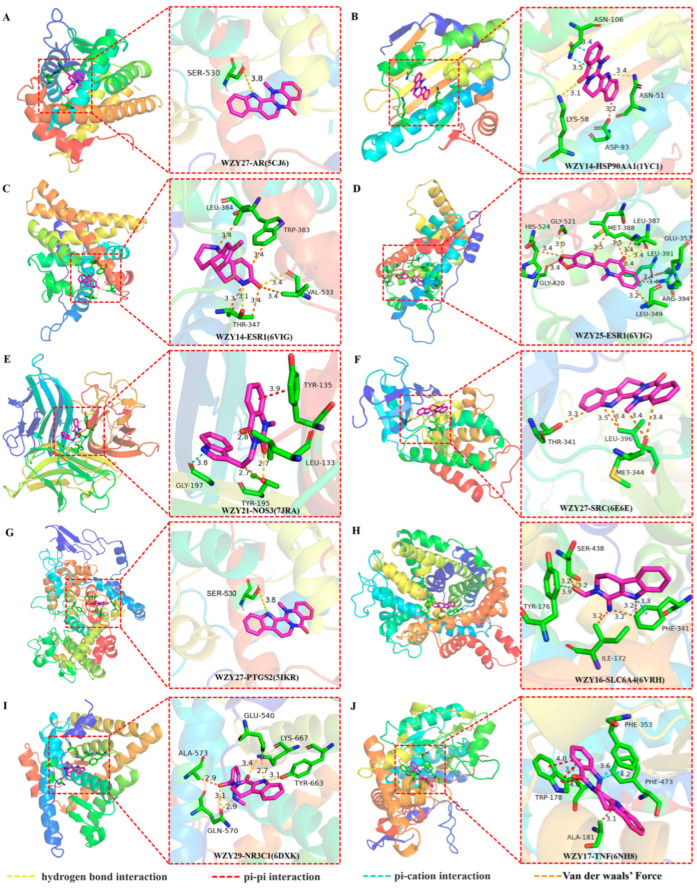
Alzheimer's disease (AD) is a brain disease with a peculiarity of multiformity and an insidious onset. Multiple-target drugs, especially Chinese traditional medicine, have achieved a measure of success in AD treatment. (Juss.) Benth. (Wuzhuyu, WZY, i.e., ), a traditional Chinese herb, has been identified as an effective drug to cure migraines. To our surprise, our in silico study showed that rather than migraines, Alzheimer's disease was the primary disease to which the active compounds were targeted. Correspondingly, a behavioral experiment showed that extract could improve impairments in learning and memory in AD model mice. However, the mechanism underlying the way that compounds target AD is still not clear. For this purpose, we employed methods of pharmacology networking and molecular docking to explore this mechanism. We found that showed significant AD-targeting characteristics, and alkaloids of played the main role in binding to the key nodes of AD. Our research detected that affects the pathologic development of AD through the serotonergic synapse signaling pathway (SLC6A4), hormones (PTGS2, ESR1, AR), anti-neuroinflammation (SRC, TNF, NOS3), transcription regulation (NR3C1), and molecular chaperones (HSP90AA1), especially in the key nodes of PTGS2, AR, SLCA64, and SRC. Graveoline, 5-methoxy-N, N-dimethyltryptamine, dehydroevodiamine, and goshuyuamide II in show stronger binding affinities to these key proteins than currently known preclinical and clinical drugs, showing a great potential to be developed as lead molecules for treating AD.
阿尔茨海默病(AD)是一种具有多形性和隐匿性发病特点的脑部疾病。多靶标药物,尤其是中药,在 AD 治疗中取得了一定的成效。(吴茱萸,WZY,即)是一种传统中药,已被确定为治疗偏头痛的有效药物。令我们惊讶的是,我们的计算机模拟研究表明,不是偏头痛,而是阿尔茨海默病是这些活性化合物的主要靶向疾病。相应地,行为学实验表明,提取物可以改善 AD 模型小鼠的学习和记忆损伤。然而,化合物靶向 AD 的方式的机制尚不清楚。为此,我们采用药理学网络和分子对接的方法来探索这种机制。我们发现,吴茱萸表现出显著的 AD 靶向特征,并且吴茱萸中的生物碱在与 AD 的关键节点结合方面发挥主要作用。我们的研究通过 5-羟色胺能突触信号通路(SLC6A4)、激素(PTGS2、ESR1、AR)、抗神经炎症(SRC、TNF、NOS3)、转录调节(NR3C1)和分子伴侣(HSP90AA1)检测到,吴茱萸通过 5-羟色胺能突触信号通路(SLC6A4)、激素(PTGS2、ESR1、AR)、抗神经炎症(SRC、TNF、NOS3)、转录调节(NR3C1)和分子伴侣(HSP90AA1)影响 AD 的病理发展,特别是在 PTGS2、AR、SLC6A4 和 SRC 的关键节点。吴茱萸中的吴茱萸堿、5-甲氧基-N,N-二甲基色胺、去氢吴茱萸碱和吴茱萸酰胺 II 与这些关键蛋白的结合亲和力强于目前已知的临床前和临床药物,具有很大的开发潜力,可作为治疗 AD 的先导化合物。