Joint BioEnergy Institute, Emeryville, CA, USA.
School of Engineering Sciences in Chemistry, Biotechnology and Health, Science for Life Laboratory, KTH - Royal Institute of Technology, Stockholm, Sweden.
Nat Commun. 2023 Aug 12;14(1):4871. doi: 10.1038/s41467-023-40464-x.
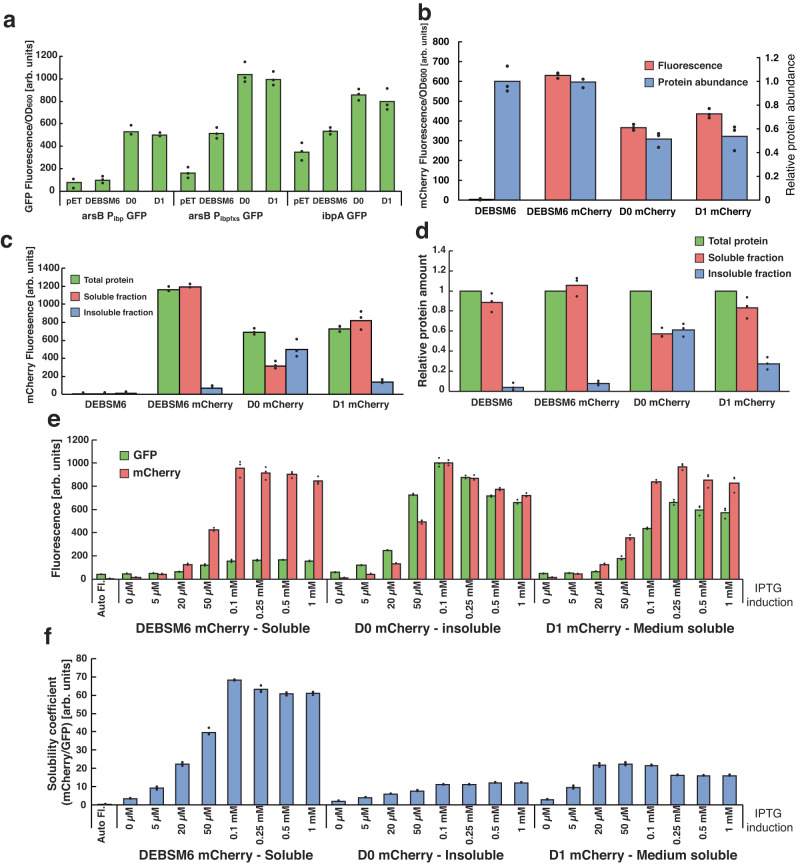
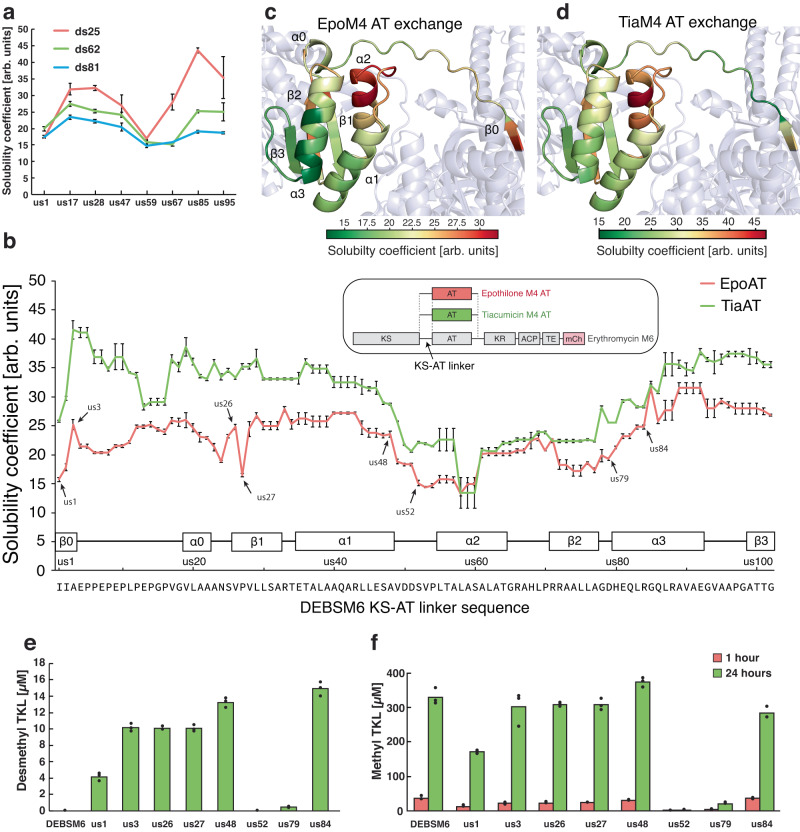
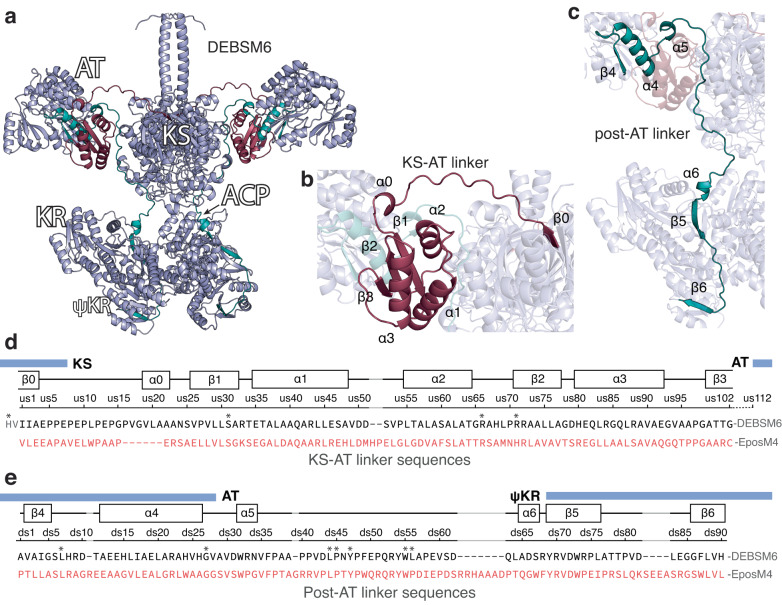
Type I modular polyketide synthases (PKSs) are multi-domain enzymes functioning like assembly lines. Many engineering attempts have been made for the last three decades to replace, delete and insert new functional domains into PKSs to produce novel molecules. However, inserting heterologous domains often destabilize PKSs, causing loss of activity and protein misfolding. To address this challenge, here we develop a fluorescence-based solubility biosensor that can quickly identify engineered PKSs variants with minimal structural disruptions. Using this biosensor, we screen a library of acyltransferase (AT)-exchanged PKS hybrids with randomly assigned domain boundaries, and we identify variants that maintain wild type production levels. We then probe each position in the AT linker region to determine how domain boundaries influence structural integrity and identify a set of optimized domain boundaries. Overall, we have successfully developed an experimentally validated, high-throughput method for making hybrid PKSs that produce novel molecules.
I 型模块化聚酮合酶(PKSs)是具有装配线功能的多结构域酶。在过去的三十年中,人们进行了许多工程尝试,试图将新的功能域替换、删除和插入 PKS 中,以产生新的分子。然而,插入异源结构域常常使 PKS 不稳定,导致活性丧失和蛋白质错误折叠。为了解决这一挑战,我们开发了一种基于荧光的可溶性生物传感器,可以快速识别结构破坏最小的工程 PKS 变体。我们使用该生物传感器筛选了一个具有随机分配的结构域边界的酰基转移酶(AT)交换 PKS 杂种文库,并鉴定出保持野生型生产水平的变体。然后,我们探测 AT 连接区的每个位置,以确定结构域边界如何影响结构完整性,并确定一组优化的结构域边界。总的来说,我们成功地开发了一种经过实验验证的高通量方法,用于制造产生新分子的杂种 PKS。