
创伤性脑损伤后神经元电磁场变化的猪模型:一项初步研究。
A Swine Model of Changes in the Neuronal Electromagnetic Field After Traumatic Brain Injury: A Pilot Study.
作者信息
Brazdzionis James, Radwan Mohamed M, Thankam Finosh G, Rajesh Lal Merlin, Baron David, Connett David A, Agrawal Devendra K, Miulli Dan E
机构信息
Neurosurgery, Riverside University Health System Medical Center, Moreno Valley, USA.
Translational Research, College of Osteopathic Medicine of the Pacific, Western University of Health Sciences, Pomona, USA.
出版信息
Cureus. 2023 Jul 12;15(7):e41763. doi: 10.7759/cureus.41763. eCollection 2023 Jul.
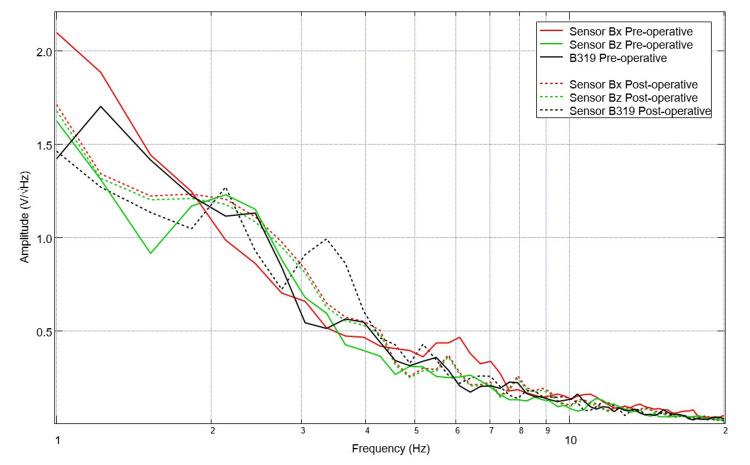
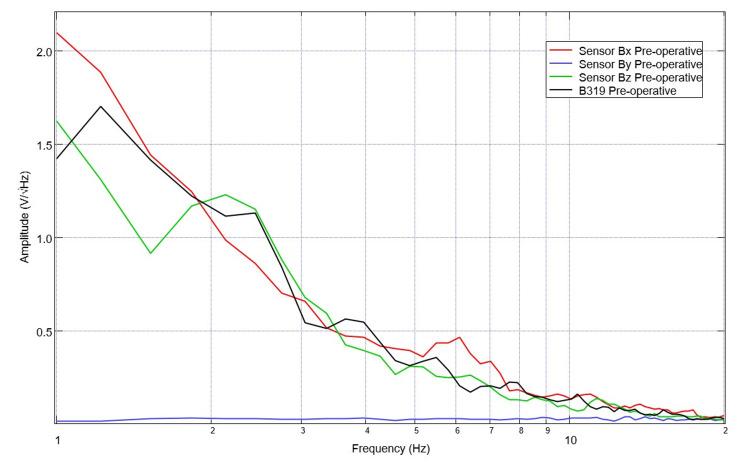
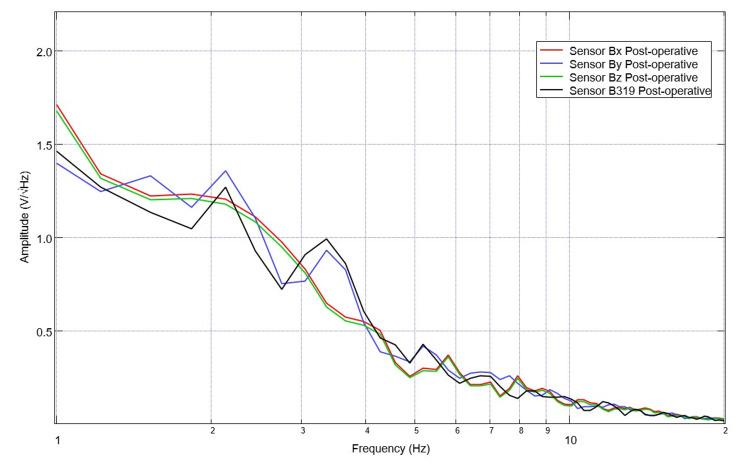
Background Traumatic brain injury (TBI) is a global cause of disability and mortality. Treatment depends on mitigation of secondary injury resulting in axonal injury, necrosis, brain dysfunction, and disruption of electrical and chemical signaling in neural circuits. To better understand TBI, translational models are required to study physiology, diagnostics, and treatments in homologous species, such as swine. Electromagnetic fields (EMFs) from altered neural circuits can be measured and historically have been reliant on expensive shielding and supercooling in magnetoencephalography. Using proprietary induction sensors, it has been found that a non-invasive, non-contact approach with an engineered Mu-metal and copper mesh-shielded helmet effectively measures EMFs. This has not yet been investigated in swine models. We wished to evaluate the efficacy of this technology to assess TBI-dependent EMF changes in swine to describe the efficacy of these sensors and this model using a gravity-dependent controlled cortical impact (CCI). Methods A Yucatan miniswine was evaluated using non-contact, non-invasive proprietary induction sensors with an engineered dual-layer Mu-metal and interlaced copper mesh helmet with sensors within EMF channels connected to a helmet. Swine EMF recordings were obtained prior to induced gravity-dependent CCI followed by post-TBI measurements. Behavioral changes and changes in EMF measurements were assessed. EMF measurements were evaluated with an artificial intelligence (AI) model. Results Differences between room "noise" EMF measurements and pre-TBI swine electromagnetic field measurements were identified. Morphological characteristics between pre-injury and post-injury measurements were noted. AI modeling differentiated pre-injury and post-injury patterns in the swine EMF. Frequently identified frequencies seen post-injury were peaks at 2.5 Hz and 6.5 Hz and a valley at 11 Hz. The AI model identified less changes in the slope and thus decreased variation of EMF measurements post-TBI between 4.5 Hz and 7 Hz. Conclusions For the first time, it was identified that cortical function in a swine can be appropriately measured using novel induction sensors and shielding isolated to a helmet and EMF channels. The swine model can be appropriately differentiated from the external noise signal with identifiably different pre-injury and post-injury EMFs. Patterns can be recognized within the post-injury EMF due to altered neural circuits that can be measured using these sensors continuously, non-invasively, and in real time.
背景
创伤性脑损伤(TBI)是导致全球残疾和死亡的原因。治疗取决于减轻继发性损伤,继发性损伤会导致轴突损伤、坏死、脑功能障碍以及神经回路中电信号和化学信号的中断。为了更好地理解TBI,需要转化模型来研究同源物种(如猪)的生理学、诊断方法和治疗方法。来自改变的神经回路的电磁场(EMF)可以被测量,并且在历史上一直依赖于脑磁图中昂贵的屏蔽和超低温技术。使用专利感应传感器发现,一种采用工程化的坡莫合金和铜网屏蔽头盔的非侵入性、非接触式方法能够有效地测量电磁场。这一方法尚未在猪模型中进行研究。我们希望评估该技术在评估猪TBI相关的EMF变化方面的有效性,以描述这些传感器和该模型在重力依赖性控制皮质撞击(CCI)中的有效性。
方法
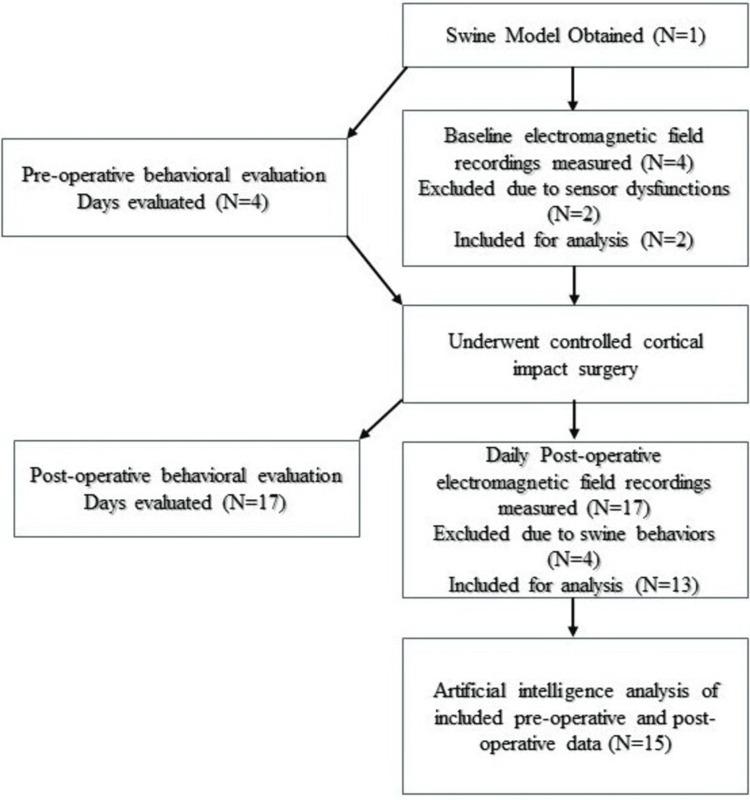
使用非接触式、非侵入性的专利感应传感器对一头尤卡坦小型猪进行评估,该传感器配备工程化的双层坡莫合金和交错铜网头盔,头盔内的EMF通道中有传感器。在诱导重力依赖性CCI之前获取猪的EMF记录,随后进行TBI后测量。评估行为变化和EMF测量的变化。使用人工智能(AI)模型评估EMF测量结果。
结果
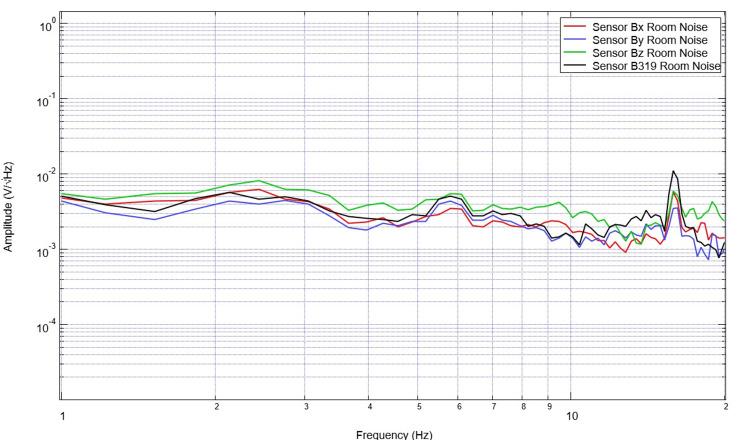
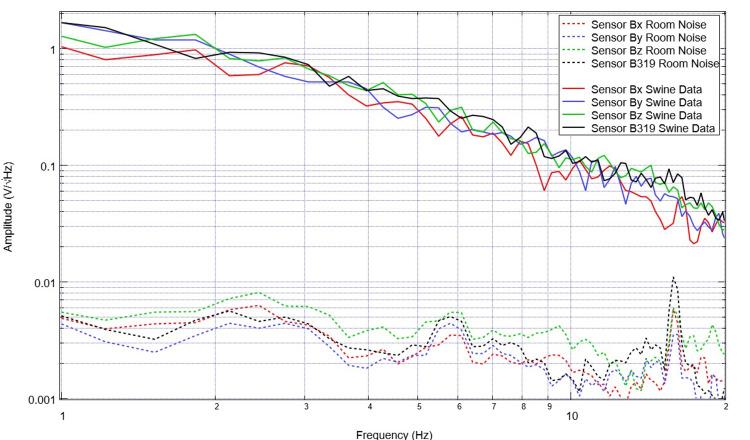
确定了室内“噪声”EMF测量与TBI前猪电磁场测量之间的差异。记录了损伤前和损伤后测量的形态学特征。AI模型区分了猪EMF中损伤前和损伤后的模式。损伤后经常识别出的频率是2.5Hz和6.5Hz处的峰值以及11Hz处 的谷值。AI模型识别出斜率变化较小,因此TBI后4.5Hz至7Hz之间的EMF测量变化减小。
结论
首次发现,使用新型感应传感器以及隔离在头盔和EMF通道中的屏蔽装置,可以适当地测量猪脑皮质功能。猪模型可以通过损伤前和损伤后明显不同的EMF与外部噪声信号进行适当区分。由于神经回路改变,损伤后EMF中可以识别出模式,这些模式可以使用这些传感器进行连续、非侵入性和实时测量。
 Zotero 插件