Zhang Pengyu, Pan Yu, Zha Rujing, Song Hongwen, Yuan Cunfeng, Zhao Qian, Piao Yi, Ren Jiecheng, Chen Yijun, Liang Peipeng, Tao Ran, Wei Zhengde, Zhang Xiaochu
Hefei National Laboratory for Physical Sciences at the Microscale and School of Life Sciences, Division of Life Sciences and Medicine, University of Science and Technology of China, Hefei, Anhui, China.
Key Laboratory of Brain-Machine Intelligence for Information Behavior (Ministry of Education and Shanghai), School of Business and Management, Shanghai International Studies University, Shanghai, China.
Gen Psychiatr. 2023 Aug 10;36(4):e100985. doi: 10.1136/gpsych-2022-100985. eCollection 2023.
Internet gaming disorder (IGD) is a mental health issue that affects individuals worldwide. However, the lack of knowledge about the biomarkers associated with the development of IGD has restricted the diagnosis and treatment of this disorder.
We aimed to reveal the biomarkers associated with the development of IGD through resting-state brain network analysis and provide clues for the diagnosis and treatment of IGD.
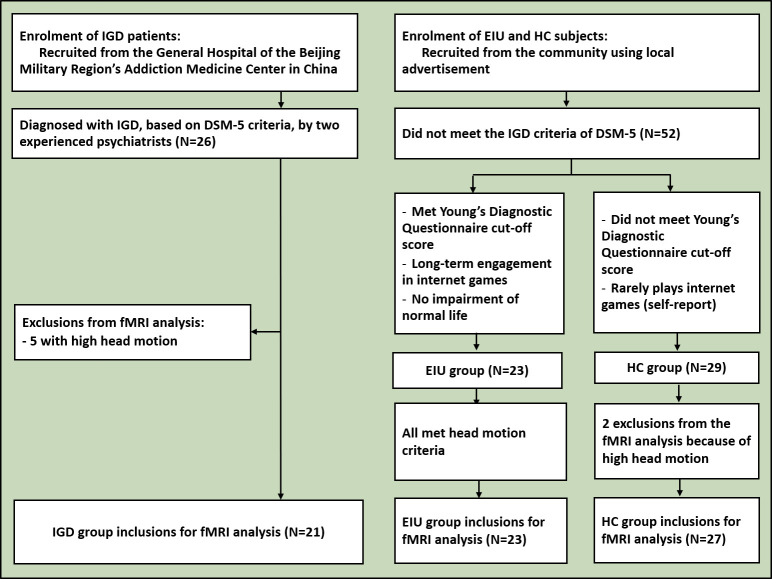
Twenty-six patients with IGD, 23 excessive internet game users (EIUs) who recurrently played internet games but were not diagnosed with IGD and 29 healthy controls (HCs) performed delay discounting task (DDT) and Iowa gambling task (IGT). Resting-state functional magnetic resonance imaging (fMRI) data were also collected.
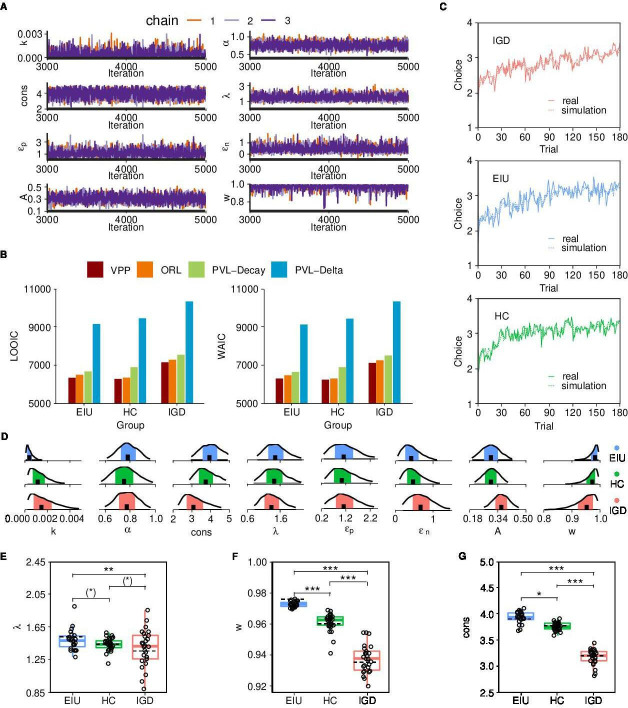
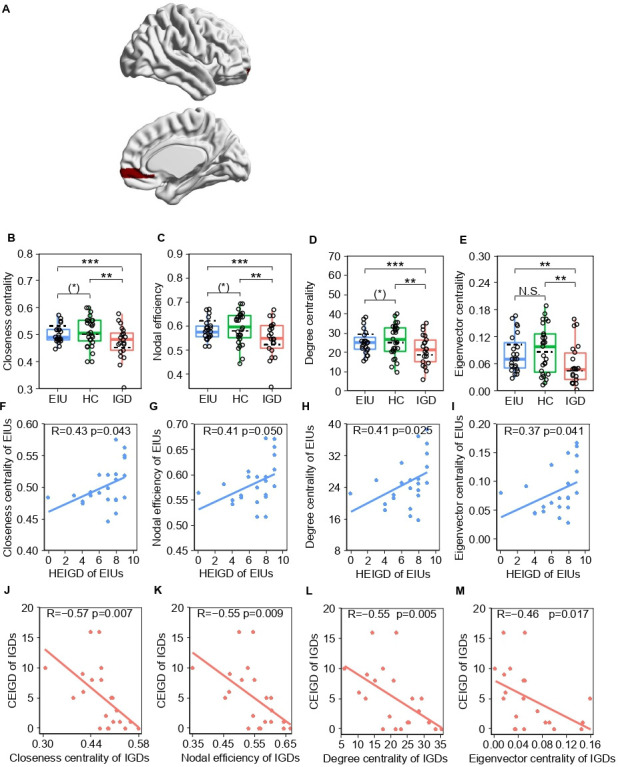
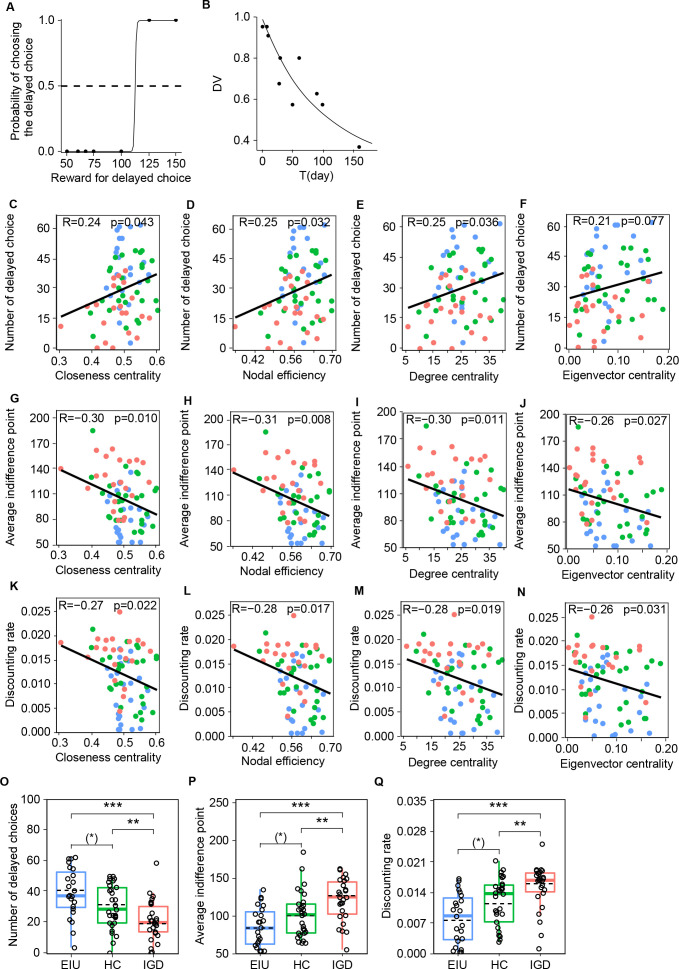
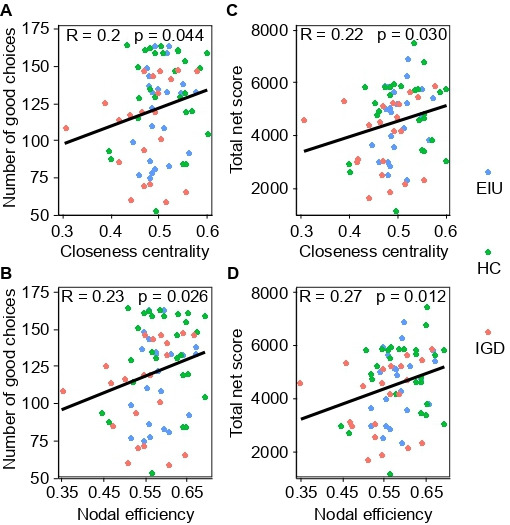
Patients with IGD exhibited significantly lower hubness in the right medial orbital part of the superior frontal gyrus (ORBsupmed) than both the EIU and the HC groups. Additionally, the hubness of the right ORBsupmed was found to be positively correlated with the highest excessive internet gaming degree during the past year in the EIU group but not the IGD group; this might be the protective mechanism that prevents EIUs from becoming addicted to internet games. Moreover, the hubness of the right ORBsupmed was found to be related to the treatment outcome of patients with IGD, with higher hubness of this region indicating better recovery when undergoing forced abstinence. Further modelling analysis of the DDT and IGT showed that patients with IGD displayed higher impulsivity during the decision-making process, and impulsivity-related parameters were negatively correlated with the hubness of right ORBsupmed.
Our findings revealed that the impulsivity-related right ORBsupmed hubness could serve as a potential biomarker of IGD and provide clues for the diagnosis and treatment of IGD.
网络游戏障碍(IGD)是一个影响全球个体的心理健康问题。然而,对与IGD发展相关的生物标志物缺乏了解限制了这种疾病的诊断和治疗。
我们旨在通过静息态脑网络分析揭示与IGD发展相关的生物标志物,并为IGD的诊断和治疗提供线索。
26名IGD患者、23名经常玩网络游戏但未被诊断为IGD的过度网络游戏使用者(EIU)和29名健康对照者(HC)进行了延迟折扣任务(DDT)和爱荷华赌博任务(IGT)。还收集了静息态功能磁共振成像(fMRI)数据。
IGD患者在额上回右侧内侧眶部(ORBsupmed)的中心性显著低于EIU组和HC组。此外,发现EIU组而非IGD组中右侧ORBsupmed的中心性与过去一年中最高的过度网络游戏程度呈正相关;这可能是防止EIU沉迷于网络游戏的保护机制。此外,发现右侧ORBsupmed的中心性与IGD患者的治疗结果相关,该区域中心性越高表明在强制戒断时恢复得越好。对DDT和IGT的进一步建模分析表明,IGD患者在决策过程中表现出更高的冲动性,且与冲动性相关的参数与右侧ORBsupmed的中心性呈负相关。
我们的研究结果表明,与冲动性相关的右侧ORBsupmed中心性可作为IGD的潜在生物标志物,并为IGD的诊断和治疗提供线索。