Hansen Austin W, Venkatachalam Kallidaikurichi V
College of Allopathic Medicine, Nova Southeastern University, Fort Lauderdale, FL, 33328, USA.
Biochem Biophys Rep. 2023 Aug 13;35:101529. doi: 10.1016/j.bbrep.2023.101529. eCollection 2023 Sep.
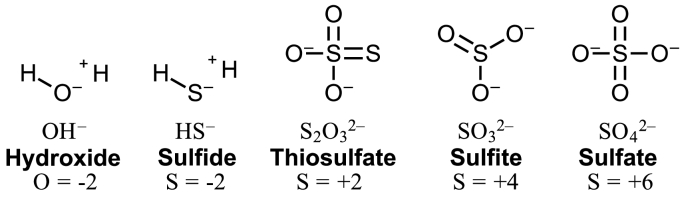
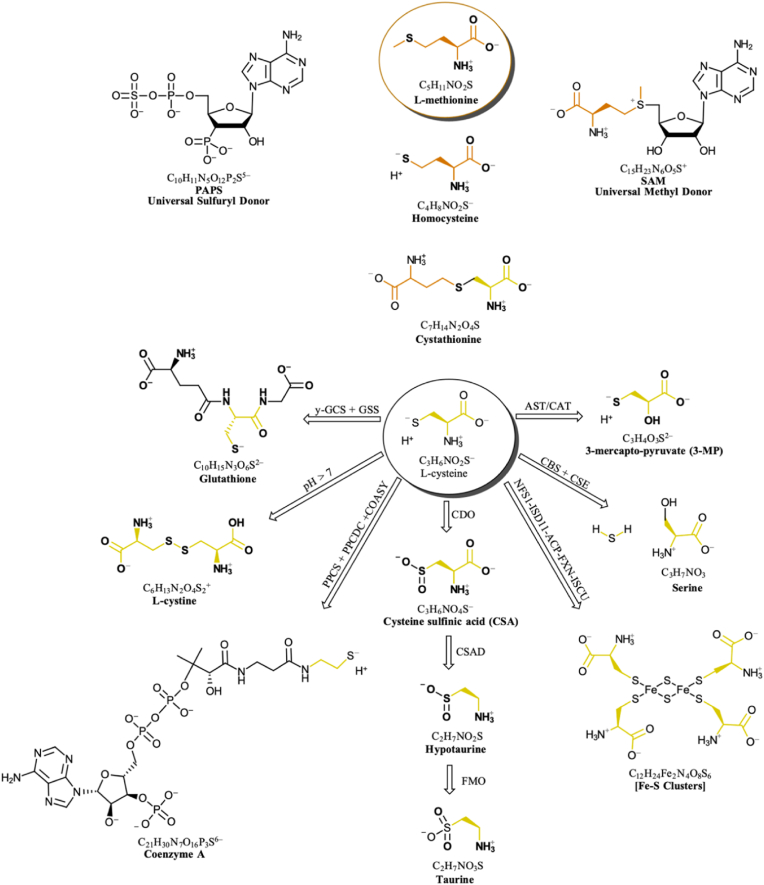
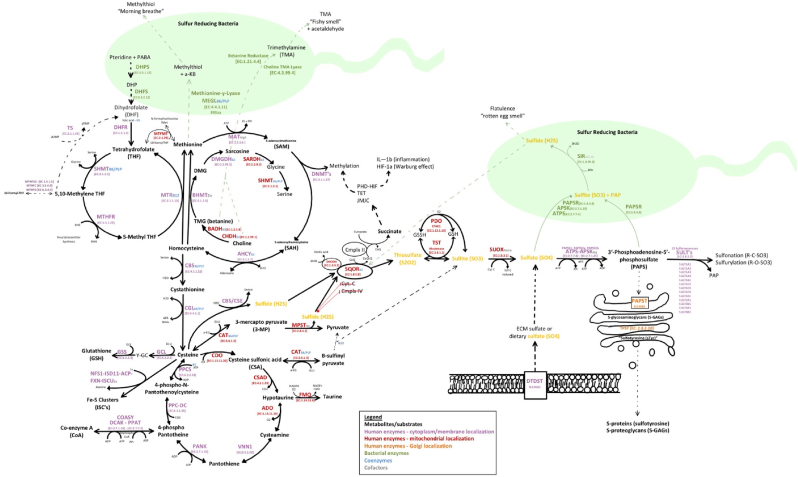
In humans, methionine derived from dietary proteins is necessary for cellular homeostasis and regeneration of sulfur containing pathways, which produce inorganic sulfur species (ISS) along with essential organic sulfur compounds (OSC). In recent years, inorganic sulfur species have gained attention as key players in the crosstalk of human health and the gut microbiome. Endogenously, ISS includes hydrogen sulfide (HS), sulfite (SO), thiosulfate (SO), and sulfate (SO), which are produced by enzymes in the transsulfuration and sulfur oxidation pathways. Additionally, sulfate-reducing bacteria (SRB) in the gut lumen are notable HS producers which can contribute to the ISS pools of the human host. In this review, we will focus on the systemic effects of sulfur in biological pathways, describe the contrasting mechanisms of sulfurylation versus phosphorylation on the hydroxyl of serine/threonine and tyrosine residues of proteins in post-translational modifications, and the role of the gut microbiome in human sulfur metabolism.
在人类中,饮食蛋白质来源的蛋氨酸对于细胞内稳态以及含硫途径的再生至关重要,这些途径会产生无机硫物种(ISS)以及必需的有机硫化合物(OSC)。近年来,无机硫物种作为人类健康与肠道微生物群相互作用中的关键参与者而受到关注。内源性的ISS包括硫化氢(HS)、亚硫酸盐(SO)、硫代硫酸盐(SO)和硫酸盐(SO),它们由转硫和硫氧化途径中的酶产生。此外,肠腔内的硫酸盐还原菌(SRB)是值得注意的HS生产者,可促进人类宿主的ISS库。在本综述中,我们将重点关注硫在生物途径中的全身效应,描述蛋白质翻译后修饰中丝氨酸/苏氨酸和酪氨酸残基羟基上的硫酰化与磷酸化的对比机制,以及肠道微生物群在人类硫代谢中的作用。