Pathology Unit, Azienda USL Toscana Nord Ovest, Pisa, Italy.
Department of Clinical and Experimental Medicine, University of Florence, Largo Brambilla 3, 50134, Florence, Italy.
Clin Exp Med. 2023 Dec;23(8):5101-5112. doi: 10.1007/s10238-023-01165-3. Epub 2023 Aug 23.
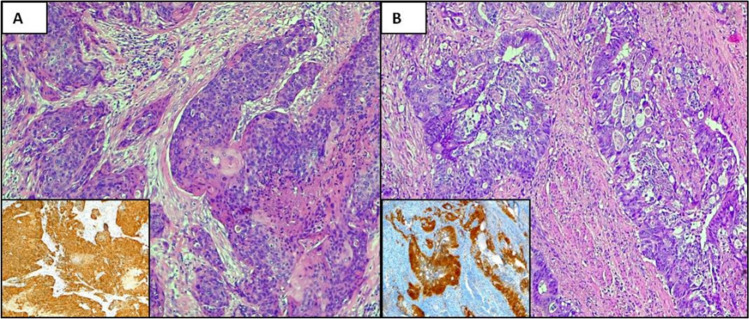
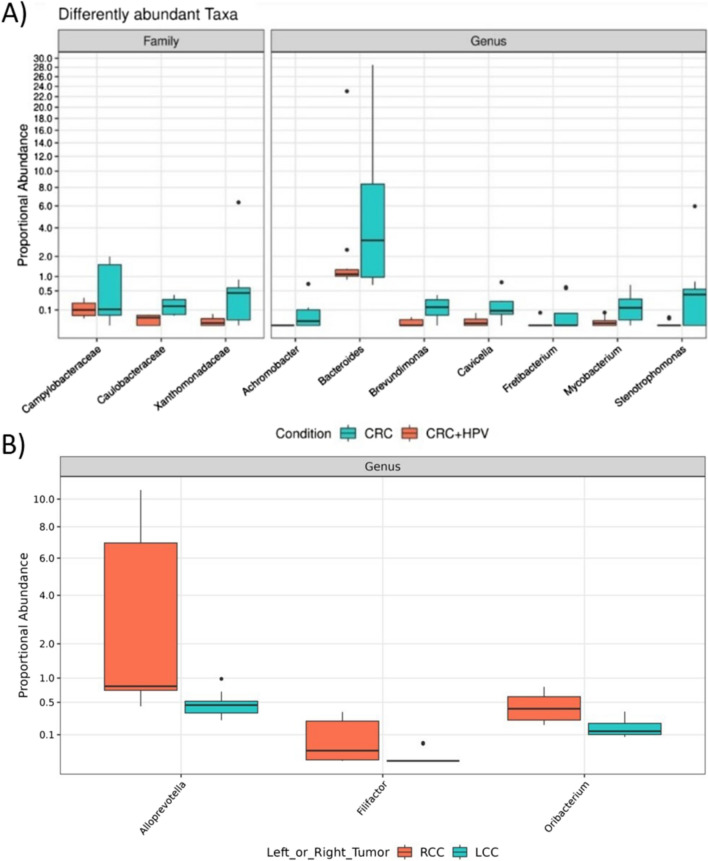
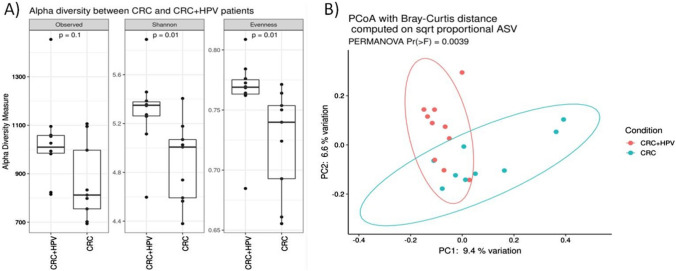
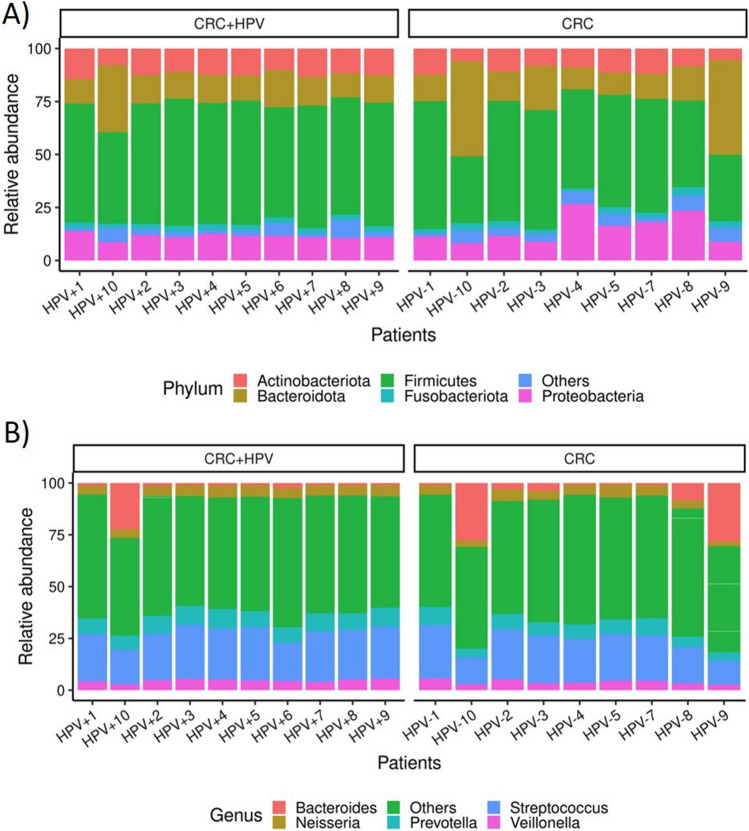
Worldwide more than 550,000 new patients suffering from malignant tumors are associated with human papillomaviruses (HPV) infection. However, only a small portion of patients infected progress to cancer, suggesting that other factors other than HPV may play a role. Some studies have investigated HPV infection in colorectal cancer (CRC) with discordant results; moreover, the role of HPV in CRC development is still unknown. We investigated HPV infection in 50 CRC from different regions, excluding the anal one, by immunohistochemistry (IHC), real-time PCR and RNA-seq. For each patient, we studied the tumor microenvironment in neoplastic and matched non-neoplastic samples, and we compared the tumor-infiltrating immune cell phenotypes among HPV-positive and negative samples. Finally, we compared the CRC-associated microbiota in HPV-positive and negative neoplastic samples by 16S rRNA sequencing. HPV infection was identified in 20% of CRC from the right side (caecum, ascending and transverse colon) and in 40% from the left side (descending colon and rectum). In all HPV-positive CRCs we found no expression of p53 and RB, thus suggesting HPV involvement in tumorigenesis. As far as the tumor microenvironment is concerned, in HPV-related cancers we observed a neoplastic environment with a reduced immune surveillance but an enhanced cytotoxic response by lymphocytes. HPV-positive and -negative CRC showed a different microbiota with lack of species normally found in CRC in the HPV-positive ones. Our results support the carcinogenic significance of HPV in CRC, suggesting a role of HPV in modulating the tumor immune microenvironment.
全球有超过 55 万名新的恶性肿瘤患者与人类乳头瘤病毒(HPV)感染有关。然而,只有一小部分感染的患者进展为癌症,这表明除 HPV 以外的其他因素可能起作用。一些研究已经调查了 HPV 感染与结直肠癌(CRC)之间的关系,但结果不一致;此外,HPV 在 CRC 发展中的作用仍不清楚。我们通过免疫组织化学(IHC)、实时 PCR 和 RNA-seq 检测了来自不同地区的 50 例 CRC(不包括肛门)中 HPV 的感染情况。对于每位患者,我们研究了肿瘤和匹配的非肿瘤样本中的肿瘤微环境,并比较了 HPV 阳性和阴性样本中肿瘤浸润免疫细胞表型。最后,我们通过 16S rRNA 测序比较了 HPV 阳性和阴性肿瘤样本中的 CRC 相关微生物组。右侧(盲肠、升结肠和横结肠)的 20%CRC 和左侧(降结肠和直肠)的 40%CRC 中检测到 HPV 感染。在所有 HPV 阳性的 CRC 中,我们均未发现 p53 和 RB 的表达,因此提示 HPV 参与了肿瘤的发生。就肿瘤微环境而言,在 HPV 相关的癌症中,我们观察到肿瘤环境中免疫监测减少,但淋巴细胞的细胞毒性反应增强。HPV 阳性和阴性的 CRC 表现出不同的微生物组,HPV 阳性的 CRC 中缺乏通常在 CRC 中发现的物种。我们的研究结果支持 HPV 在 CRC 中的致癌意义,提示 HPV 在调节肿瘤免疫微环境方面发挥作用。