Findlay-Wilson Stephen, Flett Lucy, Salguero Francisco J, Ruedas-Torres Ines, Fotheringham Susan, Easterbrook Linda, Graham Victoria, Dowall Stuart
United Kingdom Health Security Agency (UKHSA), Porton Down, Salisbury SP4 0JG, UK.
Pathogens. 2023 Jul 26;12(8):976. doi: 10.3390/pathogens12080976.
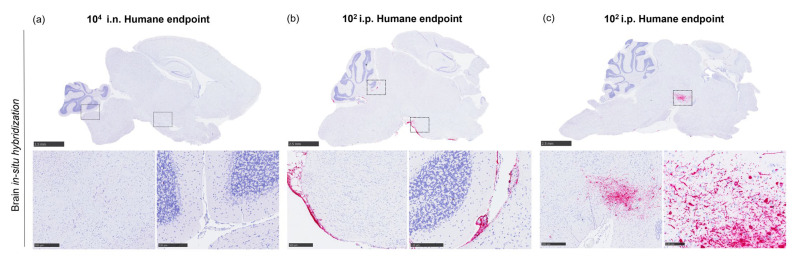
Nipah virus (NiV) is an emerging pathogen that can cause severe respiratory illness and encephalitis in humans. The main reservoir is fruit bats, distributed across a large geographical area that includes Australia, Southeast Asia, and Africa. Incursion into humans is widely reported through exposure of infected pigs, ingestion of contaminated food, or through contact with an infected person. With no approved treatments or vaccines, NiV poses a threat to human public health and has epidemic potential. To aid with the assessment of emerging interventions being developed, an expansion of preclinical testing capability is required. Given variations in the model parameters observed in different sites during establishment, optimisation of challenge routes and doses is required. Upon evaluating the hamster model, an intranasal route of challenge was compared with intraperitoneal delivery, demonstrating a more rapid dissemination to wider tissues in the latter. A dose effect was observed between those causing respiratory illness and those resulting in neurological disease. The data demonstrate the successful establishment of the hamster model of NiV disease for subsequent use in the evaluation of vaccines and antivirals.
尼帕病毒(NiV)是一种新出现的病原体,可导致人类严重的呼吸道疾病和脑炎。主要宿主是果蝠,分布在包括澳大利亚、东南亚和非洲在内的广大地理区域。通过接触受感染的猪、摄入受污染的食物或接触感染者,尼帕病毒侵入人类的情况有广泛报道。由于没有批准的治疗方法或疫苗,尼帕病毒对人类公共卫生构成威胁并具有流行潜力。为了帮助评估正在研发的新干预措施,需要扩大临床前检测能力。鉴于在不同地点建立模型时观察到的模型参数存在差异,需要优化攻毒途径和剂量。在评估仓鼠模型时,将鼻内攻毒途径与腹腔注射进行了比较,结果表明后者能更快地扩散到更广泛的组织。在导致呼吸道疾病的剂量和导致神经疾病的剂量之间观察到了剂量效应。这些数据表明,尼帕病毒疾病仓鼠模型已成功建立,可用于后续疫苗和抗病毒药物的评估。