de Wit Emmie, Prescott Joseph, Falzarano Darryl, Bushmaker Trenton, Scott Dana, Feldmann Heinz, Munster Vincent J
Laboratory of Virology, National Institute of Allergy and Infectious Diseases, National Institutes of Health, Hamilton, Montana, United States of America.
Rocky Mountain Veterinary Branch, National Institute of Allergy and Infectious Diseases, National Institutes of Health, Hamilton, Montana, United States of America.
PLoS Pathog. 2014 Mar 13;10(3):e1004001. doi: 10.1371/journal.ppat.1004001. eCollection 2014 Mar.
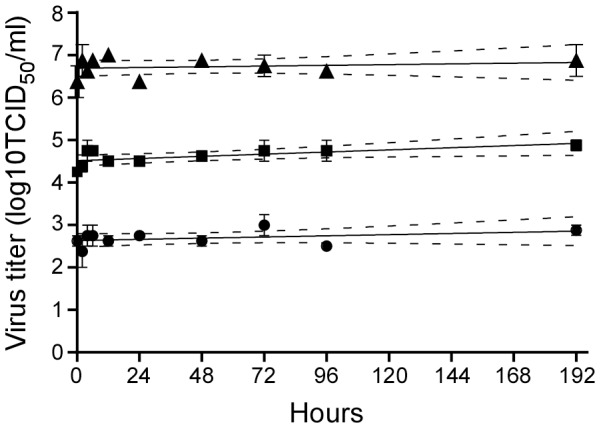
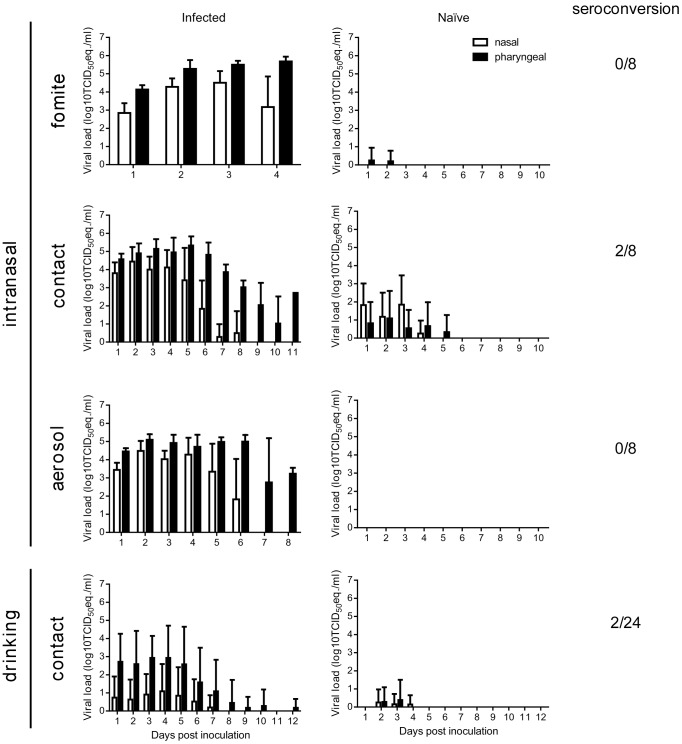
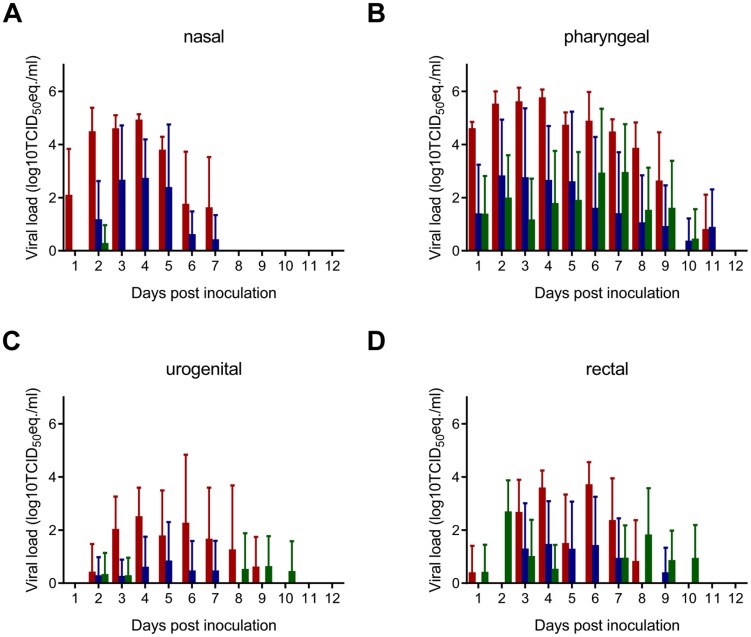
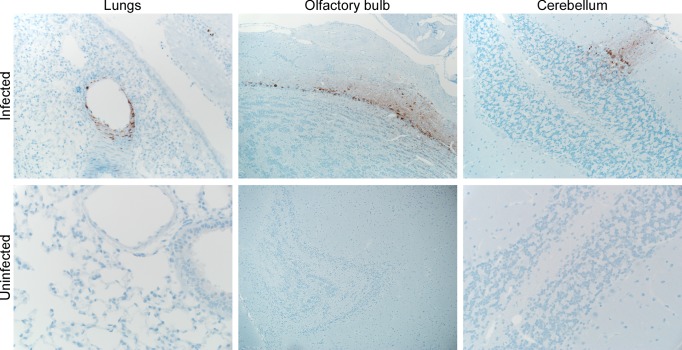
Since 2001, outbreaks of Nipah virus have occurred almost every year in Bangladesh with high case-fatality rates. Epidemiological data suggest that in Bangladesh, Nipah virus is transmitted from the natural reservoir, fruit bats, to humans via consumption of date palm sap contaminated by bats, with subsequent human-to-human transmission. To experimentally investigate this epidemiological association between drinking of date palm sap and human cases of Nipah virus infection, we determined the viability of Nipah virus (strain Bangladesh/200401066) in artificial palm sap. At 22°C virus titers remained stable for at least 7 days, thus potentially allowing food-borne transmission. Next, we modeled food-borne Nipah virus infection by supplying Syrian hamsters with artificial palm sap containing Nipah virus. Drinking of 5×10⁸ TCID₅₀ of Nipah virus resulted in neurological disease in 5 out of 8 hamsters, indicating that food-borne transmission of Nipah virus can indeed occur. In comparison, intranasal (i.n.) inoculation with the same dose of Nipah virus resulted in lethal respiratory disease in all animals. In animals infected with Nipah virus via drinking, virus was detected in respiratory tissues rather than in the intestinal tract. Using fluorescently labeled Nipah virus particles, we showed that during drinking, a substantial amount of virus is deposited in the lungs, explaining the replication of Nipah virus in the respiratory tract of these hamsters. Besides the ability of Nipah virus to infect hamsters via the drinking route, Syrian hamsters infected via that route transmitted the virus through direct contact with naïve hamsters in 2 out of 24 transmission pairs. Although these findings do not directly prove that date palm sap contaminated with Nipah virus by bats is the origin of Nipah virus outbreaks in Bangladesh, they provide the first experimental support for this hypothesis. Understanding the Nipah virus transmission cycle is essential for preventing and mitigating future outbreaks.
自2001年以来,孟加拉国几乎每年都会爆发尼帕病毒疫情,病死率很高。流行病学数据表明,在孟加拉国,尼帕病毒从天然宿主果蝠传播给人类是通过食用被蝙蝠污染的椰枣汁,随后发生人际传播。为了通过实验研究饮用椰枣汁与人类尼帕病毒感染病例之间的这种流行病学关联,我们测定了尼帕病毒(孟加拉国/200401066株)在人工椰枣汁中的生存能力。在22°C下,病毒滴度至少7天保持稳定,因此有可能通过食物传播。接下来,我们通过给叙利亚仓鼠提供含有尼帕病毒的人工椰枣汁来模拟食物传播的尼帕病毒感染。饮用5×10⁸半数组织培养感染剂量(TCID₅₀)的尼帕病毒导致8只仓鼠中有5只出现神经疾病,这表明尼帕病毒确实可以通过食物传播。相比之下,用相同剂量的尼帕病毒进行鼻内接种导致所有动物都出现致命的呼吸道疾病。在通过饮用感染尼帕病毒的动物中,在呼吸组织而非肠道中检测到病毒。使用荧光标记的尼帕病毒颗粒,我们发现饮用期间,大量病毒沉积在肺部,这解释了这些仓鼠呼吸道中尼帕病毒的复制情况。除了尼帕病毒通过饮用途径感染仓鼠的能力外,通过该途径感染的叙利亚仓鼠在24对传播配对中有2对通过与未感染的仓鼠直接接触传播了病毒。尽管这些发现不能直接证明被蝙蝠污染的椰枣汁是孟加拉国尼帕病毒疫情的源头,但它们为这一假设提供了首个实验支持。了解尼帕病毒传播周期对于预防和减轻未来疫情至关重要。