• 文献检索
  • 文档翻译
  • 深度研究
  • 学术资讯
  • Suppr Zotero 插件Zotero 插件
  • 邀请有礼
  • 套餐&价格
  • 历史记录
应用&插件
Suppr Zotero 插件Zotero 插件浏览器插件Mac 客户端Windows 客户端微信小程序
定价
高级版会员购买积分包购买API积分包
服务
文献检索文档翻译深度研究API 文档MCP 服务
关于我们
关于 Suppr公司介绍联系我们用户协议隐私条款
关注我们

Suppr 超能文献

核心技术专利:CN118964589B侵权必究
粤ICP备2023148730 号-1Suppr @ 2026

文献检索

告别复杂PubMed语法,用中文像聊天一样搜索,搜遍4000万医学文献。AI智能推荐,让科研检索更轻松。

立即免费搜索

文件翻译

保留排版,准确专业,支持PDF/Word/PPT等文件格式,支持 12+语言互译。

免费翻译文档

深度研究

AI帮你快速写综述,25分钟生成高质量综述,智能提取关键信息,辅助科研写作。

立即免费体验

用于认知障碍个体基于风险分层的深度学习

Deep learning for risk-based stratification of cognitively impaired individuals.

作者信息

Romano Michael F, Zhou Xiao, Balachandra Akshara R, Jadick Michalina F, Qiu Shangran, Nijhawan Diya A, Joshi Prajakta S, Mohammad Shariq, Lee Peter H, Smith Maximilian J, Paul Aaron B, Mian Asim Z, Small Juan E, Chin Sang P, Au Rhoda, Kolachalama Vijaya B

机构信息

Department of Medicine, Boston University Chobanian & Avedisian School of Medicine, Boston, MA, USA.

Department of Radiology and Biomedical Imaging, University of California, San Francisco, San Francisco, CA, USA.

出版信息

iScience. 2023 Aug 2;26(9):107522. doi: 10.1016/j.isci.2023.107522. eCollection 2023 Sep 15.

DOI:10.1016/j.isci.2023.107522
PMID:37646016
原文链接:
https://pmc.ncbi.nlm.nih.gov/articles/PMC10460987/
Abstract

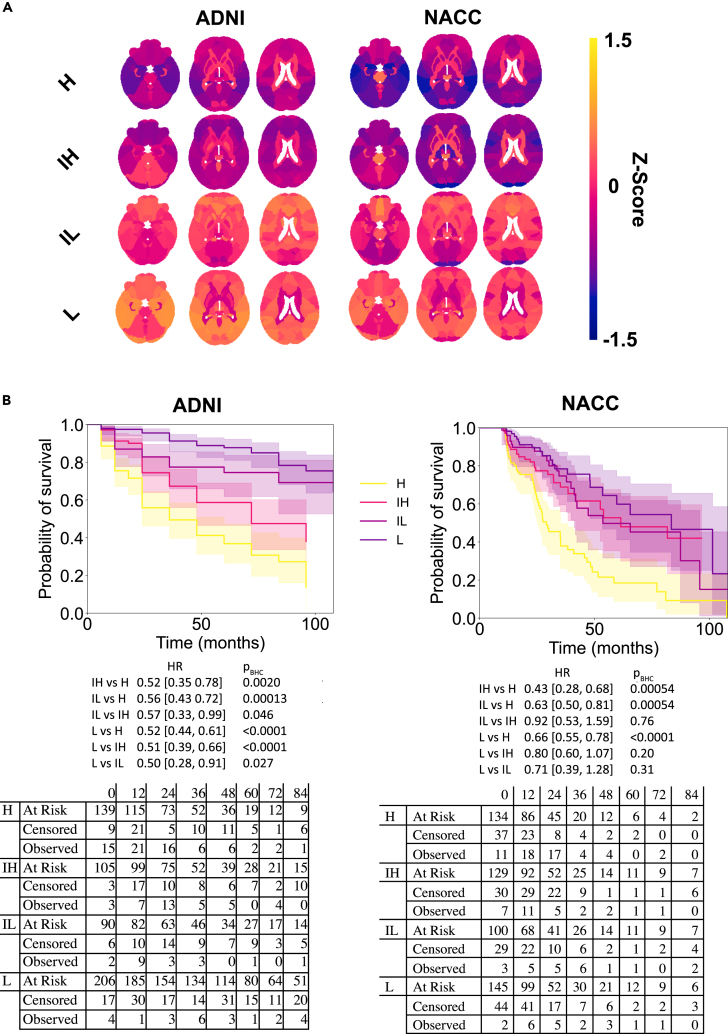
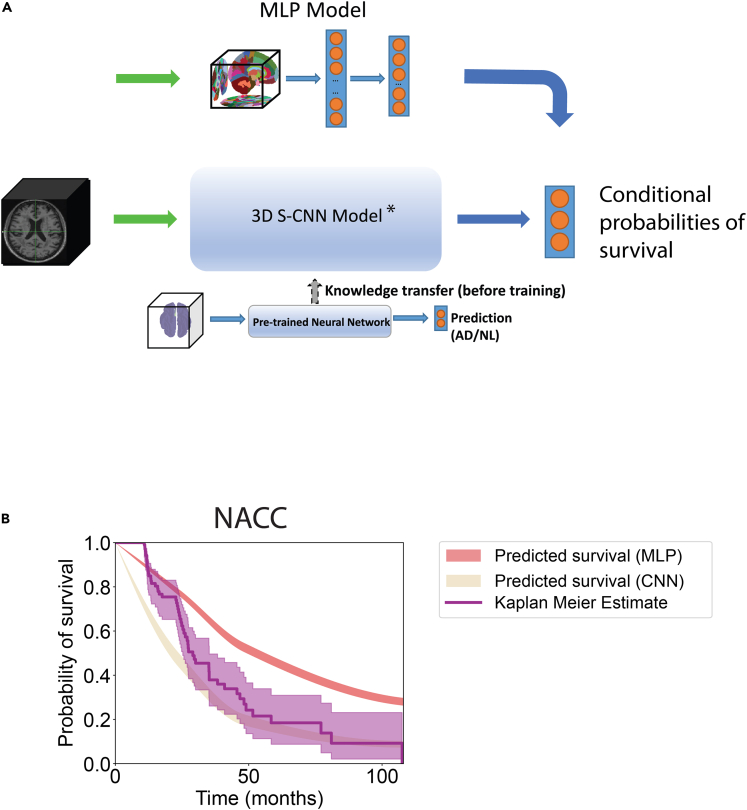
Quantifying the risk of progression to Alzheimer's disease (AD) could help identify persons who could benefit from early interventions. We used data from the Alzheimer's Disease Neuroimaging Initiative (ADNI, n = 544, discovery cohort) and the National Alzheimer's Coordinating Center (NACC, n = 508, validation cohort), subdividing individuals with mild cognitive impairment (MCI) into risk groups based on cerebrospinal fluid amyloid-β levels and identifying differential gray matter patterns. We then created models that fused neural networks with survival analysis, trained using non-parcellated T1-weighted brain MRIs from ADNI data, to predict the trajectories of MCI to AD conversion within the NACC cohort (integrated Brier score: 0.192 [discovery], and 0.108 [validation]). Using modern interpretability techniques, we verified that regions important for model prediction are classically associated with AD. We confirmed AD diagnosis labels using postmortem data. We conclude that our framework provides a strategy for risk-based stratification of individuals with MCI and for identifying regions key for disease prognosis.

摘要

量化发展为阿尔茨海默病(AD)的风险有助于识别可能从早期干预中获益的人群。我们使用了来自阿尔茨海默病神经影像倡议(ADNI,n = 544,发现队列)和国家阿尔茨海默病协调中心(NACC,n = 508,验证队列)的数据,根据脑脊液淀粉样β水平将轻度认知障碍(MCI)个体细分为风险组,并识别不同的灰质模式。然后,我们创建了将神经网络与生存分析相结合的模型,使用来自ADNI数据的未分割T1加权脑MRI进行训练,以预测NACC队列中MCI向AD转化的轨迹(综合Brier评分:0.192[发现队列]和0.108[验证队列])。使用现代可解释性技术,我们验证了对模型预测重要的区域与AD经典相关。我们使用尸检数据确认了AD诊断标签。我们得出结论,我们的框架为基于风险的MCI个体分层以及识别疾病预后的关键区域提供了一种策略。

https://cdn.ncbi.nlm.nih.gov/pmc/blobs/e91c/10460987/280cff4157f3/gr6.jpg
https://cdn.ncbi.nlm.nih.gov/pmc/blobs/e91c/10460987/71fe8d60d381/fx1.jpg
https://cdn.ncbi.nlm.nih.gov/pmc/blobs/e91c/10460987/bd87c2a53694/gr1.jpg
https://cdn.ncbi.nlm.nih.gov/pmc/blobs/e91c/10460987/ae01b1eca217/gr2.jpg
https://cdn.ncbi.nlm.nih.gov/pmc/blobs/e91c/10460987/832534a23d59/gr3.jpg
https://cdn.ncbi.nlm.nih.gov/pmc/blobs/e91c/10460987/2d706f16e07c/gr4.jpg
https://cdn.ncbi.nlm.nih.gov/pmc/blobs/e91c/10460987/e7552c220e19/gr5.jpg
https://cdn.ncbi.nlm.nih.gov/pmc/blobs/e91c/10460987/280cff4157f3/gr6.jpg
https://cdn.ncbi.nlm.nih.gov/pmc/blobs/e91c/10460987/71fe8d60d381/fx1.jpg
https://cdn.ncbi.nlm.nih.gov/pmc/blobs/e91c/10460987/bd87c2a53694/gr1.jpg
https://cdn.ncbi.nlm.nih.gov/pmc/blobs/e91c/10460987/ae01b1eca217/gr2.jpg
https://cdn.ncbi.nlm.nih.gov/pmc/blobs/e91c/10460987/832534a23d59/gr3.jpg
https://cdn.ncbi.nlm.nih.gov/pmc/blobs/e91c/10460987/2d706f16e07c/gr4.jpg
https://cdn.ncbi.nlm.nih.gov/pmc/blobs/e91c/10460987/e7552c220e19/gr5.jpg
https://cdn.ncbi.nlm.nih.gov/pmc/blobs/e91c/10460987/280cff4157f3/gr6.jpg

相似文献

1
Deep learning for risk-based stratification of cognitively impaired individuals.用于认知障碍个体基于风险分层的深度学习
iScience. 2023 Aug 2;26(9):107522. doi: 10.1016/j.isci.2023.107522. eCollection 2023 Sep 15.
2
Modelling prognostic trajectories of cognitive decline due to Alzheimer's disease.基于阿尔茨海默病的认知衰退预后轨迹建模。
Neuroimage Clin. 2020;26:102199. doi: 10.1016/j.nicl.2020.102199. Epub 2020 Jan 26.
3
A parameter-efficient deep learning approach to predict conversion from mild cognitive impairment to Alzheimer's disease.一种参数高效的深度学习方法,用于预测轻度认知障碍向阿尔茨海默病的转化。
Neuroimage. 2019 Apr 1;189:276-287. doi: 10.1016/j.neuroimage.2019.01.031. Epub 2019 Jan 14.
4
Diagnosis and prognosis of Alzheimer's disease using brain morphometry and white matter connectomes.使用脑形态计量学和白质连接组学诊断和预测阿尔茨海默病。
Neuroimage Clin. 2019;23:101859. doi: 10.1016/j.nicl.2019.101859. Epub 2019 May 13.
5
Adversarial Learning for MRI Reconstruction and Classification of Cognitively Impaired Individuals.用于认知障碍个体MRI重建与分类的对抗学习
IEEE Access. 2024;12:83169-83182. doi: 10.1109/access.2024.3408840. Epub 2024 Jun 3.
6
Deep learning prediction of mild cognitive impairment conversion to Alzheimer's disease at 3 years after diagnosis using longitudinal and whole-brain 3D MRI.使用纵向和全脑3D磁共振成像对诊断后3年轻度认知障碍转化为阿尔茨海默病进行深度学习预测。
PeerJ Comput Sci. 2021 May 25;7:e560. doi: 10.7717/peerj-cs.560. eCollection 2021.
7
Vision transformers for the prediction of mild cognitive impairment to Alzheimer's disease progression using mid-sagittal sMRI.使用正中矢状面结构磁共振成像的视觉变换器预测轻度认知障碍向阿尔茨海默病的进展
Front Aging Neurosci. 2023 Apr 13;15:1102869. doi: 10.3389/fnagi.2023.1102869. eCollection 2023.
8
Disease trajectories in elders with suspected non-Alzheimer's pathophysiology and its comparison with Alzheimer's disease pathophysiology: a longitudinal study.疑似非阿尔茨海默病病理生理学的老年人疾病轨迹及其与阿尔茨海默病病理生理学的比较:一项纵向研究。
Res Sq. 2023 Mar 29:rs.3.rs-2744271. doi: 10.21203/rs.3.rs-2744271/v1.
9
ApoE4 effects on automated diagnostic classifiers for mild cognitive impairment and Alzheimer's disease.载脂蛋白E4对轻度认知障碍和阿尔茨海默病自动诊断分类器的影响。
Neuroimage Clin. 2014 Jan 4;4:461-72. doi: 10.1016/j.nicl.2013.12.012. eCollection 2014.
10
Generalizable deep learning model for early Alzheimer's disease detection from structural MRIs.基于结构 MRI 的泛化深度学习模型用于早期阿尔茨海默病检测。
Sci Rep. 2022 Oct 17;12(1):17106. doi: 10.1038/s41598-022-20674-x.

引用本文的文献

1
Deep learning analysis of fMRI data for predicting Alzheimer's Disease: A focus on convolutional neural networks and model interpretability.用于预测阿尔茨海默病的功能磁共振成像数据的深度学习分析:聚焦卷积神经网络和模型可解释性。
PLoS One. 2024 Dec 4;19(12):e0312848. doi: 10.1371/journal.pone.0312848. eCollection 2024.
2
Adversarial Learning for MRI Reconstruction and Classification of Cognitively Impaired Individuals.用于认知障碍个体MRI重建与分类的对抗学习
IEEE Access. 2024;12:83169-83182. doi: 10.1109/access.2024.3408840. Epub 2024 Jun 3.
3
Artificial intelligence for differential diagnosis of dementia.

本文引用的文献

1
CAT: a computational anatomy toolbox for the analysis of structural MRI data.CAT:用于分析结构磁共振成像数据的计算解剖工具箱。
Gigascience. 2024 Jan 2;13. doi: 10.1093/gigascience/giae049.
2
Multimodal deep learning for Alzheimer's disease dementia assessment.多模态深度学习在阿尔茨海默病痴呆评估中的应用。
Nat Commun. 2022 Jun 20;13(1):3404. doi: 10.1038/s41467-022-31037-5.
3
A deep learning MRI approach outperforms other biomarkers of prodromal Alzheimer's disease.深度学习 MRI 方法优于前驱期阿尔茨海默病的其他生物标志物。
用于痴呆症鉴别诊断的人工智能
Nat Med. 2024 Oct;30(10):2737-2738. doi: 10.1038/s41591-024-03147-8.
4
Comparing a pre-defined versus deep learning approach for extracting brain atrophy patterns to predict cognitive decline due to Alzheimer's disease in patients with mild cognitive symptoms.比较预定义方法和深度学习方法提取脑萎缩模式,以预测轻度认知症状患者因阿尔茨海默病导致的认知能力下降。
Alzheimers Res Ther. 2024 Mar 19;16(1):61. doi: 10.1186/s13195-024-01428-5.
Alzheimers Res Ther. 2022 Mar 29;14(1):45. doi: 10.1186/s13195-022-00985-x.
4
Predictors of Mortality in Individuals with Dementia in the National Alzheimer's Coordinating Center.国家阿尔茨海默病协调中心痴呆患者死亡的预测因素。
J Alzheimers Dis. 2022;86(4):1935-1946. doi: 10.3233/JAD-215587.
5
Time-to-event prediction using survival analysis methods for Alzheimer's disease progression.使用生存分析方法对阿尔茨海默病进展进行事件发生时间预测。
Alzheimers Dement (N Y). 2021 Dec 31;7(1):e12229. doi: 10.1002/trc2.12229. eCollection 2021.
6
Survival Analysis in Cognitively Normal Subjects and in Patients with Mild Cognitive Impairment Using a Proportional Hazards Model with Extreme Gradient Boosting Regression.使用极端梯度提升回归的比例风险模型对认知正常受试者和轻度认知障碍患者进行生存分析。
J Alzheimers Dis. 2022;85(2):837-850. doi: 10.3233/JAD-215266.
7
Why Is Aducanumab Priced at $56,000 per Patient? Lessons for Drug-Pricing Reform.为什么阿杜卡努单抗每位患者定价56000美元?药物定价改革的经验教训。
N Engl J Med. 2021 Nov 25;385(22):2017-2019. doi: 10.1056/NEJMp2113679. Epub 2021 Nov 20.
8
Association Between Polygenic Risk Score and the Progression from Mild Cognitive Impairment to Alzheimer's Disease.多基因风险评分与轻度认知障碍向阿尔茨海默病进展的关系。
J Alzheimers Dis. 2021;84(3):1323-1335. doi: 10.3233/JAD-210700.
9
Deep Learning for Automated Triaging of 4581 Breast MRI Examinations from the DENSE Trial.深度学习用于对DENSE试验中4581例乳腺MRI检查进行自动分诊
Radiology. 2022 Jan;302(1):29-36. doi: 10.1148/radiol.2021203960. Epub 2021 Oct 5.
10
Screening and predicting progression from high-risk mild cognitive impairment to Alzheimer's disease.筛查和预测高危轻度认知障碍向阿尔茨海默病的进展。
Sci Rep. 2021 Sep 2;11(1):17558. doi: 10.1038/s41598-021-96914-3.