Ruggeri Marco, Miele Dalila, Contardi Marco, Vigani Barbara, Boselli Cinzia, Icaro Cornaglia Antonia, Rossi Silvia, Suarato Giulia, Athanassiou Athanassia, Sandri Giuseppina
Department of Drug Sciences, University of Pavia, Pavia, Italy.
Smart Materials, Istituto Italiano di Tecnologia, Genova, Italy.
Front Bioeng Biotechnol. 2023 Aug 15;11:1225722. doi: 10.3389/fbioe.2023.1225722. eCollection 2023.
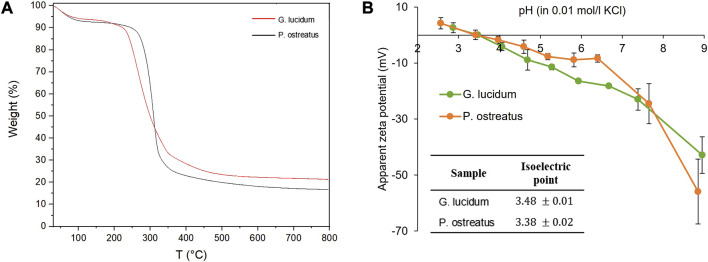
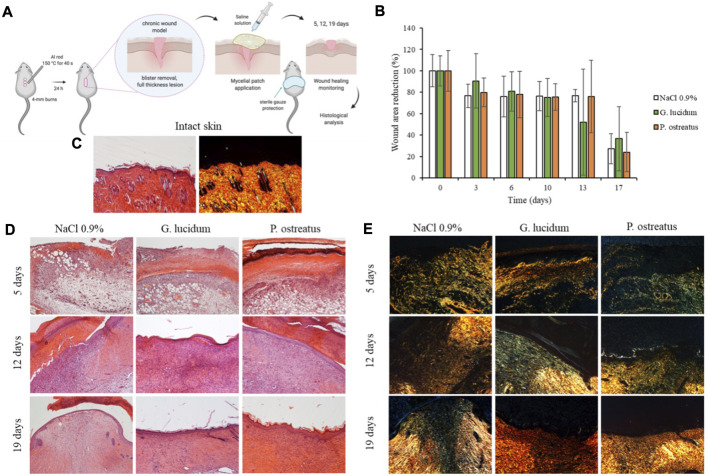
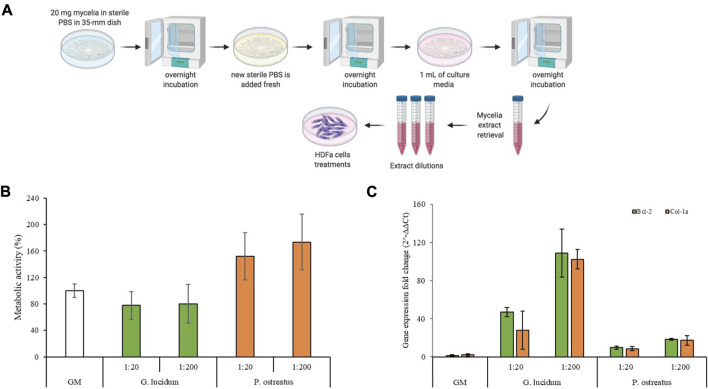
Recently, mycelia of and , edible fungi, have been characterized as self-growing biomaterials for tissue engineering since they are constituted of interconnected fibrous networks resembling the dermal collagen structure. This work aims to investigate the biopharmaceutical properties of and mycelia to prove their safety and effectiveness in tissue engineering as dermal substitutes. The mycelial materials were characterized using a multidisciplinary approach, including physicochemical properties (morphology, thermal behavior, surface charge, and isoelectric point). Moreover, preclinical properties such as gene expression and wound healing assay have been evaluated using fibroblasts. Finally, these naturally-grown substrates were applied using a murine burn/excisional wound model. Both and mycelia are biocompatible and able to safely and effectively enhance tissue repair in our preclinical model.
最近,香菇和木耳这两种食用菌的菌丝体已被表征为用于组织工程的自生长生物材料,因为它们由类似于真皮胶原结构的相互连接的纤维网络构成。这项工作旨在研究香菇和木耳菌丝体的生物制药特性,以证明它们作为真皮替代物在组织工程中的安全性和有效性。使用多学科方法对菌丝体材料进行了表征,包括物理化学性质(形态、热行为、表面电荷和等电点)。此外,还使用成纤维细胞评估了基因表达和伤口愈合试验等临床前特性。最后,使用小鼠烧伤/切除伤口模型应用了这些天然生长的基质。在我们的临床前模型中,香菇和木耳菌丝体均具有生物相容性,并且能够安全有效地促进组织修复。