Department of Digestive Diseases, Huashan Hospital, Fudan University, Shanghai, 200040, China.
State Key Laboratory of Genetic Engineering, School of Life Sciences, Zhongshan Hospital, Fudan University, Shanghai, 200438, China.
BMC Med. 2023 Sep 4;21(1):336. doi: 10.1186/s12916-023-03034-y.
Colorectal adenoma (CA), especially high-risk CA (HRCA), is a precancerous lesion with high prevalence and recurrence rate and accounts for about 90% incidence of sporadic colorectal cancer cases worldwide. Currently, recurrent CA can only be treated with repeated invasive polypectomies, while safe and promising pharmaceutical invention strategies are still missing due to the lack of reliable in vitro model for CA-related drug screening.
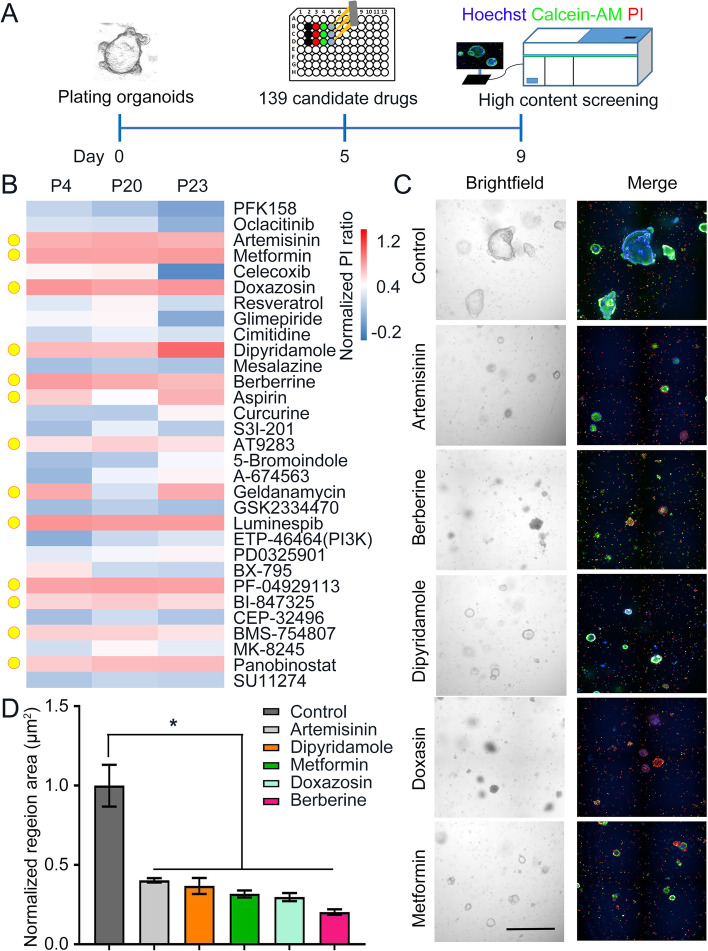
We have established a large-scale patient-derived high-risk colorectal adenoma organoid (HRCA-PDO) biobank containing 37 PDO lines derived from 33 patients and then conducted a series of high-throughput and high-content HRCA drug screening.
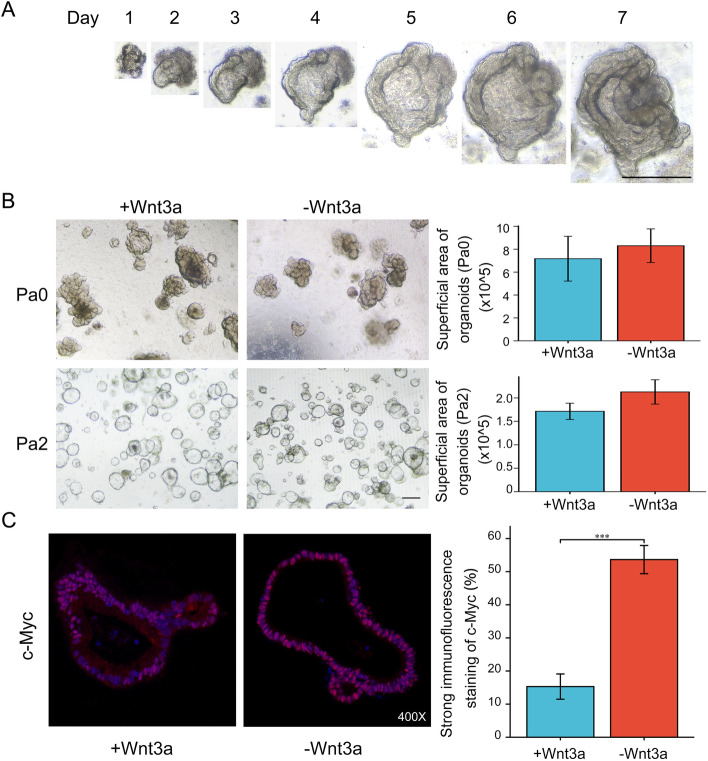
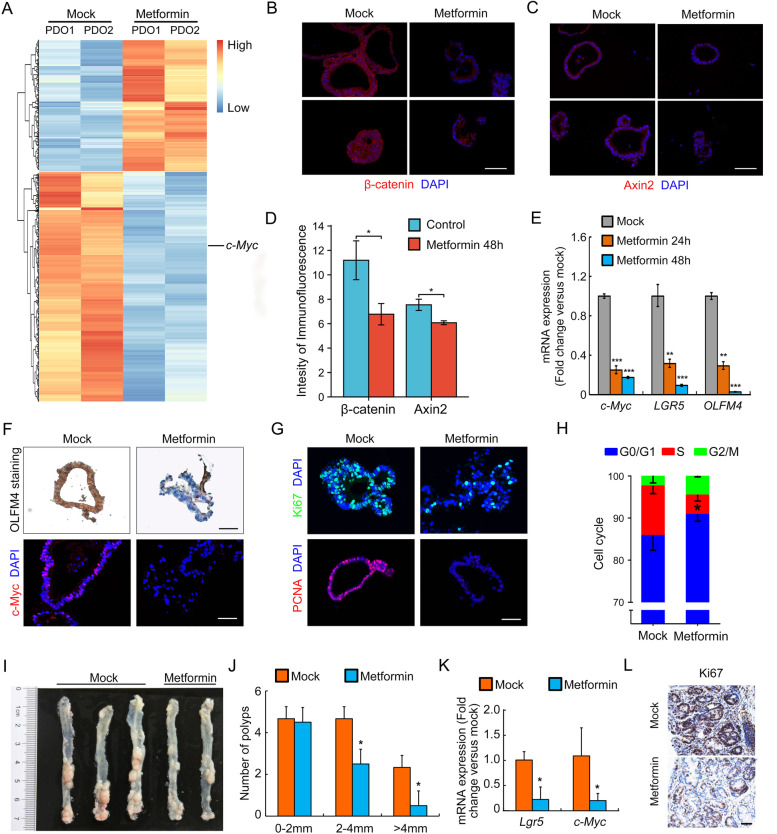
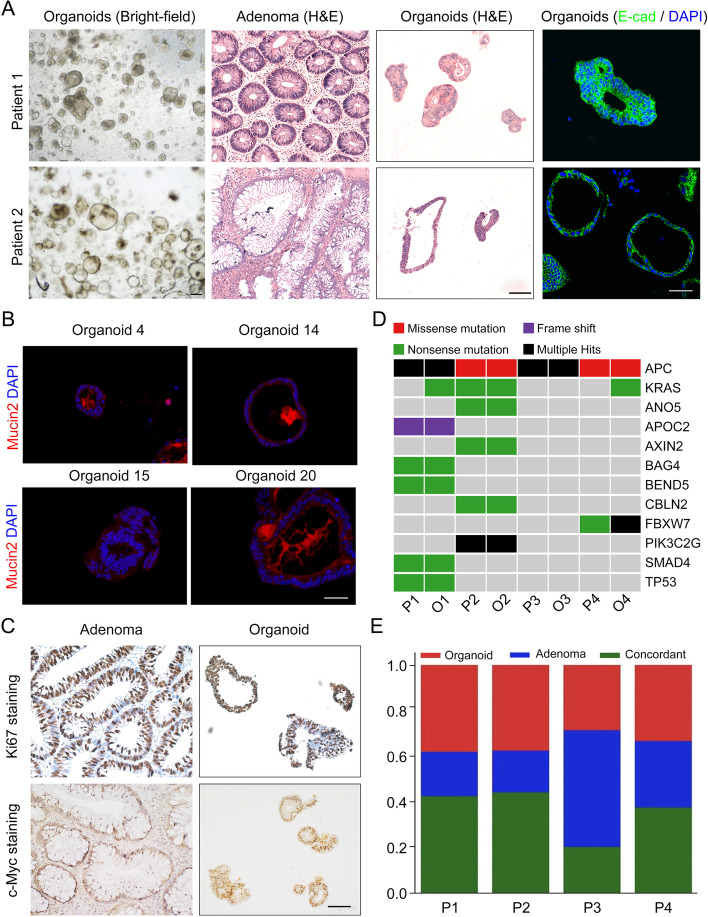
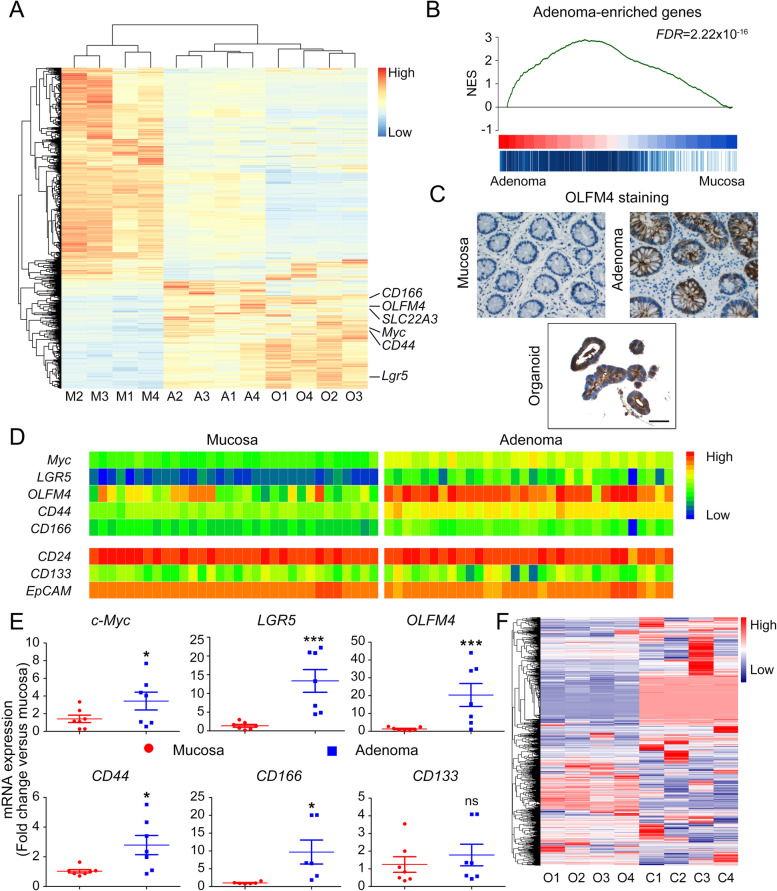
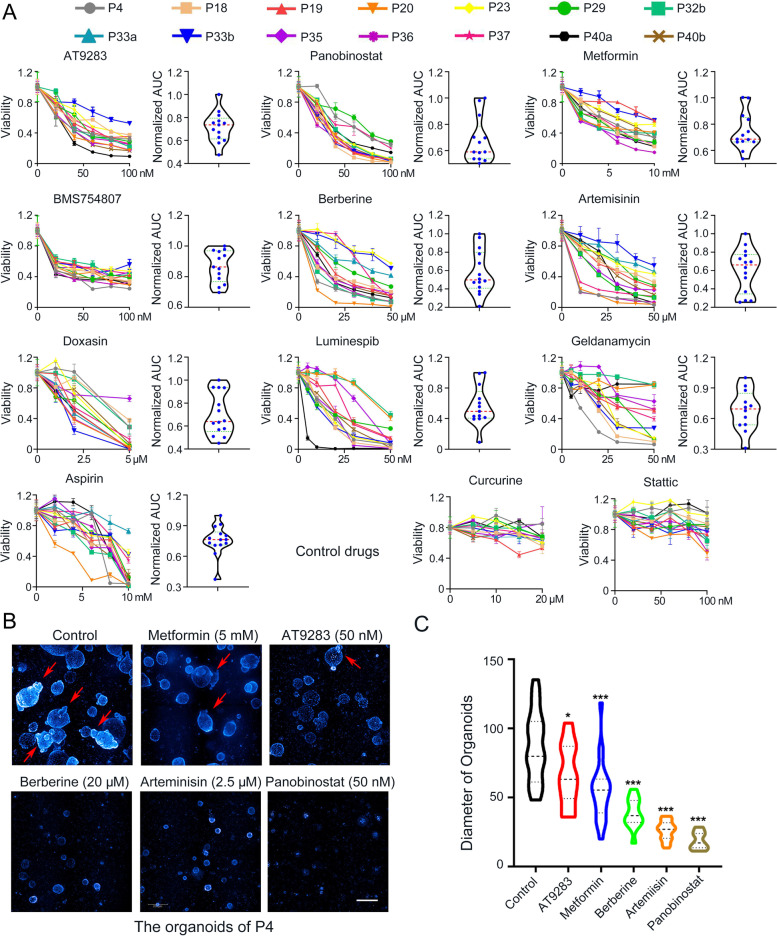
We established the primary culture system with the non-WNT3a medium which highly improved the purity while maintained the viability of HRCA-PDOs. We also proved that the HRCA-PDOs replicated the histological features, cellular diversity, genetic mutations, and molecular characteristics of the primary adenomas. Especially, we identified the dysregulated stem genes including LGR5, c-Myc, and OLFM4 as the markers of adenoma, which are well preserved in HRCA-PDOs. Based on the HRCA-PDO biobank, a customized 139 compound library was applied for drug screening. Four drugs including metformin, BMS754807, panobinostat and AT9283 were screened out as potential hits with generally consistent inhibitory efficacy on HRCA-PDOs. As a representative, metformin was discovered to hinder HRCA-PDO growth in vitro and in vivo by restricting the stemness maintenance.
This study established a promising HRCA-PDO biobank and conducted the first high-throughput and high-content HRCA drug screening in order to shed light on the prevention of colorectal cancer.
结直肠腺瘤(CA),尤其是高危 CA(HRCA),是一种癌前病变,具有高患病率和高复发率,约占全球散发性结直肠癌病例的 90%。目前,复发性 CA 只能通过反复的侵入性息肉切除术进行治疗,而由于缺乏用于 CA 相关药物筛选的可靠体外模型,安全且有前途的制药发明策略仍然缺失。
我们建立了一个包含 37 条源自 33 名患者的 PDO 系的大规模患者来源的高危结直肠腺瘤类器官(HRCA-PDO)生物库,然后对其进行了一系列高通量和高内涵的 HRCA 药物筛选。
我们建立了一种无 WNT3a 培养基的原代培养体系,该体系在提高 HRCA-PDO 纯度的同时,还保持了其活力。我们还证明,HRCA-PDO 复制了原发性腺瘤的组织学特征、细胞多样性、遗传突变和分子特征。特别是,我们确定了失调的干细胞基因,包括 LGR5、c-Myc 和 OLFM4,作为腺瘤的标志物,这些标志物在 HRCA-PDO 中很好地保存。基于 HRCA-PDO 生物库,我们应用了定制的 139 种化合物库进行药物筛选。筛选出四种药物,包括二甲双胍、BMS754807、panobinostat 和 AT9283,它们对 HRCA-PDO 具有普遍一致的抑制作用,被认为是潜在的有效药物。作为代表,二甲双胍通过限制干细胞维持来阻碍 HRCA-PDO 的体外和体内生长。
本研究建立了一个有前途的 HRCA-PDO 生物库,并进行了首次高通量和高内涵的 HRCA 药物筛选,以期为结直肠癌的预防提供新的思路。