Kadelka Claus, Wheeler Matthew, Veliz-Cuba Alan, Murrugarra David, Laubenbacher Reinhard
Department of Mathematics, Iowa State University, Ames, IA 50011, United States.
Department of Medicine, University of Florida, Gainesville, FL, United States.
bioRxiv. 2023 Sep 12:2023.09.11.557227. doi: 10.1101/2023.09.11.557227.
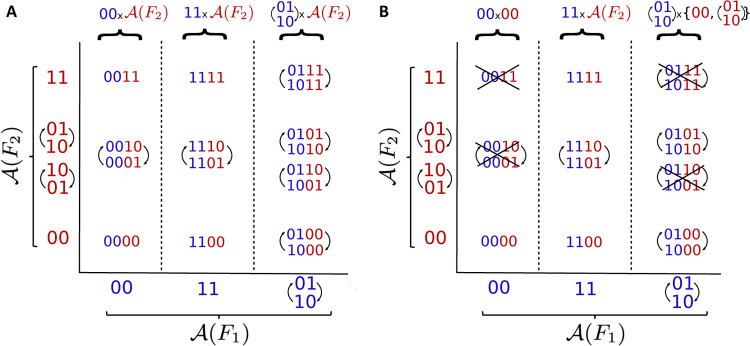
This paper addresses two topics in systems biology, the hypothesis that biological systems are modular and the problem of relating structure and function of biological systems. The focus here is on gene regulatory networks, represented by Boolean network models, a commonly used tool. Most of the research on gene regulatory network modularity has focused on network structure, typically represented through either directed or undirected graphs. But since gene regulation is a highly dynamic process as it determines the function of cells over time, it is natural to consider functional modularity as well. One of the main results is that the structural decomposition of a network into modules induces an analogous decomposition of the dynamic structure, exhibiting a strong relationship between network structure and function. An extensive simulation study provides evidence for the hypothesis that modularity might have evolved to increase phenotypic complexity while maintaining maximal dynamic robustness to external perturbations.
本文探讨了系统生物学中的两个主题,即生物系统是模块化的这一假设,以及生物系统结构与功能的关联问题。这里的重点是基因调控网络,由布尔网络模型表示,这是一种常用工具。关于基因调控网络模块化的大多数研究都集中在网络结构上,通常通过有向图或无向图来表示。但由于基因调控是一个高度动态的过程,因为它随时间决定细胞的功能,所以考虑功能模块化也是很自然的。主要结果之一是,将网络结构分解为模块会诱导动态结构的类似分解,显示出网络结构与功能之间的紧密关系。一项广泛的模拟研究为以下假设提供了证据:模块化可能已经进化,以增加表型复杂性,同时对外部扰动保持最大的动态稳健性。