Graz University of Technology, Graz, Austria.
Complexity Science Hub Vienna, Vienna, Austria.
Nat Hum Behav. 2023 Dec;7(12):2140-2151. doi: 10.1038/s41562-023-01691-w. Epub 2023 Sep 25.
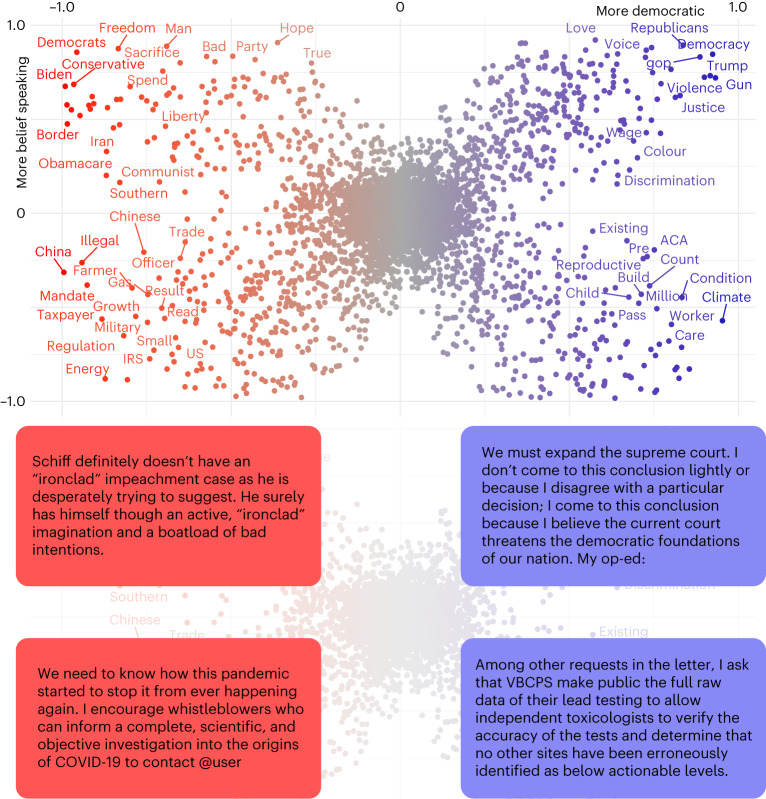
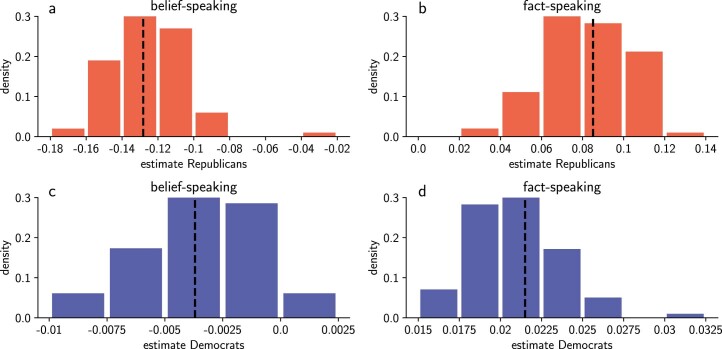
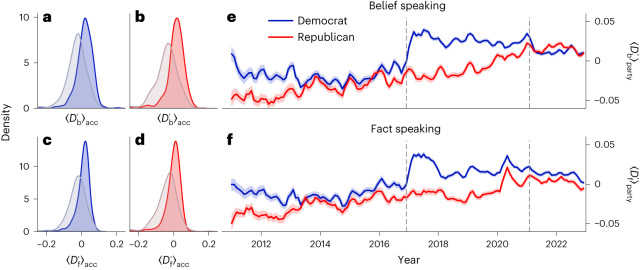
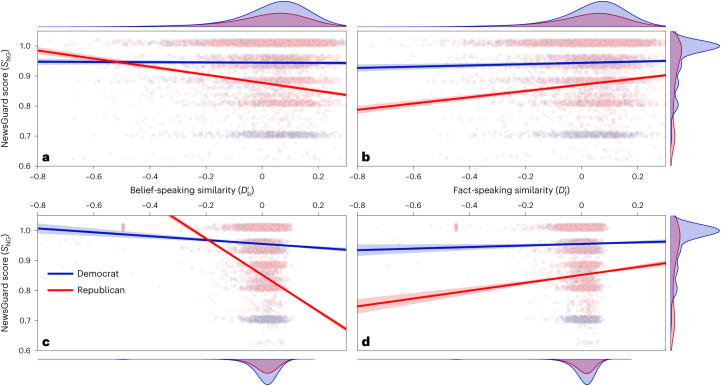
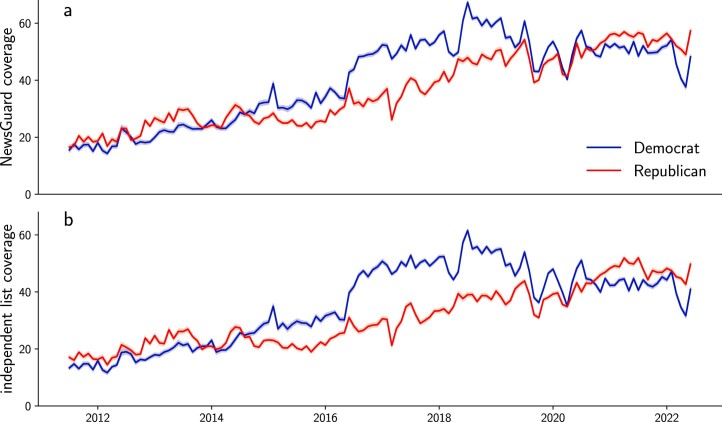
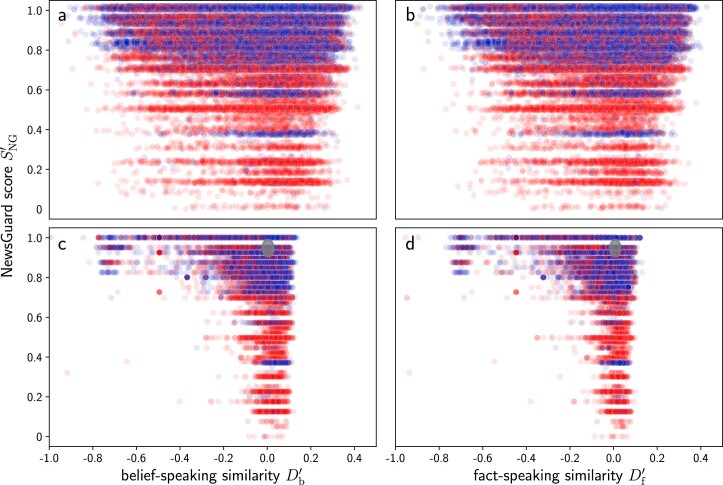
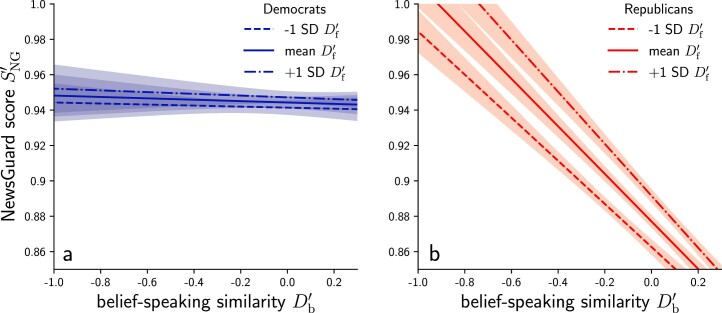
The spread of online misinformation on social media is increasingly perceived as a problem for societal cohesion and democracy. The role of political leaders in this process has attracted less research attention, even though politicians who 'speak their mind' are perceived by segments of the public as authentic and honest even if their statements are unsupported by evidence. By analysing communications by members of the US Congress on Twitter between 2011 and 2022, we show that politicians' conception of honesty has undergone a distinct shift, with authentic belief speaking that may be decoupled from evidence becoming more prominent and more differentiated from explicitly evidence-based fact speaking. We show that for Republicans-but not Democrats-an increase in belief speaking of 10% is associated with a decrease of 12.8 points of quality (NewsGuard scoring system) in the sources shared in a tweet. In contrast, an increase in fact-speaking language is associated with an increase in quality of sources for both parties. Our study is observational and cannot support causal inferences. However, our results are consistent with the hypothesis that the current dissemination of misinformation in political discourse is linked to an alternative understanding of truth and honesty that emphasizes invocation of subjective belief at the expense of reliance on evidence.
社交媒体上网络错误信息的传播,越来越被视为社会凝聚力和民主的一个问题。在这个过程中,政治领导人的作用引起的研究关注较少,尽管有些公众认为那些“直言不讳”的政客是真实和诚实的,即使他们的言论没有证据支持。通过分析 2011 年至 2022 年期间美国国会议员在 Twitter 上的交流,我们表明,政治家们对诚实的理解发生了明显的转变,真实的信念言论——可能与证据脱钩——变得更加突出,并与明确基于证据的事实言论更加区分开来。我们表明,对于共和党人——而不是民主党人——信念言论增加 10%,与在一条推文中分享的来源的质量(新闻卫士评分系统)下降 12.8 分有关。相比之下,事实言论的增加与两党来源质量的提高有关。我们的研究是观察性的,不能支持因果推理。然而,我们的结果与这样一种假设是一致的,即当前政治话语中错误信息的传播与对真理和诚实的替代理解有关,这种理解强调主观信念的援引,而不是依赖证据。