Key Laboratory for Stem Cells and Tissue Engineering (Sun Yat-sen University), Ministry of Education, Guangzhou, Guangdong, China.
Rehabilitation Medicine Department, The First Affiliated Hospital of Sun Yat-sen University, Guangzhou, Guangdong, China.
CNS Neurosci Ther. 2024 Mar;30(3):e14445. doi: 10.1111/cns.14445. Epub 2023 Sep 26.
Severe spinal cord injury results in the loss of neurons in the relatively intact spinal cord below the injury area and skeletal muscle atrophy in the paralyzed limbs. These pathological processes are significant obstacles for motor function reconstruction.
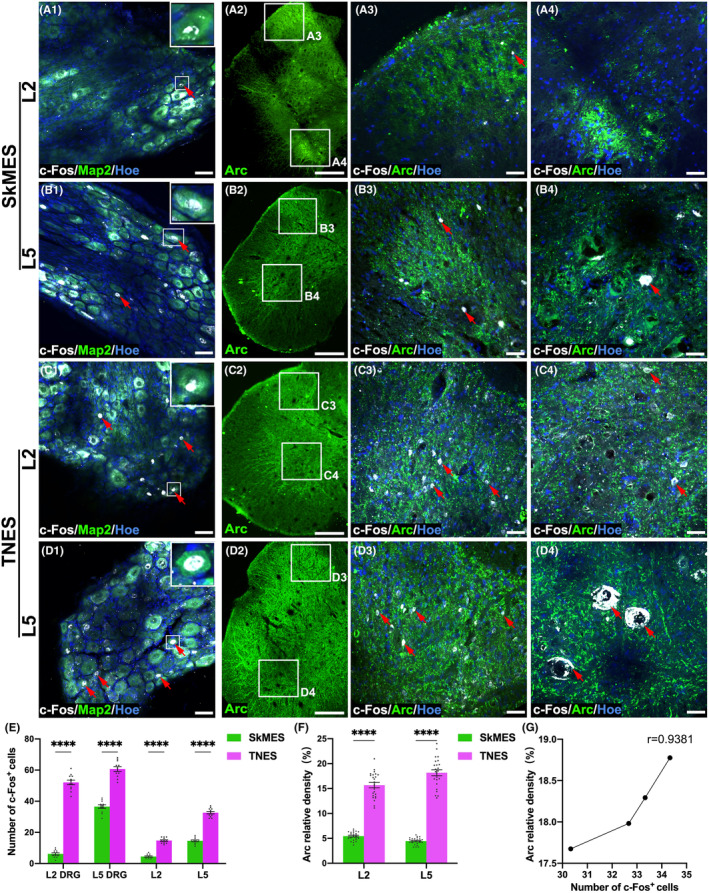
We performed tail nerve electrical stimulation (TNES) to activate the motor neural circuits below the injury site of the spinal cord to elucidate the regulatory mechanisms of the excitatory afferent neurons in promoting the reconstruction of locomotor function.
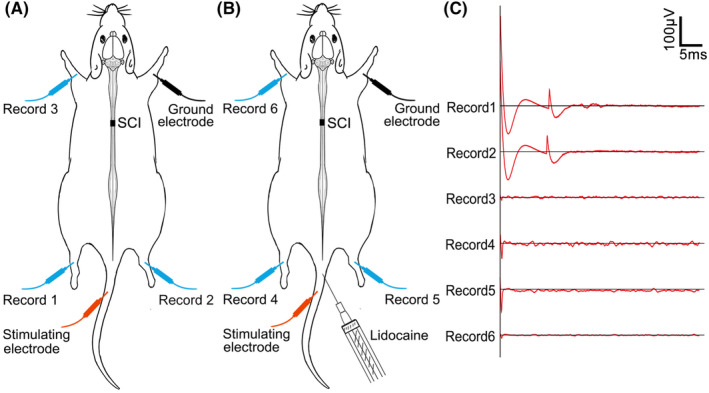
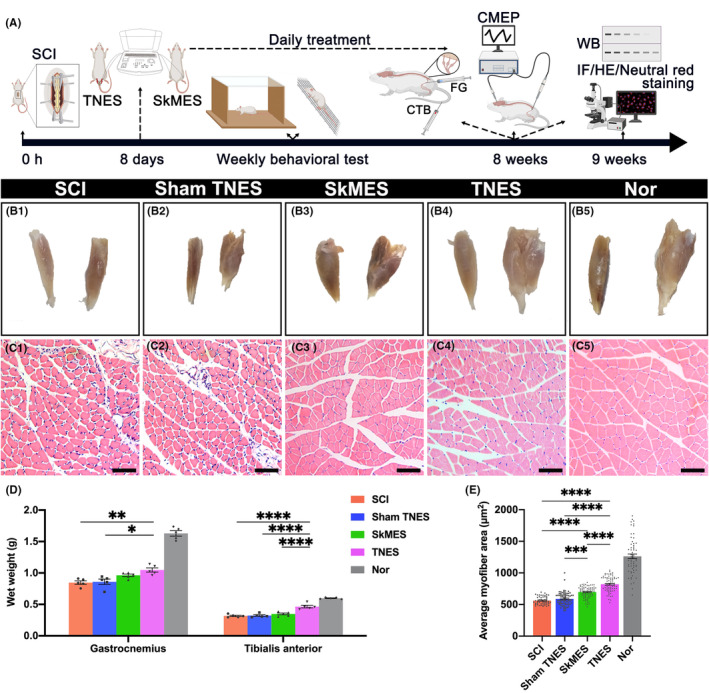
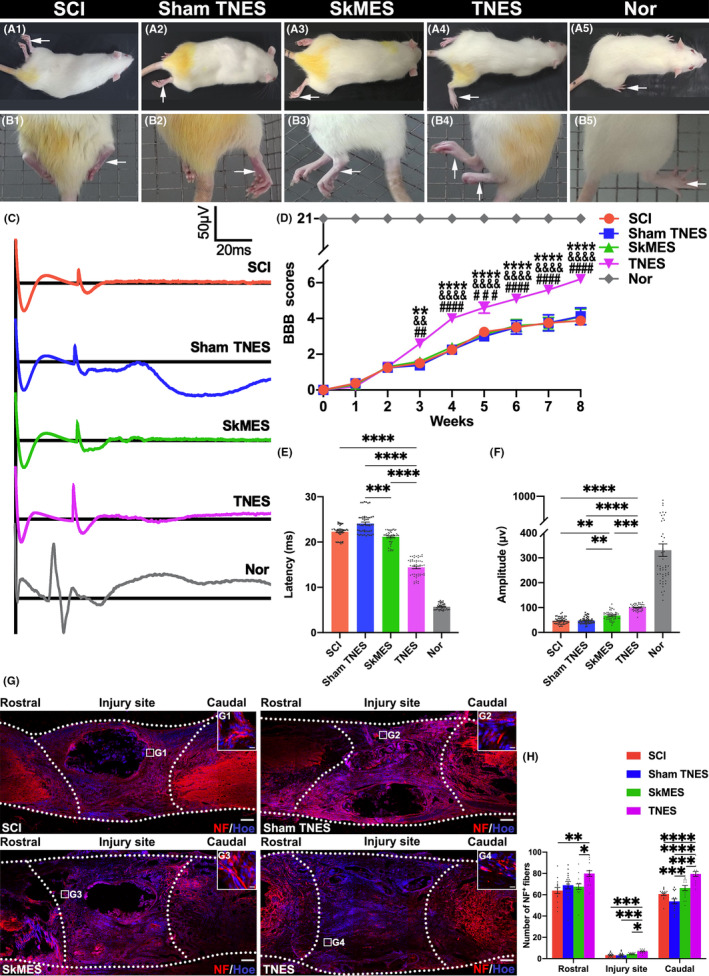
Eight days after T10 spinal cord transection in rats, TNES was performed for 7 weeks. Behavioral scores were assessed weekly. Electrophysiological tests and double retrograde tracings were performed at week 8.
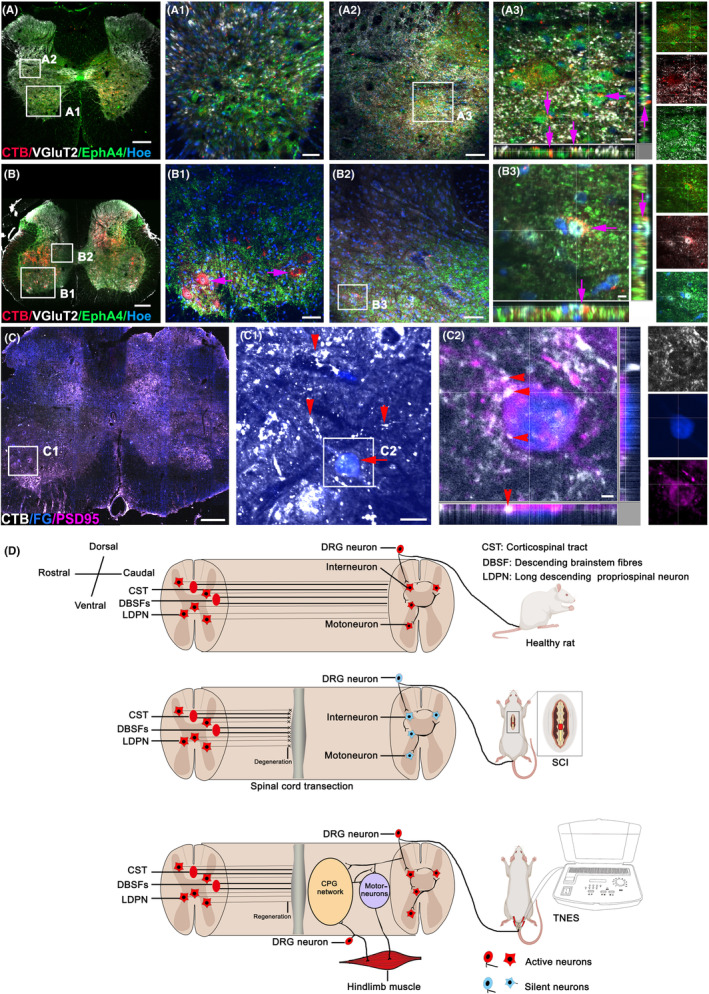
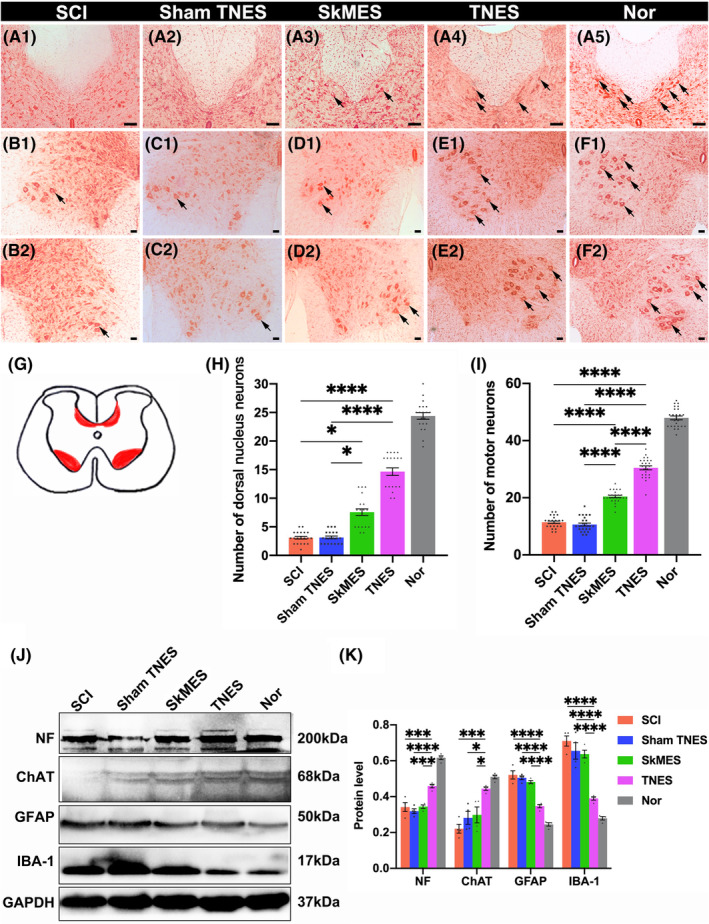
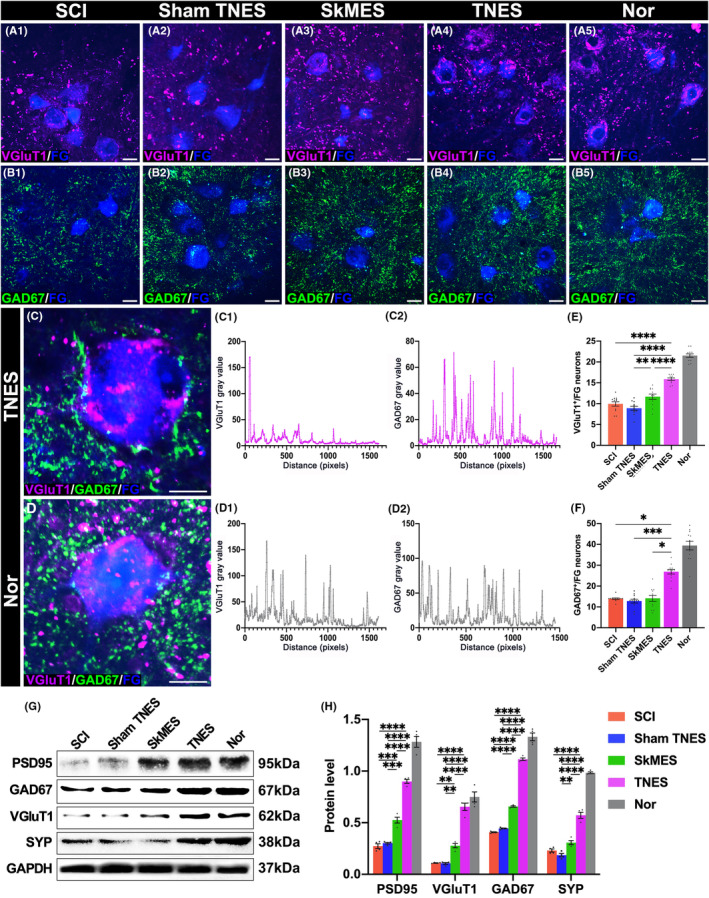
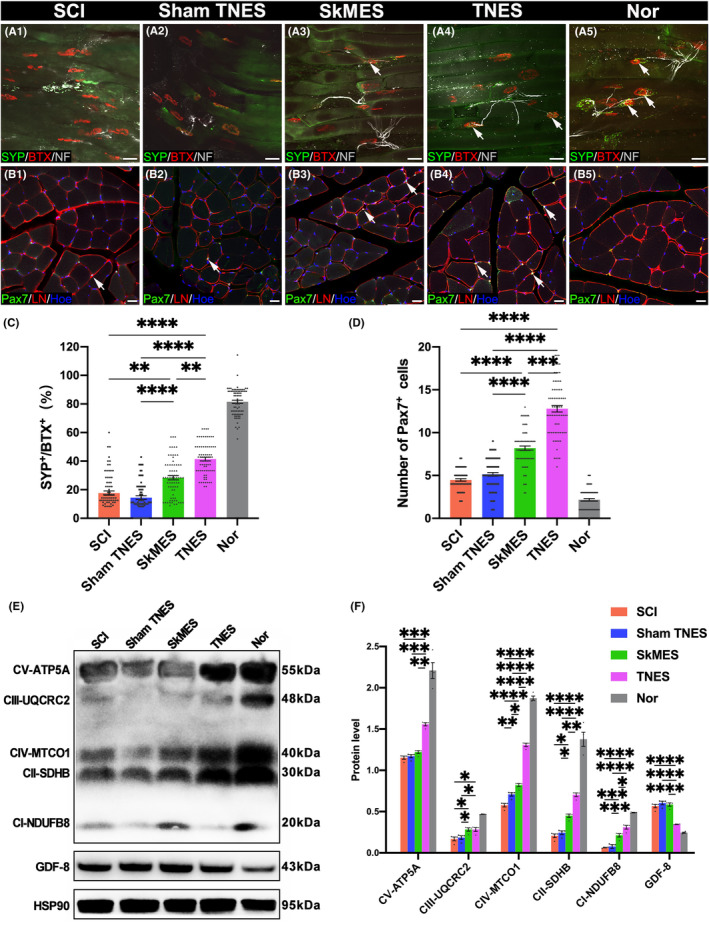
After 7 weeks of TNES treatment, there was restoration in innervation, the number of stem cells, and mitochondrial metabolism in the rats' hindlimb muscles. Double retrograde tracings of the tail nerve and sciatic nerve further confirmed the presence of synaptic connections between the tail nerve and central pattern generator (CPG) neurons in the lumbar spinal cord, as well as motor neurons innervating the hindlimb muscles.
The mechanisms of TNES induced by the stimulation of primary afferent nerve fibers involves efficient activation of the motor neural circuits in the lumbosacral segment, alterations of synaptic plasticity, and the improvement of muscle and nerve regeneration, which provides the structural and functional foundation for the future use of cutting-edge biological treatment strategies to restore voluntary movement of paralyzed hindlimbs.
严重的脊髓损伤导致损伤区域以下相对完整的脊髓神经元丧失和瘫痪肢体的骨骼肌萎缩。这些病理过程是运动功能重建的重大障碍。
我们对尾部神经进行电刺激(TNES),以激活脊髓损伤部位以下的运动神经回路,阐明兴奋性传入神经元在促进运动功能重建中的调节机制。
在大鼠 T10 脊髓横断后 8 天,进行 TNES 治疗 7 周。每周评估行为评分。在第 8 周进行电生理测试和双逆行追踪。
在 TNES 治疗 7 周后,大鼠后肢肌肉的神经支配、干细胞数量和线粒体代谢得到恢复。尾部神经和坐骨神经的双逆行追踪进一步证实了尾部神经与腰脊髓中的中枢模式发生器(CPG)神经元以及支配后肢肌肉的运动神经元之间存在突触连接。
初级感觉神经纤维刺激引起的 TNES 机制涉及腰骶节运动神经回路的有效激活、突触可塑性的改变以及肌肉和神经再生的改善,为未来使用先进的生物治疗策略恢复瘫痪后肢的自主运动提供了结构和功能基础。