Department of Pharmacology, School of Integrated Chinese and Western Medicine, Anhui University of Chinese Medicine, No. 1 Qianjiang Road, Xinzhan District, Hefei, 230012, Anhui Province, China.
Department of Orthopaedics, the First Affiliated Hospital, Anhui Medical University, Hefei, 230032, China.
Arthritis Res Ther. 2023 Oct 2;25(1):189. doi: 10.1186/s13075-023-03149-w.
N6-methyladenosine (m6A) methylation modification is involved in the regulation of various biological processes, including inflammation, antitumor, and antiviral immunity. However, the role of m6A modification in the pathogenesis of autoimmune diseases has been rarely reported.
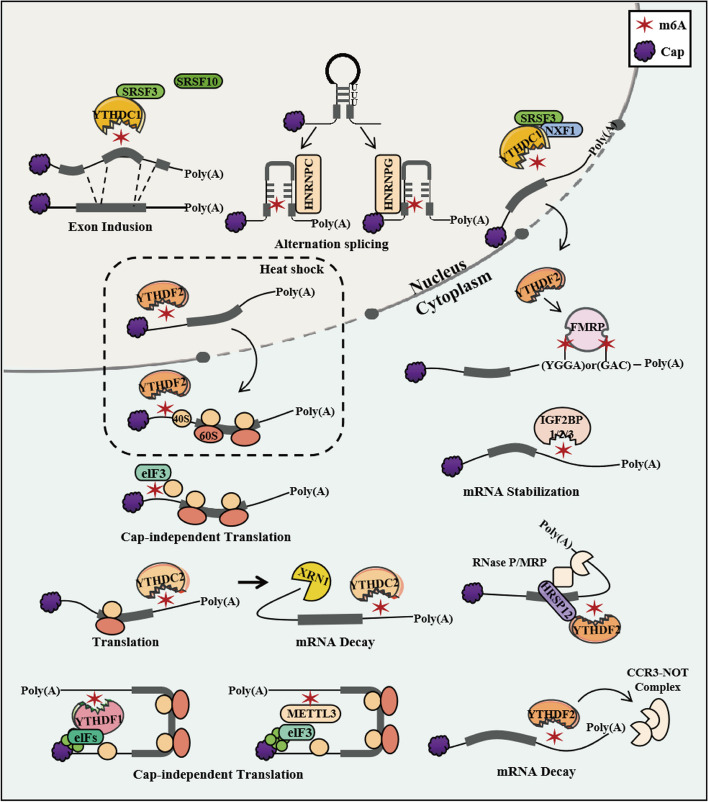
Based on a description of m6A modification and the corresponding research methods, this review systematically summarizes current insights into the mechanism of m6A methylation modification in autoimmune diseases, especially its contribution to rheumatoid arthritis (RA) and systemic lupus erythematosus (SLE).
By regulating different biological processes, m6A methylation is involved in the pathogenesis of autoimmune diseases and provides a promising biomarker for the diagnosis and treatment of such diseases. Notably, m6A methylation modification is involved in regulating a variety of immune cells and mitochondrial energy metabolism. In addition, m6A methylation modification plays a role in the pathological processes of RA, and m6A methylation-related genes can be used as potential targets in RA therapy.
M6A methylation modification plays an important role in autoimmune pathological processes such as RA and SLE and represents a promising new target for clinical diagnosis and treatment, providing new ideas for the treatment of autoimmune diseases by targeting m6A modification-related pathways.
N6-甲基腺苷(m6A)修饰参与调节包括炎症、抗肿瘤和抗病毒免疫在内的各种生物学过程。然而,m6A 修饰在自身免疫性疾病发病机制中的作用鲜有报道。
基于对 m6A 修饰及其相应研究方法的描述,本综述系统总结了目前对 m6A 甲基化修饰在自身免疫性疾病发病机制中的作用的认识,特别是其在类风湿关节炎(RA)和系统性红斑狼疮(SLE)中的作用。
通过调节不同的生物学过程,m6A 甲基化参与了自身免疫性疾病的发病机制,并为这些疾病的诊断和治疗提供了有前途的生物标志物。值得注意的是,m6A 甲基化修饰参与调节多种免疫细胞和线粒体能量代谢。此外,m6A 甲基化修饰在 RA 的病理过程中发挥作用,m6A 甲基化相关基因可作为 RA 治疗的潜在靶点。
m6A 甲基化修饰在 RA 和 SLE 等自身免疫性病理过程中发挥重要作用,代表了临床诊断和治疗的有前途的新靶点,为通过靶向 m6A 修饰相关途径治疗自身免疫性疾病提供了新的思路。