Ganz Scott C, Duan Chenghao, Ji Chuanyi
McDonough School of Business, Georgetown University, 37th and O Streets, NW, Washington, DC 20057, USA.
American Enterprise Institute, 1789 Massachusetts Ave NW, Washington, DC 20036, USA.
PNAS Nexus. 2023 Oct 3;2(10):pgad295. doi: 10.1093/pnasnexus/pgad295. eCollection 2023 Oct.
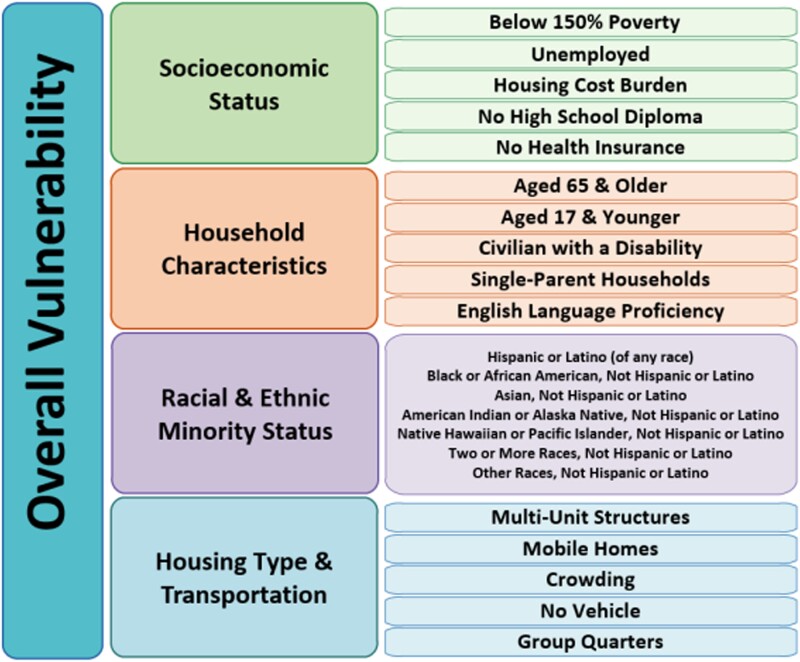
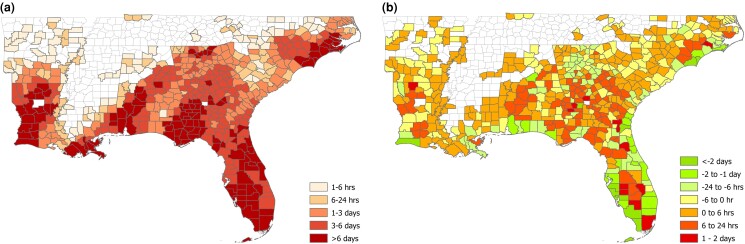
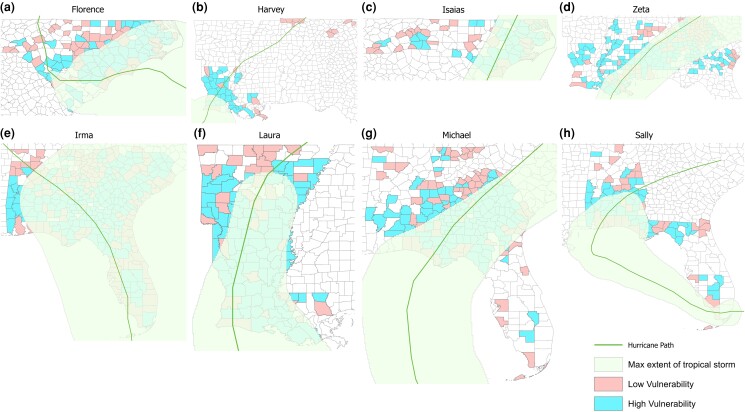
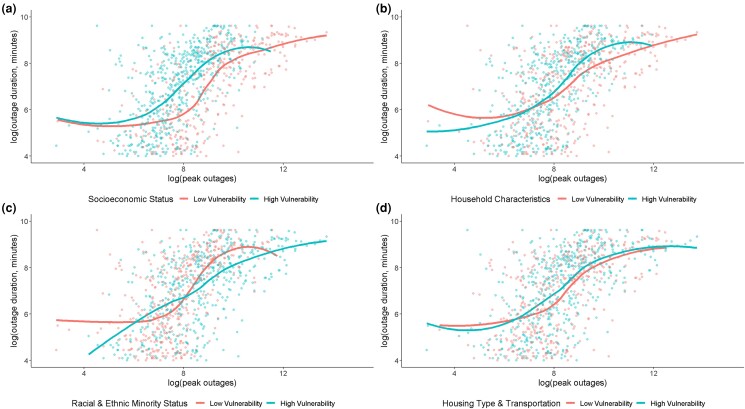
In response to concerns about increasingly intense Atlantic hurricanes, new federal climate and environmental justice policies aim to mitigate the unequal impact of environmental disasters on economically and socially vulnerable communities. Recent research emphasizes that standard procedures for restoring power following extreme weather could be one significant contributor to these divergent outcomes. Our paper evaluates the hypothesis that more economically and socially vulnerable communities experience longer-duration power outages following hurricanes than less vulnerable communities do, conditional on the severity of the impact of the storm itself. Using data from eight major Atlantic hurricanes that made landfall between January 2017 and October 2020 and induced power outages for over 15 million customers in 588 counties in the Southeast, we demonstrate a significant relationship between socioeconomic vulnerability and the duration of time that elapses before power is restored for 95% of customers in a county. Specifically, a one-decile change in the socioeconomic status theme in the Social Vulnerability Index, a measure of vulnerability produced by the Centers for Disease Control and Prevention and the Agency for Toxic Substances and Disease Registry, produces a 6.1% change in expected outage duration in a focal county. This is equivalent to a 170-min average change in the period of time prior to power restoration.
针对人们对大西洋飓风日益增强的担忧,新的联邦气候与环境正义政策旨在减轻环境灾难对经济和社会弱势群体社区的不平等影响。近期研究强调,极端天气后恢复供电的标准程序可能是导致这些不同结果的一个重要因素。我们的论文评估了这样一个假设:在风暴本身影响的严重程度相同的情况下,经济和社会上更脆弱的社区在飓风过后经历停电的持续时间比不那么脆弱的社区更长。利用2017年1月至2020年10月间登陆的8次大西洋主要飓风的数据,这些飓风导致美国东南部588个县的1500多万客户停电,我们证明了社会经济脆弱性与一个县95%的客户恢复供电之前所经过的时间长短之间存在显著关系。具体而言,社会脆弱性指数(由疾病控制与预防中心以及有毒物质与疾病登记局编制的一种脆弱性衡量指标)中的社会经济地位主题每变化十分之一,目标县的预期停电持续时间就会产生6.1%的变化。这相当于恢复供电之前平均时间变化170分钟。