Zhang Chi, Jiang Chao, Jin Jiale, Lei Pengfei, Cai Youzhi, Wang Yue
Center for Sports Medicine, The First Affiliated Hospital, Zhejiang University School of Medicine, 79 Qingchun Road, Hangzhou, 310008, China.
Institute of Sports Medicine of Zhejiang University, 388 Yuhangtang Road, Hangzhou, 310030, China.
Mater Today Bio. 2023 Sep 26;23:100819. doi: 10.1016/j.mtbio.2023.100819. eCollection 2023 Dec.
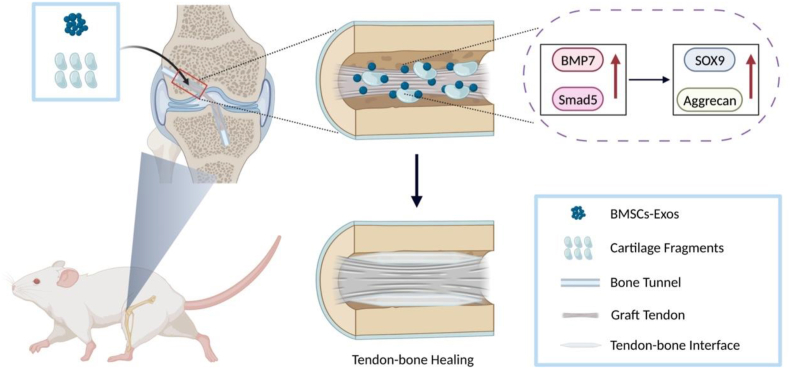
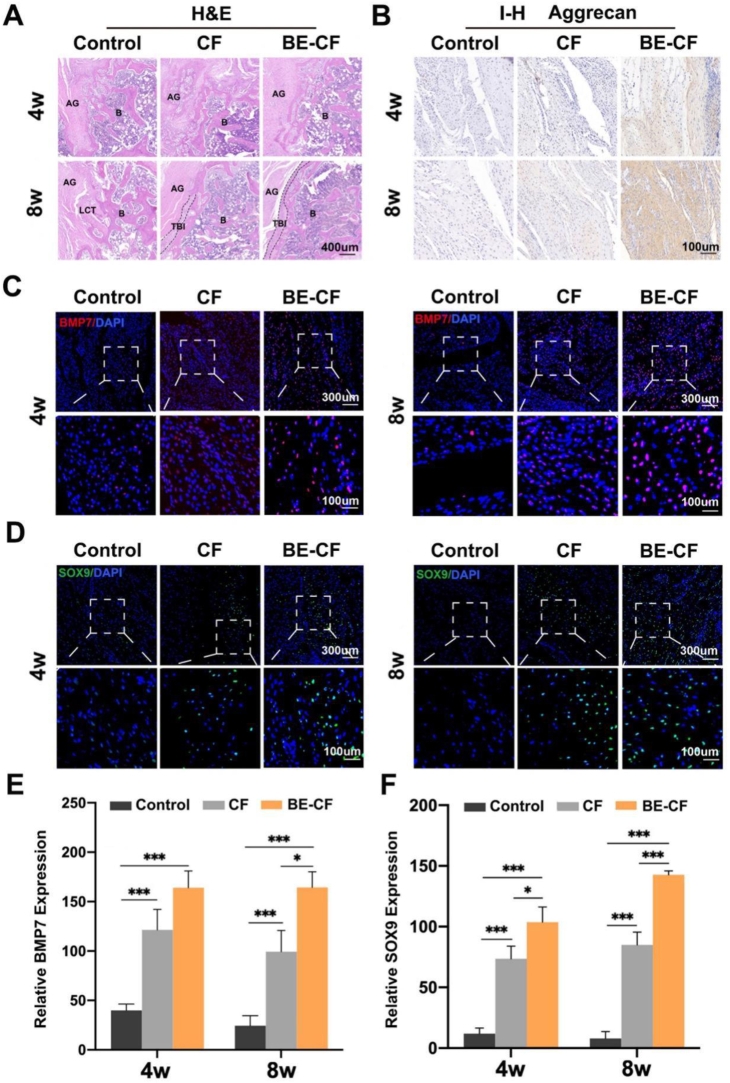
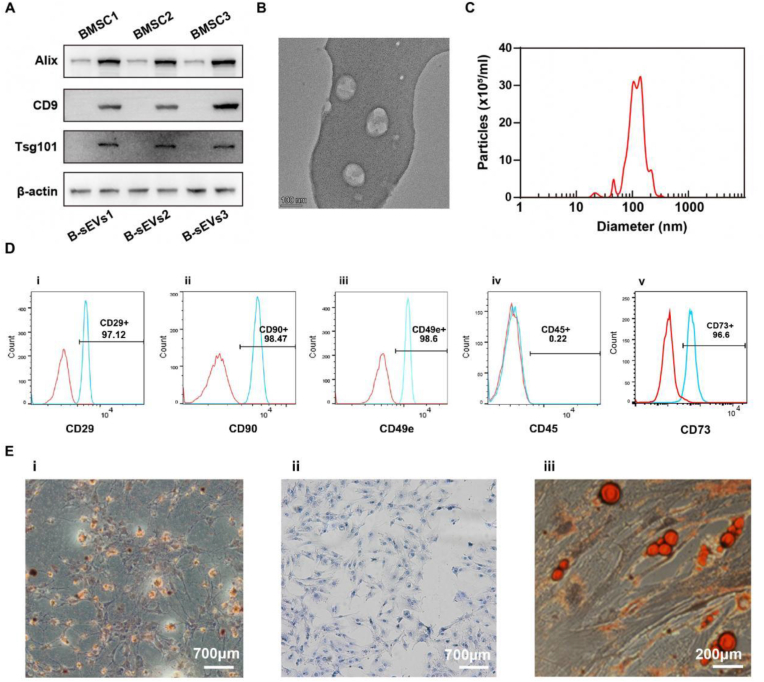
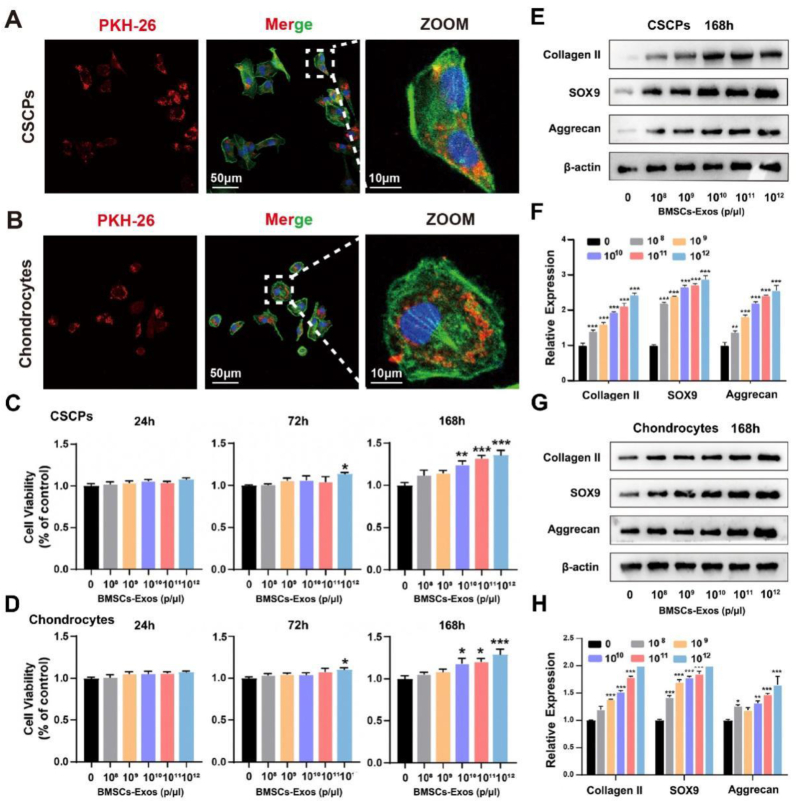
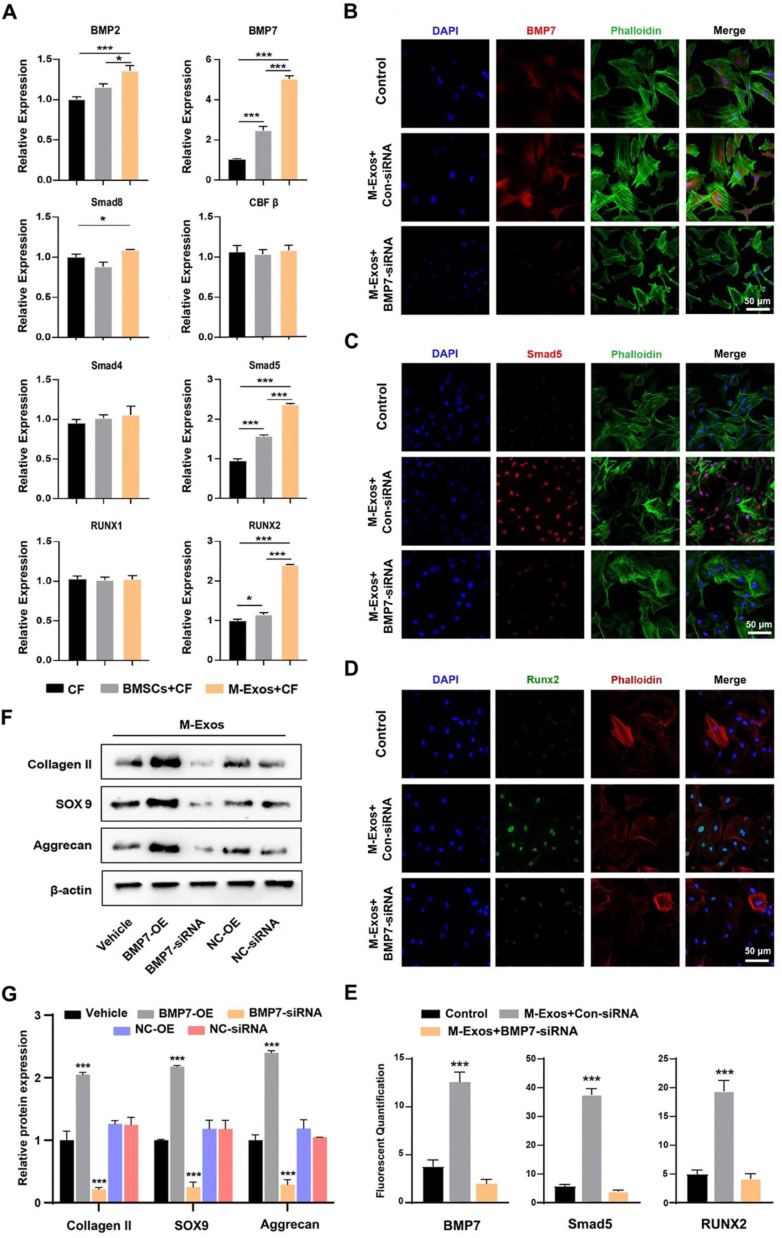
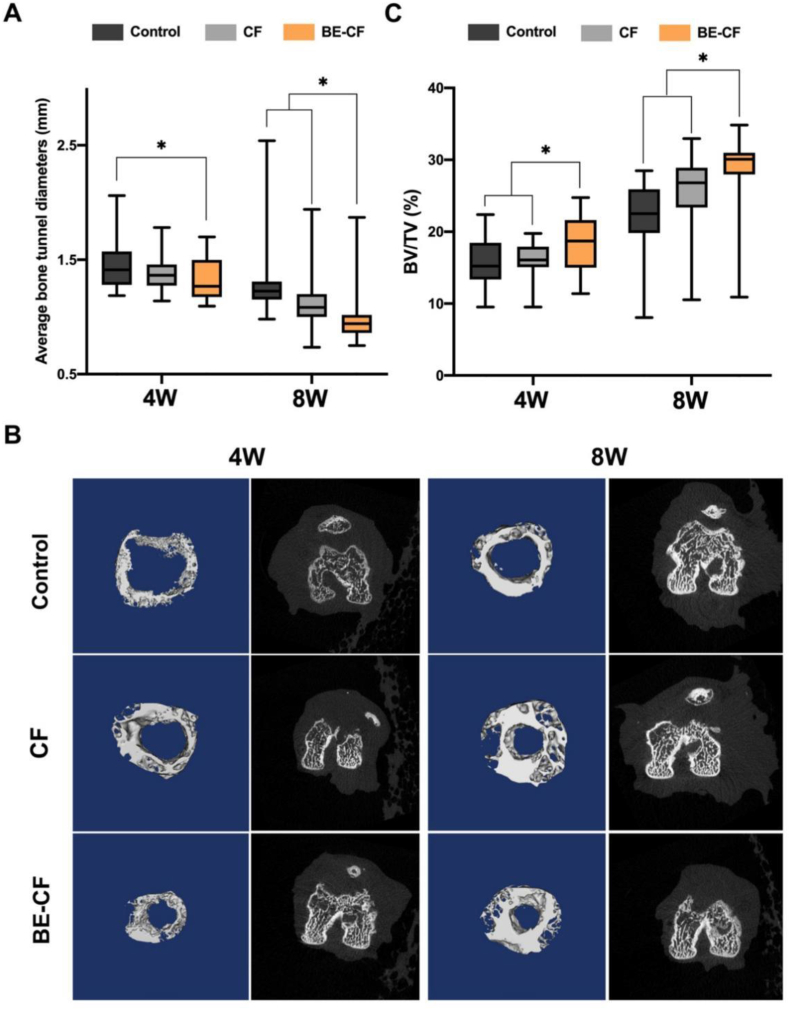
Anterior cruciate ligament reconstruction (ACLR) often fails due to the inability of tendon-bone integration to regenerate normal tissues and formation of fibrous scar tissues in the tendon-bone interface. Cartilage fragments and exosomes derived from bone mesenchymal stromal cells (BMSCs-Exos) can enhance enthesis healing. Nevertheless, the effects on the tendon-bone healing of ACLR remain unknown. This study found that BMSCs-Exos can promote the proliferation of chondrocytes in cartilage fragments, and activated the expression of chondro-related genes SOX9 and Aggrecan. The optimal effect concentration was 10 events/uL. Besides, BMSCs-Exos could significantly upregulated the expression of BMP7 and Smad5 in cartilage fragments, and further enhanced the expression of chondrogenic genes. Moreover, this study established a rat model of ACLR and implanted the BMSCs-Exos/cartilage fragment complex into the femoral bone tunnel. Results demonstrated that the mean diameters of the femoral bone tunnels were significantly smaller in the BE-CF group than those in the CF group (p = 0.038) and control group (p = 0.007) at 8 weeks after surgery. Besides, more new bone formation was observed in the femoral tunnels in the BE-CF group, as demonstrated by a larger BV/TV ratio based on the reconstructed CT scans. Histological results also revealed the regeneration of tendon-bone structures, especially fibrocartilage. Thus, these findings provide a promising result that BMSCs-Exos/cartilage fragment complex can prevent the enlargement of bone tunnel and promote tendon-bone healing after ACLR, which may have resulted from the regulation of the BMP7/Smad5 signaling axis.
前交叉韧带重建(ACLR)常常失败,原因是肌腱-骨整合无法再生正常组织,且在肌腱-骨界面形成纤维瘢痕组织。来自骨间充质基质细胞的软骨碎片和外泌体(BMSCs-Exos)可促进附着点愈合。然而,其对ACLR肌腱-骨愈合的影响仍不清楚。本研究发现,BMSCs-Exos可促进软骨碎片中软骨细胞的增殖,并激活软骨相关基因SOX9和聚集蛋白聚糖的表达。最佳作用浓度为10个颗粒/微升。此外,BMSCs-Exos可显著上调软骨碎片中BMP7和Smad5的表达,并进一步增强软骨生成基因的表达。此外,本研究建立了ACLR大鼠模型,并将BMSCs-Exos/软骨碎片复合物植入股骨骨隧道。结果表明,术后8周时,BE-CF组股骨骨隧道的平均直径显著小于CF组(p = 0.038)和对照组(p = 0.007)。此外,BE-CF组股骨隧道中观察到更多新骨形成,基于重建CT扫描的骨体积分数(BV/TV)比值更大即证明了这一点。组织学结果还显示了肌腱-骨结构的再生,尤其是纤维软骨。因此,这些发现提供了一个有前景的结果,即BMSCs-Exos/软骨碎片复合物可防止ACLR后骨隧道扩大并促进肌腱-骨愈合,这可能是由于对BMP7/Smad5信号轴的调节所致。